Showing posts with label inclusiveness. Show all posts

Saturday, September 8, 2018

International Literacy Day : Literacy & Skills Development


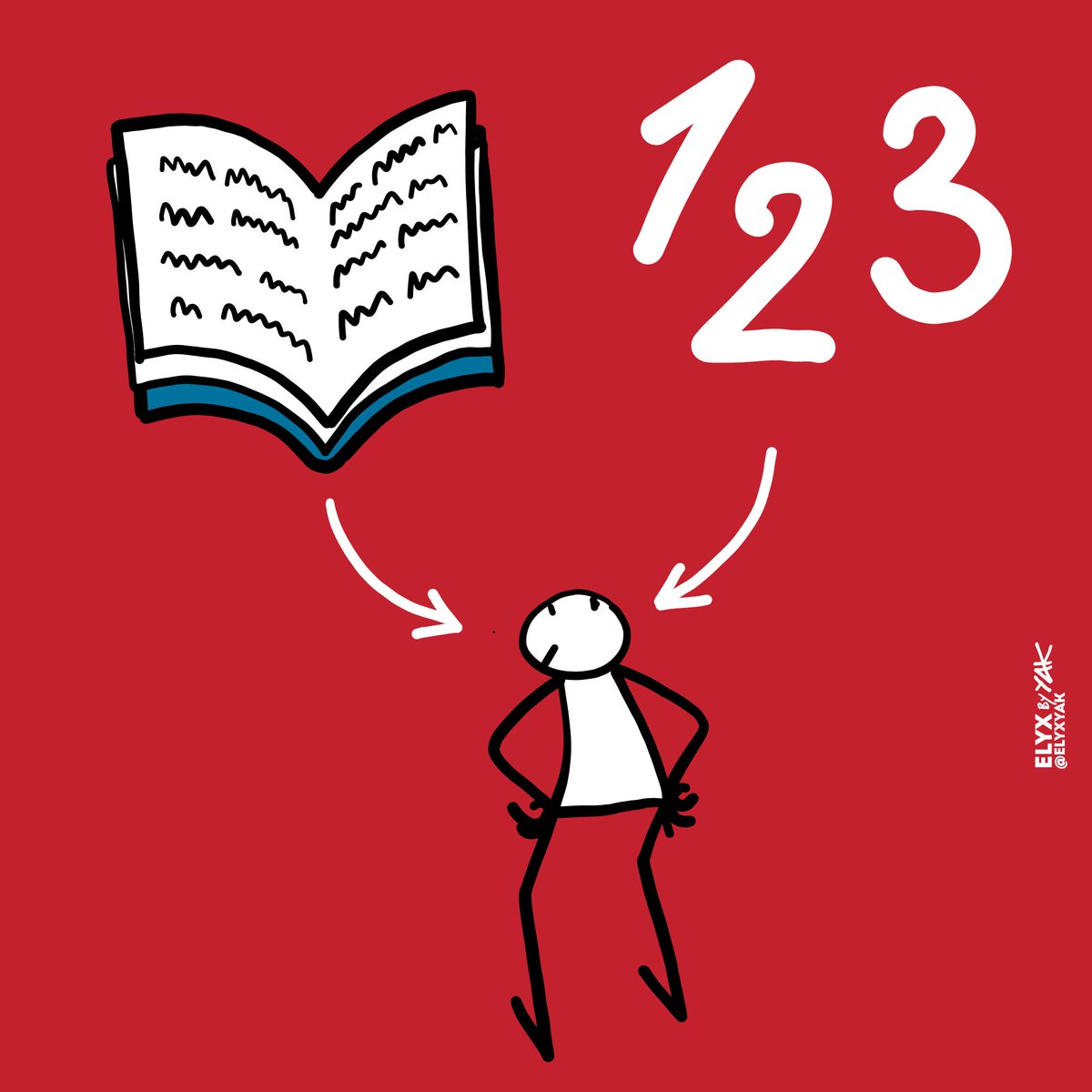
Literacy Day
credits: Elyx Yak

“Once you learn to read, you will be forever free”

Frederick Douglass

On 8 September, International Literacy Day will be celebrated around the world with the theme ‘Literacy and skills development’. 


International Literacy Day, celebrated annually on 8 September. The issue of literacy is a key component of the UN's Sustainable Development Goals and the UN's 2030 Agenda for Sustainable Development


Despite progress made, literacy challenges persist, and at the same time the demands for skills required for work, evolve rapidly. This year, ILD explores and highlights integrated approaches that simultaneously can support the development of literacy and skills, to ultimately improve people’s life and work and contribute to equitable and sustainable societies.


Elyx Yak, virtual Ambassador
credits: UNESCO

Theme: "Literacy and skills development."

This year’s theme is ‘Literacy and skills development’. Focusing on youth and adults within the lifelong learning framework, the effective linkages between literacy and skills will be explored. 

For ILD, ‘skills’ means knowledge, skills and competencies required for employment, careers, and livelihoods, particularly technical and vocational skills, along with transferable skills and digital skills. 

In an increasingly digitized and globalized world, literacy is more vital to navigate life and work than ever. But around the world, 750 million adults still cannot read and write. The rapidly changing labor markets require that skills are developed throughout life.


credits: UNESCO

Out-of-school children and young people must have access to both literacy and skills development to be able to live and work decently. Literacy is more crucial than ever to meet the demands of increasingly globalized societies and changing labour markets. By combining literacy learning with skills development, the most vulnerable populations can be supported. Integrated approaches to literacy and skills development throughout life allows people to access resources that open doors to decent work opportunities and improved lives.


Literacy and skills development go hand in hand: without literacy, it is difficult to acquire new knowledge and skills for full participation in society and for the rapidly changing labour market.


credits: Elyx Yak, virtual Ambassador UN

Education:

"Target 4.3 : By 2030, ensure equal access for all women and men to affordable and quality technical, vocational and tertiary education, including university."

In addition to these literacy and skills challenges, globalisation and fast-advancing digital technology are transforming ways in which people work, live and learn, and are generating new skill demands and lifelong learning needs. 

  • Use flexibility offered in the curriculum to respond to issues as technical and vocational skills, along with transferable skills and digital skills. 
  • Provide space for teachers and students to discuss and reflect on literacy and skills : knowledge, skills and competencies required for employment, careers, and livelihoods, particularly technical and vocational skills. 
  • Students know how important is to have the knowledge and skills to  improve their life and futur work. Let them express their feelings and hope on future jobs. 

"Preparing young people and adults for jobs, the majority of which have not yet been invented, is a challenge."

Audrey Azoulay, Director General Unesco

G-Souto

08.09.2018
Copyright © 2018G-Souto'sBlog, gsouto-digitalteacher.blogspot.com®

Creative Commons License
Schools : International Literacy Day : Literacy & Skills Development bG-Souto is licensed under a Creative Commons Attribution-NonCommercial-NoDerivatives 4.0 International License.

Monday, March 14, 2016

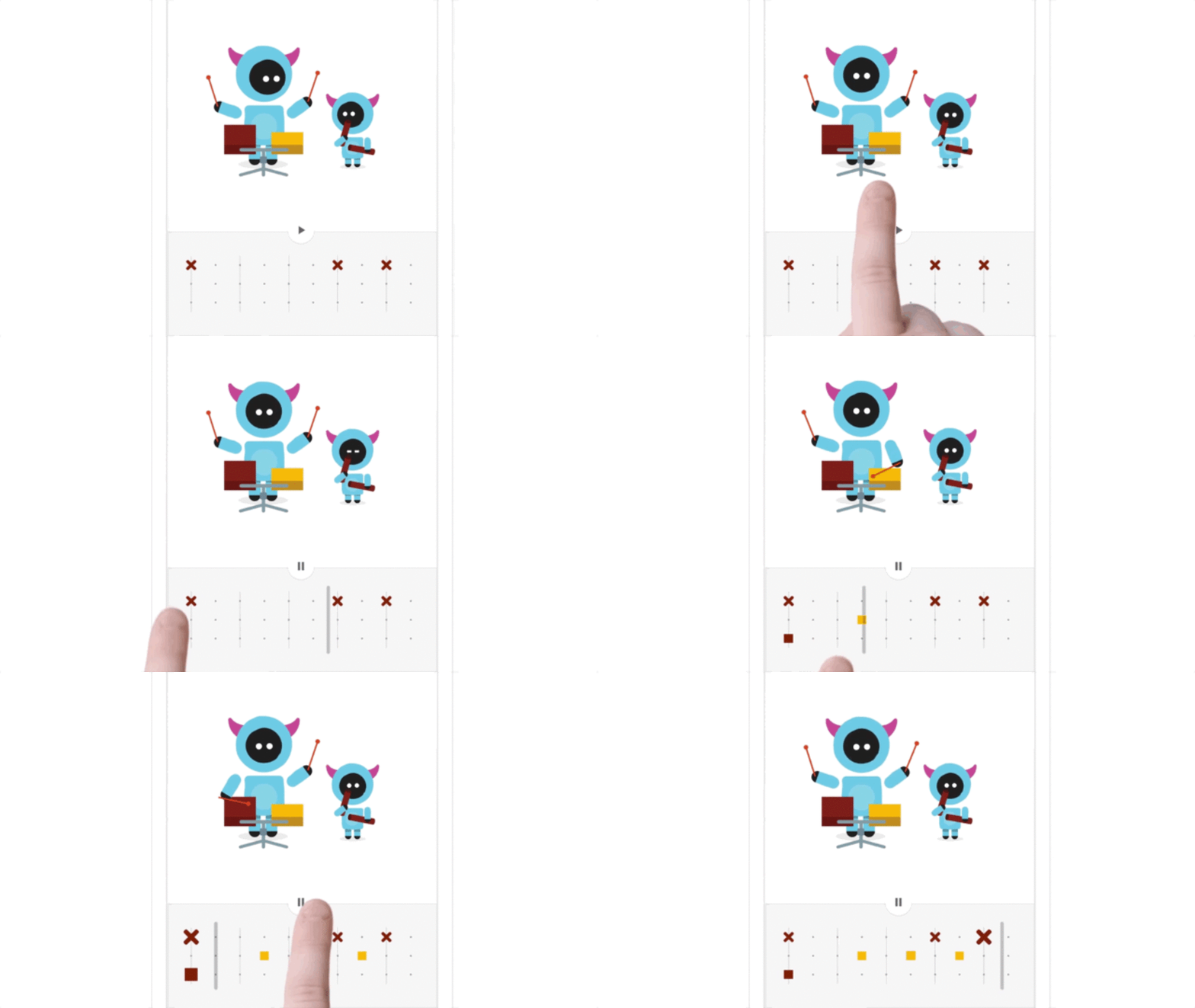
Schools : Let's Play Music on Google Chrome !


Google Chrome MusicLab

"Music expresses that which cannot be said and on which it is impossible to be silent."

Victor Hugo


Google put the Lab together for Music in Our Schools Month, because the company "wanted to make learning music a bit more accessible." I agree. Music is for everyone. Please read my post Talking about Music in Public Schools.

"So this year for Music in our schools, we wanted to make learning music a bit more accessible to everyone by using technology that’s open to everyone: the web."

Do you know a better inclusive resource than the web? So you and your students can play with all its experiments right on the browser without having to download extensions or add-ons. 

The best thing about Music Lab, though, is that you don't have to know how to read notes or play an instrument to enjoy it: just go to its website and poke around to have some fun.


Google Chrome MusicLab

Chrome Music Lab is a collection of experiments that let anyone, at any age, explore how music works. 

They're collaborations between musicians and coders, all built with the freely available Web Audio API. 

These experiments are just a start. Check out each experiment to find open-source code you can use to build your own.


Google Chrome MusicLab

Those words are a kind of presentation of Google Chrome Experiments.
 
WebGL is a web technology that brings hardware-accelerated 3D graphics to the browser without installing additional software.

The experience should appeal to adults and kids alike: It’s like a Web-based Exploratorium for sound. 

  • Education:
Don't you think this is the best new for schools, to include into music and science curricula, but specially for Music teachers. Such a creative digital resource that allows students experiment different kind of musical experiences?


Arcade Fire The Wilderness Downtown

Thus, I remember you another interesting Google project with the rock band Arcade FireGoogle joined the Canadian rock band Arcade Fire to conceptualize an interactive video that shows some of the potentialities of the new "markup" language.


The Wilderness Downtown is an interactive interpretation of Arcade Fire's song "We Used To Wait" and was built entirely with the latest open web technologies, including HTML5 video, audio, and canvas. 


Another Google Chrome experiment that demanded an interaction using Google Maps and Street View. Students loved it.


Google Chrome MusicLab

Exploring music can help spark curiosity in all kinds of ways.  These experiments will inspire teachers and students. They give a new perspective on music, make students more curious about math and science. Teachers will have new ways to teach or code.

If you teach Music and your students love to play with musical instrument apps, they might find Chrome Music Lab awesome. 


Characteristics:

Students can play with sound, rhythm, melody, and more. Chrome Music Lab is all built for the web, so students can start playing instantly, whether they're on a tablet, phone, or laptop. Oh ! They will love it. For sure.


Just like Clara Rockmore doodle, (remember the 9th March 2016?), "the experiments are all built with the Web Audio API, a freely-accessible, open web standard that lets developers create and manipulate sound right in the browser".
Exploring music can help spark curiosity in all kinds of ways. We hope these experiments inspire you – whether they give you a new perspective on music, make you more curious about math and science, or even make you think of new ways to teach or code.

It doesn't have straightforward virtual pianosguitars or saxophones. It's more of a collection of experiments (some familiar, some odd) to explore sounds, rhythms and melodies. 

One of them plays notes and tunes based on what students draw, for instance, while another remixes their voice. There's also one experiment that works like a stripped down rhythm game if you're not quite up for a round of Arcade Fire .


Exploring music can help spark curiosity in all kinds of ways. I We hope these experiments inspire you – whether they give you a new perspective on music, make you more curious about math and science, or even make you think of new ways to teach or code.

I amused myself to explore a little bit chords (I play the piano) and I enjoyed very much.


  • Music & Coding?


Yes, Google is also providing open-source code so that students can build new experiments based on what they’ve started. They're collaborations between musicians and coders, all built with the freely available Web Audio API. These experiments are just a start. 
Check out each experiment to find open-source code students can use to build their own.


Google Chrome MusicLab

Google has architected the experiments with enough depth to allow kids and adults alike to spend a few minutes with each one, exploring the variations there in. 

It’s a rare mixture of art and science, and one that does the Web as a medium proud. 


"Music is for everyone. Play with these simple experiments to explore how music works. We’re also providing open-source code so that others can build new experiments based on what we’ve started. Start playing!"

Google Chrome MusicLab

G-Souto 

14.03.2016

update 16.01.2024
Copyright © 2016G-Souto'sBlog, gsouto-digitalteacher.blogspot.com®

Creative Commons License

Schools : Let's Play Music on Google Chrome ! How pleasant and educative ! bG-Souto is licensed under a Creative Commons Attribution-NonCommercial-NoDerivatives 4.0 International License.


Monday, October 12, 2015

OECD : Poster Competition for Youth

~


The OECD Public Governance Ministerial Meeting has launched a youth poster competition!

The OECD Public Governance Ministerial Meeting will take place in Helsinki, Finland, October 28, 2015 on the theme Public Governance Makes Inclusive Growth Happen.

In many countries inequality is growing as the benefits of economic growth go to the richest members of society. 

Inclusive Growth is all about changing the rules so that more people can contribute to and benefit from economic growth.

"On 28 October, ministers and cabinet-level officials from OECD countries and beyond will meet in Helsinki, Finland, to help determine how we can shape the policy cycle to deliver growth for everyone."


There will be a Youth dialogue event on Tuesday 27 October 2015. 


Young people’s voices are not always heard in policy debates and are often left out of policy discussions that shape their future. 


By including young people’s voices in the policy process, policy-makers can leverage their creativity, increase the relevance of policy solutions for this group and build social capital thus contributing to inclusive growth.


The Youth Dialogue will take place on Tuesday 27 October 2015, from 16h-18h at the House of Estate, Snellmaninkatu 9-11, Helsinki.

Visit the website to consider the participation on Youth Dialogue here. You can also consult the Agenda here

Meanwhile OECD opened a Poster Competition for youth.


The Challenge:

Create a poster reflecting the challenge of fixing government to include more voices in public decisions and help address growing income inequality. 

Using the powerful poster format, you are invited to express your unique views and ideas on how we can change the rules so that everyone can have access to better public services (such as schools and healthcare) and a better life (through less unemployment, better jobs and job satisfaction, less discrimination and more opportunities for all). 

The prize:

Winning posters will be displayed in an exclusive poster gallery during the OECD Ministerial Meeting in Helsinki on October 27-28, 2015 bringing together ministers and high-level officials from countries around the world. 

To enter your Poster:

For your poster entry to be eligible, you must be 15-25 years old during the period of the competition.

Deadline : Competition closes on 21 October, 2015).

Requirement:

The poster you design should be motivating and visual. With few words and strong graphics, it should get people thinking and make them want to act to change things for the better.

Themes:
  • Giving young people a voice in the government decision process.
  • Opportunity for all! (Everyone deserves access to good schools, good health care, good jobs, a decent salary, a healthy environment, ...)
  • Including more voices and more diverse voices in government decisions creates societies that are fairer to all.
  • Improving everyone’s well-being results in a stronger society than just concentrating on more material wealth (GDP).
  • The negative effects of income inequality on society.
  • An idea for reducing income inequality.
  • Changing the rules to help everyone have access to a better life.
  • Encouraging government to listen to everyone, not just to those with the most power and influence.
  • Getting involved in school, neighbourhood, community or larger organisations to make things better, such as providing better services.


Technical requirements:

Posters may be created digitally or traditionally (on paper). 

If you create a digital poster, the file should be sent to IGPoster@oecd.org in the form of a high-resolution (300 dpi) PDF file (for technical reasons, only PDF files will be accepted).

Files sent by email must not exceed 30 MB in size. If your file is larger, you may use transfer services such as wetransfer.com or hightail.com (no subscription is required the last time we checked). 

If you create a traditional handmade poster, you may send it by postal mail to:

OECD Inclusive Growth Poster Competition, OECD, Directorate for Public Governance and Territorial Development, MB 1157, 2 rue André Pascal, 75775, Paris CEDEX 16, France 

Notes: Leave plenty of time for delivery prior to the deadline. 

Make sure that your poster is 100 cm x 70 cm and is appropriately protected when shipped. Please keep in mind that original artwork cannot be returned. 

You may also send a digital image of your handmade poster. The resulting image must be of high quality, without glare, shadows, distortion or other aspects affecting reproduction quality if enlarged. 

Digital files must be prepared for a final printing size of 100 cm x 70 cm

Important information: The OECD reserves the right to exclude any posters that do not meet the technical requirements.

Final notes: 

About you and your poster:
  • For your poster entry to be eligible, you must be 15-25 years old during the period of this competition (Competition closes on 16 October, 2015). 
  • If any words are used in your poster that are not in English or French, a translation must be provided.
  • Your poster must not portray violence, profanity or direct attacks on individuals or organisations. Offensive entries will be disqualified.
  • Your poster must not infringe on any third party rights.


Education:

It would be interesting if teachers could motivate younger students to understand how important is their participation at a Poster Competition where their voices can be heared about equity and inclusiveness avoiding economical segregation and stratification.

The contest may open a good discussion about inclusiveness being acutely sensitive to individual differences.


Finally empowering students' creativity regarding to the poster competition.

Target : up-to15 : high school ; further education; higher education.

N.B. Teachers must ask for parents permission to young adolescents under 16 years-old.

Curriculum : Arts ; Arts & Design ; Languages.

Young people will be happy to enter the Poster Competition! Now they have the chance to hear their voices! Speak loudly through creativity.

G-Souto


12.10.2015

Copyright © 2015-Souto'sBlog, gsouto-digitalteacher.blogspot.com

Creative Commons License
OECD : Poster Competition for Youth bG-Souto is licensed under a Creative Commons Attribution-NonCommercial-NoDerivatives 4.0 International License.