Showing posts with label formal and informal learning. Show all posts

Thursday, March 5, 2015

Schools ! Gerardus Mercator, the cartographer of World Atlas : resources & activities


Gerardus Mercator
in  Alter von 62 Jahren; Kupferstich von Frans Hogenberg

Gerardus Mercator born on 5 March 1512 and died on 2 December 1594 was a 16th-century Dutch cartographer, geographer and cosmographer. He was renowned for creating the 1569 world map based on a new projection which represented sailing courses of constant bearing (rhumb lines) as straight lines, an innovation that is still employed in nautical charts.


Google Doodle Gerardo Mercator 503rd Birthday


  • Google Doodle:

2015 marks the 503rd birthday of Gerardus Mercator, the Flemish inventor of the flat map. 

Today, Mach 5th, Google is celebrating with a Doodle, the 503rd birthday of 16th century cartographer Gerardus Mercator, who coined the term 'atlas' in reference to a collection of maps. 


👉Some information:

Mercator is considered the father of the modern map. Mercator, who was born in the County of Flanders, now in modern Belgium, changed the face of 16th century maps. 

Mercator was one of the pioneers of cartography and is widely considered the most notable figure of Netherlandish school of cartography in its golden age.

Flemish cartographer whose most important innovation was a map, embodying what was later known as the Mercator projection, on which parallels and meridians are rendered as straight lines spaced so as to produce at any point an accurate ratio of latitude to longitude. He also introduced the term atlas for a collection of maps.

A renegade, who battled the church establishment, Mercator was accused of heresy for his innovative cartography designs.  

His maps revolutionized navigation. For the first time sailors could plot a straight-line course over vast distances. It was from this discovery that laid the foundation for a plotting system that would one day evolve into GPS.


Gerardus Mercator
Portrait Nicolas III de Larmessin

  • Biography:

Born on 5 March 1512, Mercator was educated in the Netherlands, where he was taught theology, a type of philosophical argument called dialetics, and Latin.

By 1532, he graduated with a master’s degree in Humanities and Philosophy from the Catholic University of Leuven, now in modern-day Belgium.


Gemma Frisius
credits: Library of Congress/ Science Photo Library

He would go on to master Mathematics, Geography and Astronomy with the help of leading mathematician Gemma Frisius. 

Aged just 24, Mercator was an excellent engraver, calligrapher and made exquisite scientific instruments. 

In 1534 Mercator married Barbara Schellekens, with whom he had six children.

His fortunes changed in 1544 when he was imprisoned for heresy, after a combination of his Protestant faith and his frequent trips to gather information for his maps aroused suspicions.

But with the help of university authorities, he was released after seven months and continued his work.


Mercator map of the world,1569


Mercator became a well-known figure in around 1552, when he moved the Duchy of Cleve, in modern-day Germany, and established a cartographic workshop where he hired his own engravers.

However, he was not publicly recognized for his work until 1564 when he was appointed as the court “cosmographer” to Duke Wilhelm of Cleve.

It was during these years he perfected his projection technique, later named the “Mercator projection,” which he went on to use on his map of the world in 1569.


Africa : ex magna orbis terre descriptione Gerardi Mercatoris desumpta
studio & industria G.M. Iuniori

Mercator then began to put together a series of publications to describe the creation of the world and its subsequent history, which he called the atlas.

Mercator died in 1594 in the Duchy of Cleve. He is buried in Duisburg's main church of Saint Salvatore. 

His epitaph : "the foremost mathematician of his time who crafted artistic and accurate globes showing the heaven from the inside and the Earth from the outside ... greatly respected for his wide erudition, particularly in theology, and famous on account of his piety and respectability in life".

Exhibits of his works can be seen in the Mercator treasury located in the city. More exhibits about Mercator's life and work are featured at the Mercator Museum in Sint-Niklaas, Belgium.


  • Further information:

A skilled engraver and talented calligrapher, Mercator’s maps were not only functional technological marvels but stunning works of art. Not surprisingly his artistic influence has as great a reach as his technological innovations. 

The contemporary art world is filled with artists who are using maps in their work.  Artists like late Italian conceptual artist Alighieri and Boetti whose Mapp series was a group of large embroidered maps of the world woven by master Afghan weavers. 

French artist Elisabeth Lecourt has made the maps wearable by constructing dresses made of paper maps of London, New York and Paris. 

Matthew Cusick makes delicately beautiful collages out of old maps and geography textbooks.  

These are only a handful of the growing number of artists who see the map as something to explore.

Mercator is buried in Duisburg's main church of Saint Salvatore. Exhibits of his works can be seen in the Mercator treasury located in the city.


Atlas Minor
Gerardus Mercator


👉Education:

A Doodle is a symbolic digital resource. This one reminds us the 503rd anniversary of the important cartographer. Why not include into our lessons?

As teachers, we can prepare some events or propose interesting resources or activities to students.

Schools are rich environments of teaching and learning. Schools and teachers have an important role aiming to renew and reinvigorate global knowledge as they have the mission to educate children and adolescents as future citizens.

These resources are digital educational challenges to promote famous scientists, humanists, scholars and 
artists who will inspire students to find new path towards precious solutions to society and planet. Humanities, Sciences, Arts, are the basic curricula.


👧👦Activities:

I selected several activities to involve students but you are free to have your own ideas:

  • Begin with a good motivation sharing the Doodle, promoting brainstorming moments, and then ask your students to do a good research about Gerardus Mercator;
  • Organize an open day (today or/and next week) at school with your students to highlight the importance of science for world development;
  • Open discussions in the classroom emphasing different ways that science & technologies touch our daily lives, from cartography (16th Century) to GPS (21st century);
  • Ask other curricular teachers to highlight the importance of celebrating Science, Humanities and Arts at school in a cross-curricular project;
  • Invite students to create/write news, biography, comics, in the classroom about the importance of science for sustainable societies and include them into the school newspaper;
  • Build classroom-to-classroom connections between schools via the Internet:  schools websites, schools accounts on Facebook or Twitter, Instagram  to share  projects that will captivate the students;
  • Organize a visit to a Science Museum. Museums are awesome practical lessons.


Levels: All levels (different activities for different ages and grades).


Curricula : Math, Sciences, Geography, History, Literature, Technology.


The Portuguese (Lusitanian) and Spanish hemispheres of the globe 
Franciscus Monachus, 1527


👉Some thoughts:


So as you see, can we say that formal learning is a non captivating method? Of course, not! Be creative! And let your students be creative.

Well, there are a lot of funny and engaging activities about Sciences and Humanities that we can create and share with our students, on informal learning (online learning) and in-person lessons. Technology has a good role in all this.

Believe me! You will have a motivated class that will learn and share some knowledge.

To us, as educators, "the attitude" of changing methods, and the creative mind to facilitate different learning activities at our young students!


G-Souto

05.03.2015

update 21.08.2026

Wednesday, November 5, 2014

Apps at school : Learning Spanish, foreign language


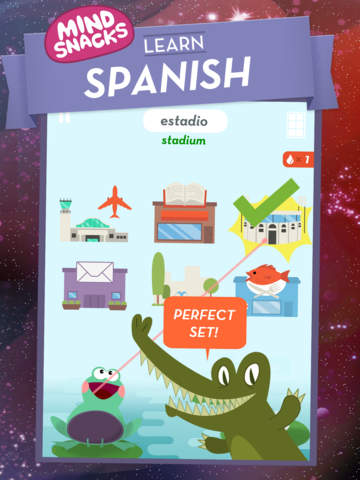
screenshot 4 ipad

After PhotoMath app, published on October, or Words app on August, here I am writing about apps in Education and much more along the years. 

Today let's talk about Learn Spanish by MindSnacks, an app to teach and learn a foreign language on phones or tablets. 


screenshot Learn Spanish by MindSnacks
Tired of boring Spanish classes and lifeless language apps? You want teach or learn to speak and read Spanish as foreign language at school? You can do it all by playing games forgetting the old-fashioned repetitious lessons. 

Aims:
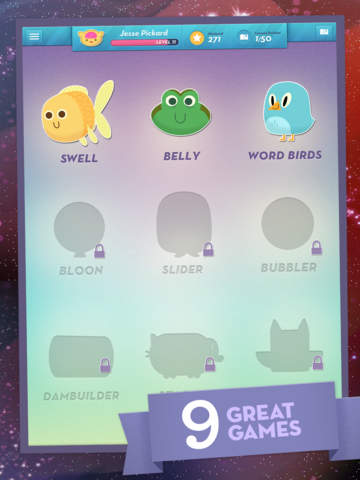
  • Learn Spanish by MindSnacks' app is crammed with nine rich and engaging games designed to build vocabulary, boost conversation skills and prevent students becoming a flashcard flipping zombie.
  • Instead, they will transform into a Spanish speaking savant with lessons that go beyond memorization and teach things like word gender, pronoun usage and the conjugation of -AR, -ER and -IR verbs. 

  • And since everyone learns at their own pace, the unique algorithm personalizes the experience by selectively repeating content with which students have struggled. 
  • What’s more, spoken audio clips will help add that extra bit of panache to their pronunciation.


Education:

The app teaches words, phrases and grammar making lessons fun. Learn Spanish by MindSnacks with 9 addictive games designed for essential vocabulary and conversation skills.

MindSnacks' Spanish app is perfect for young students and kids. Easy building vocabulary and conversation skills: a set of flashcard lessons with about 1000 words and phrases, 9 minigames + extras.


screenshot 4 ipad 
Learn Spanish by MindSnacks
MindSnacks’ app has different games meant to help students learn the language. In one game, for example, they click the word on the screen to match the Spanish word they have just heard. Students play against the clock while water is draining out of an on-screen fish tank. Think quickly: Is “ocho” eight or 18? That fish is going to die if you get it wrong! 


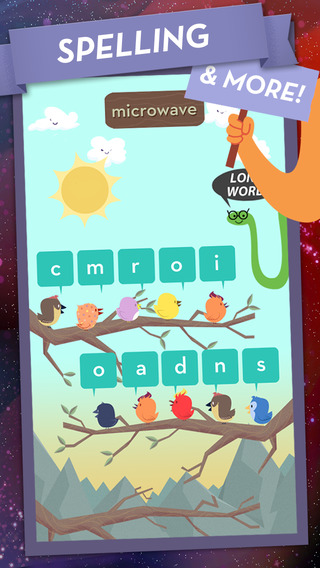
screenshot 4 iphone 
Learn Spanish by MindSnacks

Features: 


  • 9 addictive and unique games;

  • 1000+ Spanish words & phrases to study and master;

  • Spoken audio clips provided by a native Spanish speaker to help with pronunciation;
  • Hand-illustrated image library to help memorize words;
  • 50 Spanish lessons designed by Ivy League instructors (upgrade required);
  • Personalized learning algorithms to maximize memorization, retention & contextual usage;
  • Enhanced review mode lets you replay previously mastered lessons;
  • Additional quests & challenges will keep you motivated;
  • Not a single tedious, boring, mind-numbing or snooze-inducing quiz, class or lesson allowed.

Education Level:

Primary grades

Language: 

English


Prize:

It's a free app

Devices:

This app is designed for both iPhone and iPad


Video games at school

Some thoughts:

"MindSnacks believes learning should be delicious. I agree special in early age. When education excites kids, they devour knowledge; but when it doesn’t, that information may as well be cafetaria food. It may be packed full of vitamins and minerals, but it’s gosh-darn hard to swallow."

MindSnacks

Educational games and apps have been offered as one good solution, a solution that applies to both the traditional classroom as well as the informal learning.

Some of us used to think of educational games as either a time-filler or, at best, a supplement to traditional course materials. 

They were rarely seen as integral to the learning process. Attitudes changed, though, as educators discovered an increasing number of empirical studies or teachers' experiments that suggested game-based learning and educational games improve academic performance. 


Perfect for beginning and intermediate learners of Latin American Spanish, MindSnacks is like their own personal Spanish teacher they can take just about anywhere on phone or tablet, in the classroom or at home.

Students will quickly become less reliant on that Spanish dictionary and learn the grammar and vocab needed for talking or travelling to Spain or other Spanish-speaking countries. 

Badges and scores add to the experience, and the app changes the formula enough to keep students interest.

Give your young students/children the chance to learn all the letters a foreign language in an easy and fun way, with Learn Spanish by MindSnacks 

"If you talk to a man in a language he understands, that goes to his head. If you talk to him in his own language, that goes to his heart."

Nelson Mandela


Note:  The educational digital resources and tools published on my blog are my own choices. I don't do advertising.


Tuesday, March 26, 2013

European Forum on Learning Futures and Innovation


European Forum on Learning Futures and Innovation

"A good education system should provide all who want to learn with access to available resources at any time in their lives."

Illich, 1971

The European Forum on Learning Futures and Innovation took place in Brussels, last 18-19 March 2013 at Committee of the Regions.


Committee des Regions | Brussels

Organised by the VISIR, TELMAP, ODS projects with the support of the European Commission (DG CONNECT and DG EAC) and the Committee of Regions.

This was a two day event, aiming at:
  • Mainstreaming existing e-learning grassroots innovation practices, increasing awareness about opportunities for community building and roadmapping;
  • Discussing and sharing e-learning perspectives and visions to foster innovation management, scalability and mainstreaming;
  • Providing intelligence in order to alert and inform e-learning stakeholders about developments, and trends that can affect their future plans.


European Forum on Learning Futures and Innovation

During two days, more than 130 experts, practitioners, decision makers from TEL, a great number from European countries, joined to find ways to mainstream existing e-learning grassroots innovation practices, increasing awareness about opportunities for community building and roadmapping. 
A number of e-learning perspectives and visions to foster innovation management, scalability and mainstreaming were shared and discussed. 
The first day of the event focused on issues of scalability and mainstreaming through highlighting the results of existing European projects; the second day of the event addressed sector-based strategies and innovation workshops.
The event was organised through a first day of Unconference-type discussion and dissemination and a second day of sector-based strategy and innovation. An a second day sector-based strategy and innovation workshops.

«The "idea of a European learning innovation cartography" was discussed during the event, bringing the agreement to build a "living map of innovation" of TEL in Europe.»


Vana Kamtsiou
European Forum on Learning Futures and Innovation
http://www.learningfrontiers.eu/


Vana  Kamtsiou opened the Unconference and in her speech described the context behind the driving question of the event: "Why has mainstreaming been so difficult?"

The three projects that organized the event presented their way towards scalablity: VISIR, TEL-Map, ODS.


Fabio Nascimbeni
European Forum on Learning Futures and Innovation
https://fbcdn-sphotos-g-a.akamaihd.net/

The VISIR project was presented by Fabio Nascimbeni. The project aims to close three important e-learning gaps (understanding, networking, mainstreaming) featuring connecting bottom-up grassroots micro-innovation practices.

VISIR has mapped more than 120 working practices on the use of ICT in different learning areas.

One if these working practices, my micro-innovation practice Lugares & Aprendizagens (ICT & Languages, e-learning) informal learning & Secondary Education (2002).


European Forum on Learning Futures and Innovation


Round-table "Towards an e-learning innovation cartography" joined Claudio Dondi (VISIR), Paul Lefrere (TEL-Me), Daniel Burgos (HoTEl), Nikolas Athanisiadi (ODS), Lieve Van den Brand (EU). Read the report here

Key-note speach "Scaling-up ICT-enabled innovation for learning: Insights from European and Asian Education Innovations" was given by Yves Punie (IPTS). Read more here


VISIR | ICT for Learning in Europe

The 19th March, three parallel sessions were organized. I was invited by Fabio Nascimbeni (VISIR) to lead with Giordano Koch and Jan Pawlowsky the Workshop 3: "Bridging formal to informal learning: cases of grassroots innovation towards scalability".

My presentation "Attractive Learning at a Digital Age: bridging formal to informal learning in Secondary Education."
Really liked to participate at the VISIR workshop. I am honored to have been invited by Fabio Nascimbeni. He believed in my expertise. Wonderful experience! Great responsibility. At the end, I was very happy! Participants followed me with much interest and attention and they congratulated me with the warmest and kind words.
Giordano Kosch was a great colleague. Jan Pawlowsky was very snob. Sometimes, college professors, not all, thanks God! don't understand that who prepared the new "wired-gen" who attend now Higher Education were the educators in Secondary Education. Students are prepared to online learning because we practice it in school.

European Forum on Learning Futures and Innovation
Finally the Plenary Conclusions: "What we have learnt? Next steps for the e-learning innovation cartography". Read the conclusions on the final report here
A fantastic and instructive Seminar ! The European Forum on Learning Futures and Innovation was an excellent opportunity for an interactive and personalized participation. 

New ideas and exchanging visions about TEL in Europe.

Thank you VISIR!

G-Souto

26.03.2013
Copyright © 2013G-Souto'sBlog, gsouto-digitalteacher.blogspot.com®
Licença Creative Commons
European Forum on Learning Futures and Innovation by G-Souto is licensed under a Creative Commons Attribution-NonCommercial-ShareAlike 3.0 Unported License.