Showing posts with label HIV. Show all posts

Wednesday, December 1, 2021

November in Review & World Aids Day : resources


credits: UN Photo/Eskinder Debebe

Throwback to 2001, when UN Headquarters in NYC was lit up with the AIDS ribbon, signifying our commitment to ending HIV.

On 1st December, World AIDS Day, join UNAIDS in calling for greater efforts to address inequalities and ensure access to affordable, quality health care to save lives.


credits. UNESCO

Every year, on 1 December, the world commemorates World AIDS Day. People around the world unite to show support for people living with and affected by HIV and to remember those who lost their lives to AIDS.

This World AIDS Day, UNAIDS is highlighting the urgent need to end the inequalities that drive AIDS and other pandemics around the world.


"The COVID-19 pandemic has laid bare the connections between education, health, and equality. It has also reminded us that accurate information is one of our most powerful public health tools. The education sector has a transformative role to play in promoting the health and well-being of all learners and ending inequalities, stigma and discrimination."

 Audrey Azoulay, Director-General of UNESCO


Without bold action against inequalities, the world risks missing the targets to end AIDS by 2030, as well as a prolonged COVID-19 pandemic and a spiralling social and economic crisis.

While considerable progress has been made towards ending AIDS as a public health threat, the HIV epidemic is not over and young people remain disproportionately at risk. In 2020 alone, 410,000 young people between the ages of 10 to 24 were newly infected with HIV, of whom 150,000 were adolescents between the ages of 10 and 19. Moreover, comprehensive knowledge of HIV among young people remains far too low, with only one in three demonstrating accurate knowledge.


Teachers can help students to prevent by educating the students. Information about risks and tools to protect them from HIV is an important competence for their life.


credits: UNICEF

Comprehensive sexuality education (CSE) is essential for young people to be able to protect themselves from HIV. It also helps young people avoid unintended pregnancy and other sexually transmitted infections, encourages them to seek out health-related information and services, promotes values of tolerance, mutual respect and non-violence in relationships, and supports a safe transition into adulthood.


Education: 

"Transformative education involves  the  teaching  and  learning   geared   to   motivate   and   empower   learners   to   take   informed  decisions  and  actions  at  the  individual,  community  and  global   levels."

UNESCO

The education sector has a key role to play in closing the gap by preventing new infections among young people, supporting testing, treatment and care, and reducing stigma and discrimination within the school environment. 
Whatever students individual situation may be, adolescents need access to the tools to protect them from HIV. Prevention is a pedagogic aim to observe in schools.
Risks and challenges change as students go through life, highlighting the need to adapt HIV prevention and treatment strategies from birth to older age.


Resources:
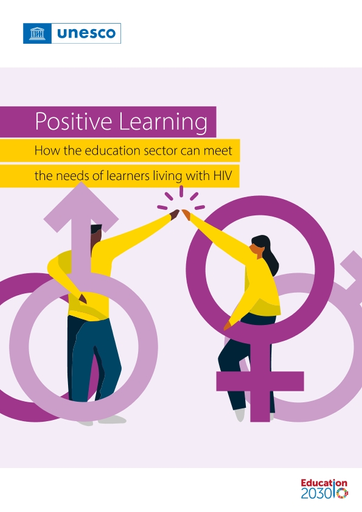
In today’s changing world, growing up isn’t always easy. The education sector, teachers and schools, both formal and informal, has a key role to play in supporting learners living with HIV to fulfil their right to education in a safe, supportive, inclusive and enabling learning environment. Read more
The education sector, both formal and informal, has a key role to play in supporting learners living with HIV to fulfil their right to education in a safe, supportive, inclusive and enabling learning environment, through the followi
Teachers can help students to prevent by educating the students. Information about risks and tools to protect them from HIV is an important competence for their life.

And now, here my posts of November...

Wherever you are I hope that you're having a safe time at school or on remote learning. Christmas is near, despite Covid-9 measures. Not so good as we expected.

Take care.  Enjoy your life and profession. We are teachers for better and for worst. Students need teachers and now they do love the school time after so many lockdowns.

I'll be back posting the normal roundup next week.

G-Souto

1.12.2021

Copyright © 2021G-Souto'sBlog, gsouto-digitalteacher.blog


Education : November in Review & World Aids Day . Resources !  by GinaSouto is licensed under a Creative Commons Attribution-NonCommercial-NoDerivatives 4.0 International License.

Monday, December 1, 2014

Education : World Aids Day #ClosetheGap


"On this World AIDS Day, I welcome the tremendous progress the world is making in responding to the AIDS epidemic.  This year, world leaders made a commitment to end AIDS by 2030."

Ban Ki-moon


Today December 1st is World AIDS Day. World Aids Day is an opportunity to harness the power of social change to put people first and close the access gap.

December 1 has been World AIDS Day since 1988 - but though the awareness and activism around the diseases has changed drastically during the years between then and now.

UNESCO’s slogan for World Aids Day 2014 is: “Close the Gap: Start with Education”, which echoes the UNAIDS campaign “Close the Gap”, calling for an end to the AIDS epidemic by 2030.


credits : UNESCO
UNESCO is focusing on the needs of young people and adolescents for coordinated sexual and reproductive health education and services. 
UNESCO is also exploring new ways of reaching large numbers of young people in an efficient and effective manner to provide comprehensive sexuality education and sexual and reproductive health information. 
In addition, UNESCO is training leaders to improve programming for young key populations and has started developing global guidance to prevent school related gender-based violence, a driver of the HIV epidemic.


Some information :
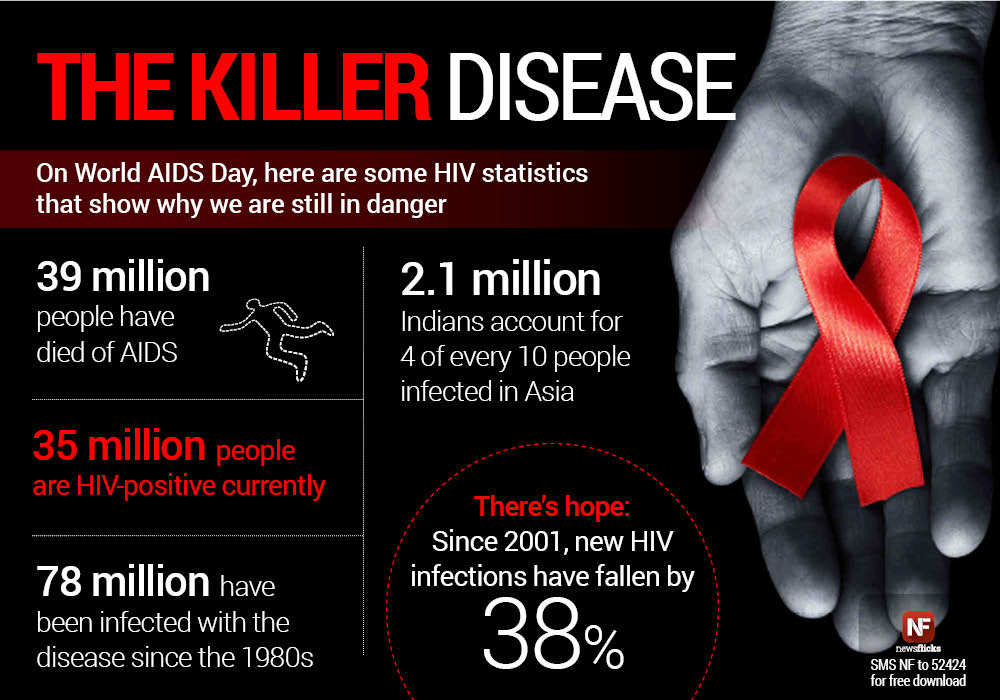
As of the end of 2013 there were an estimated 35 million people living with HIV, of which 2.1 were infected in the past year, and 4 million where young people. 
Nonetheless, new HIV infections have declined by 38% since 2001 and the number of people living with HIV (PLHIV) accessing antiretroviral therapy is increasing. There are an estimated 13.6 million PLHIV receiving antiretroviral therapy, though challenges remain to increase the number of children accessing treatment. The latest fact sheet on the global AIDS epidemic is available here


UNAids | Google +

World AIDS Day 2014 is an opportunity to harness the power of social change to put people first and close the access gap.  
Ending the AIDS epidemic by 2030 is possible, but only by closing the gap between people who have access to HIV prevention, treatment, care and support services and people who are being left behind.
Closing the gap means empowering and enabling all people, everywhere, to access the services they need.
  • By closing the HIV testing gap, the 19 million people who are unaware of their HIV-positive status can begin to get support.
  • By closing the treatment gap, all 35 million people living with HIV will have access to life-saving medicine.
  • By closing the gap in access to medicines for children, all children living with HIV will be able to access treatment, not just the 24% who have access today.
  • By closing the access gap, all people can be included as part of the solution. 
Closing the gap means that ending the AIDS epidemic by 2030 is possible.
Goals for 2015:

There are 10 goals on race to provide universla access to HIV treatment. You can read here.


Education:
The education sector has a key role to play in closing the gap by preventing new infections among young people, supporting testing, treatment and care, and reducing stigma and discrimination within the school environment. 


In 2014 UNESCO has been involved in a number of activities and programmes. It has provided technical support on sexuality education to ministries of education in Latin America and the Caribbean (LAC), Eastern Europe and Central Asia (EECA), Africa, the Middle East and North Africa (MENA) and Asia-Pacific. 
UNESCO teams also worked with civil society and the private sector to increase the impact and efficiency of a coordinated HIV response. 

Resources :


Some information about Aids:

"Almost 14 million people worldwide are now accessing HIV treatment.  We have reduced new HIV infections by 38 per cent since 2001.  We have prevented 1.16 million infections among new-born babies by providing essential antiretroviral medicines.  We are on track to provide antiretroviral therapy to 15 million people by 2015 and to eliminate mother-to-child transmissions within the next few years.  Thanks to the dedication and energy of many partners including those in civil society, we continue to tackle and remove laws that stigmatize and discriminate.  Progress is accelerating."


World AIDS Day lauches New UNAIDS Cities Report Map - Interactive Map. The Cities Report shows how cities and urban areas are particularly affected by HIV, with the 200 cities most-affected by the epidemic estimated to account for more than a quarter of the 35 million people living with HIV around the world.

Materials :
A range of materials have been produced to support efforts to close the gap
The materials can be used in different ways to express how individuals, schools, organizations and societies can offer support in closing the gap.   

Ressources en Français:
UNESCO's Charting the Course of Education and HIV, now available in French, for further analysis of these changes and the way forward. You can download here


Une nouvelle publication de l'UNESCO se penche sur l'évolution de l'éducation en matière de VIH et sur la manière de la rendre plus pertinente pour les jeunes. A lire ici
Games : VIHdeo game


VIHdeo game

Responsabiliser la jeune génération lors de situations à risques. 

Le serious game d’information VIHdeo game est a été conçu sous forme d’histoire interactive et dynamique. 

Etudiants : 

Le jeu est en ligne sur le site www.VIHservices.fr et en lien depuis la page Facebook VIH – SIDA .

Ce jeu est à destination des jeunes de +13 ans.

Comment jouer :

Le joueur suit un parcours de soins avec la possibilité de son personnage et de prendre des décisions qui modifieront l’histoire. 

À chaque bonne réponse, un ruban d’or viendra récompenser l’utilisateur afin de l’encourager à améliorer ses résultats. 

Tout au long du jeu, des conseils sont donnés sur les bons gestes à adopter, les droits, les stratégies de dépistage et l’importance de suivre correctement un traitement.


VIHdeo game

Ce serious game propose aussi de nombreuses séquences animées, des quiz et des messages pédagogiques pour que le joueur apprenne tout en expérimentant des situations du quotidien : encontre fortuite, consultation médicale, vie professionnelle… 

VIHdeo game implique le joueur en le mettant dans la peau d’une personne malade afin de mieux appréhender les risque du SIDA et comment se déroule le combat au quotidien contre la maladie. 

Des informations importantes, car on estime aujourd’hui à 1 500 le nombre de jeunes adultes infectés par le VIH en France, suivis dans des services pédiatriques et bénéficiant d’un accompagnement.

You have the game Fast Car:Travelling Safely around the World released by UNESCO and unveiled  originally on my blog in January 13, 2011.


Quelques pensées :

De plus en plus il faut alerter les jeunes sur le sida et les inciter à se questionner sur la sexualité : qu’est-ce que le sida ? comment s’en protéger ? comment se transmet-il ? Comment se soigne-t-il ? Comment vit un séropositif au quotidien ?

Les parents et les professeurs on un rôle assez important dans l'éducation des jeunes sur le sida.

Education develops the knowledge, values, attitudes and skills required to make informed choices and adopt healthier behaviours. 

"We must #CloseTheGap in #HIV #AIDS education, particularly in regions where discussion about #AIDS is stifled by cultural stigmas. Education holds the key to creating a world free of #AIDS."
G-Souto

01.12.2014
Copyright © 2014G-Souto'sBlog, gsouto-digitalteacher.blogspot.com®

Creative Commons License
Education : World Aids Day #ClosetheGap bG-Souto is licensed under a Creative Commons Attribution-NonCommercial-NoDerivatives 4.0 International License.

References:


Remerciment à #ClémentKolodziejczak pour la divulgation du serious game VIHdeo.