credits: Corbis Bridge / Alamy/Alamy
"Finding mutual respect for kids is important. We are all teachers, and we are all students."
Marc Prensky
This rundown of the most-read posts of October is a bit late because I have been at Brussels (Belgium) to participate at a seminar, last week. But here I am.
I am glad for sharing Marc Prensky's quote that I found on Twitter, reading and tweeting this morning.
I am glad for sharing Marc Prensky's quote that I found on Twitter, reading and tweeting this morning.
The readers of my blog know that the quote identifies the way I always teach and the values of my pedagogical proposals introduced in school curricula to my students.
And yes, indeed, we are all teachers and we are all students. I wrote it in different posts sharing with you throughout the years on this blog my attitude in education.
I
believe and practice the differentiation as a value too by focusing on
individual identity of my students.
They are free to be creative by discovering, learning, discussing. And I am there as a facilitator or a tutor, sometimes as e-tutor, just the sufficient to let them comfortable in their learning and research. Finding mutual respect for kids is essential.
They are free to be creative by discovering, learning, discussing. And I am there as a facilitator or a tutor, sometimes as e-tutor, just the sufficient to let them comfortable in their learning and research. Finding mutual respect for kids is essential.
The
classroom must be an open window to the world. Students must feel free to talk and
share ideas about all the subjects they care about, in and around every
curriculum.
October rundown shows the diversity of subjects and some of my values in teaching, and summarize the most-read topics in a collection of six posts.
As you already know I write in English, French, and Portuguese on this blog:
Le jour le plus court
credits: ARTE TV
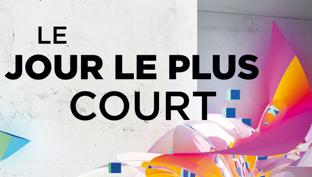
ARTE, le jour le plus court, un défi en cours. A l'occasion du "Jour le plus court" initié par le CNC le 21 décembre 2012, Court-Circuit propose un nouveau concours de courts métrages ouvert à tout public.
Le jour le plus court de l'année est sur ARTE le jour des courts métrages. Cette année, le magazine Court-Circuit organise alors un concours de courts métrages sur Internet.
Le court métrage doit être réalisé sans paroles ou en langue française, achevé après le 1er janvier 2009 et sa durée n'excèdera pas 2 minutes. La bande annonce du concours est disponible sur le site Arte.TV

Le jour le plus court
credits: ARTE TV
ARTE sollicite cette année la créativité de tous, à partir de 18 ans, pour accompagner cet évènement, en organisant un concours de courts métrages sur le thème "21/12/2012, le jour le plus court".
Et le 21/12/2012 n’est pas seulement le jour le plus court de l’année, c’est également celui de la "fin du monde" selon différentes rumeurs, dont notamment celle inspirée de l’interprétation du calendrier Maya.
Apocalypse ou nouvelle ère ? Les possibilités d’interprétation sont nombreuses…
Éducation:
Faites place à la créativé de vos jeunes étudiants, âgés de plus de 18 ans! À eux l'expérimentation: idéaliser, créer, devélopper, enregistrer, réaliser une vidéo, suivis de près par un professeur attentif, réceptif aux idées des étudiants.
Les vidéos doivent être claires, de qualité, et riches en contenu. Là, peut-être le rôle du mentor|professeur.
Pour améliorer la motivation des étudiants, le professeur enrichit le curriculum. L’enrichissement du curriculum consiste essentiellement à donner plus de responsabilités et d’autonomie, à confier des tâches plus complexes, à permettre à chacun de construire une expertise.
Et voilà le résultat! Les étudiants s'investissent profondément dans des projets dont ils sont les créateurs. Et les professeurs se sentent réalisés dans son objectif.
Nous avons tous nos domaines de compétence dans lesquels nous excellons. Partageons-les afin qu'ensemble nous élargissions notre savoir par le partage et de nouvelles connaissances que souvent nos élèves nous apprennent !

Pour améliorer la motivation des étudiants, le professeur enrichit le curriculum. L’enrichissement du curriculum consiste essentiellement à donner plus de responsabilités et d’autonomie, à confier des tâches plus complexes, à permettre à chacun de construire une expertise.
Et voilà le résultat! Les étudiants s'investissent profondément dans des projets dont ils sont les créateurs. Et les professeurs se sentent réalisés dans son objectif.
Nous avons tous nos domaines de compétence dans lesquels nous excellons. Partageons-les afin qu'ensemble nous élargissions notre savoir par le partage et de nouvelles connaissances que souvent nos élèves nous apprennent !

Pathways to a Culture of Peace
“Through education, we teach children not to hate. Through education, we raise leaders who act with wisdom and compassion. Through education, we establish a true, lasting culture of peace,”
Ban Ki-moon, Secretary-General UN
Global Contest for Mutual Understanding is a contest launched at the international level through UNESCO’s networks and partners.

Education:
Young participants of the contest are invited to express its experience of how peace and non-violence are or should be produced and reproduced day after day in various environments, what has come to be termed everyday peace.
Young participants of the contest are invited to express its experience of how peace and non-violence are or should be produced and reproduced day after day in various environments, what has come to be termed everyday peace.
In a world in complete change, young people have a relevant voice to demonstrate their critical thinking and some ideas about a new intercultural dialogue, interconnectedness, capacity building, in order to innovate the society and build a different world through important values as Peace and Culture.

Peace wordlest
Wow! Just do it! Start working with your students! You have a month to create amazing contributions.
“We want children and youth to have quality lessons. And we want to strengthen their core values.”
Ban Ki-moon, Secretary-General UN

Throughout October, every year, the world celebrates International School Library Month, the perfect time for students to visit their own school library and browse through the hundreds of books and several e-books available to them!
International School Library Day was proclaimed by the IASL President, Dr Blanche Woolls, in 1999 and reaffirmed by the IASL President, Peter Genco, in 2005.
Education:
"We should teach great books; we should teach a love of reading."
B.F. Skinner
Some Suggestions:
Let's begin our lesson today watching with our students this awesome animation about books...
Of course, you must not forget The Fantastic Flying Books of Mr. Morris Lessmore.
Some conclusions:
In their efforts to implement e-books, school libraries face a set of challenges that differ from those confronting their public and academic counterparts.
At the school libraries around the world are continuing to look forward to a future rich with ebooks.
School libraries are integrated learning spaces that values connections between home, school, community, and the world.
Flexibility, creativity and the ability to question are some of the most important transferrable skills that children and young people will need in the fluid, changeable and unpredictable world of work they will emerge into when they eventually leave school. So pay attention at the front!

Zoe makes a splash
It's Saturday morning and as usual Zoe is getting ready in the bathroom.
She has combed her hair and is brushing her teeth.
She doesn't see that the tap in the bath is running. (...)
She has combed her hair and is brushing her teeth.
She doesn't see that the tap in the bath is running. (...)
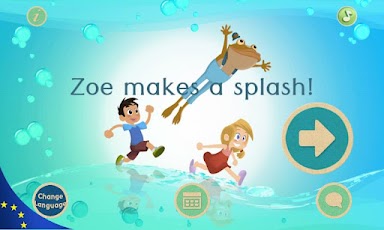
Environmental App for Education presents Zoe makes a splash! a new App developed by the Environment Directorate General of the European Commission.
The European Commission has launched this environmental app that can be downloaded to Apple and Android devices.
This interactive storybook is for Teachers & Parents to use in the classroom or with your child (target group 7-11) to learn about the importance of water in our society, how to use it in moderation, the impact of polluted water on wildlife and habitats and the benefits we get from clean water.
screenshot app Zoe makes a splash
Education:
Here I am talking again about Environmental education that is a cross-curricula subject. Schools have an important role promoting environmental education as a Civics value across all school curricula.
All teachers must be "green" in the classroom and help the new generations to involve in educational projects, national or international, about Environment.
I have already published a good number of posts on this blog about Environment & Education along the years. You can read them searching about Environmental Education.
I hope that the app in your lessons at school gives you some inspiration for projects and actions about Environment.
Rachel Carson
For years, I shared my "green" values with the students in Languages & IT curricula.
I hope that the app in your lessons at school gives you some inspiration for projects and actions about Environment.
Young students will have fun finding the story and will learn about how they can save the environment.
"The more clearly we can focus our attention on the wonders and realities of the universe about us, the less taste we shall have for destruction."
Rachel Carson

"Rampant poverty, which has festered for far too long, is linked to social unrest and threats to peace and security. On this International Day, let us make an investment in our common future by helping to lift people out of poverty so that they, in turn, can help to transform our world."
Ban Ki-moon, Secretary-General, message
for the International Day for the Eradication of Poverty
The Hard Times Generation: children's rights: Austerity measures widen gap between rich and poor. That is a fact. Every day, in our city we cross homeless people, we know someone that lost his or her job, even the home family.
"Of the 925 million people suffering from chronic hunger, 98 percent live in the developing world. Unlike famines that receive emergency-aid, chronic hunger is a silent, invisible, day-after-day condition."
"When you get up in the morning and don’t know where to go, with nothing to feed your children, that is violence. When you have to fight others to defend the little you own, that is violence.”
A mother from Haiti
Unfortunately, this is no longer a mother's voice of an underdeveloped country. We know that poverty and hunger are disseminated too in developed countries. I wrote about it on my post Child Poverty in Develped Countries.


"Extreme poverty destroys the lives and spirit of people; it kills more children, young persons, and adults than any war. Every day, people living in extreme poverty are challenged and threatened by lack of food, shelter and access to essential services. They endure hazardous working conditions and live in precarious, degraded, and insecure living environments."
"As debates rage on austerity measures and social spending cuts, a new report reveals the extent of child poverty and child deprivation in the world’s advanced economies.
Some 13 million children in the European Union (plus Norway and Iceland) lack basic items necessary for their development.
Meanwhile, 30 million children - across 35 countries with developed economies - live in poverty."
UNICEF (Brussels, May 29, 2012)
As chidren across the United Sates, or Canada, and other developed countries in the world.
How can we build a just and peaceful society to the "hard time generation"?
For some children, socializing and learning are being cruelly complicated by homelessness. And we have this reality in our classroom among some our students!
On this post I had no pedagogical ideas. I only wanted to share with you some messages:
Child Poverty at a Time of Crisis (UNICEF)
Pupils speak out about UK child poverty
Hard Times Generation: homeless kids (Florida children - USA).
Child Poverty at a Time of Crisis (UNICEF)
Pupils speak out about UK child poverty
Hard Times Generation: homeless kids (Florida children - USA).
Only by listening to chidren living in extreme poverty, can we learn from their courage, experience and knowledge on how to achieve a peaceful world for all.
Ultimately, the social transformation that is needed to achieve a peaceful society can only be achieved through the active contribution of everyone, regardless of where we live, or our social and cultural background.

via Google images
"Music has a power of forming the character and should therefore be introduced into the education of the young."
Aristotle
The IMC was founded in 1949 at the request of UNESCO as a non-governmental advisory body on musical matters. It currently comprises national music committees in 74 countries on all continents as well as 34 organisations representing most fields of musical activity.

Músicos Inesperados | Porto (Portugal)
credits: Casa da Musica
Education:
Children and young people from all backgrounds should have the opportunity to learn a musical instrument, to make music with others, to learn to sing or to dance, to have the opportunity to progress to the next level of excellence.
"Music should be a very solid part of the education of young children."
Sir George Martin
As I wrote already on this blog: "Music has the potential to achieve social and psychological transformation of children and young people. Their sensibility will be accurate. We must never waste such an opportunity as teachers! Captivating the major interests of our students about Music."
Music, as you can read on several posts, is fundamental in Education of young people.

Jan Lisiecki
via Facebook page
via Facebook page
Remember my post about the young pianist Jan Lisiecki. He is 16 years old, "recognized around the world for his poetic and mature playing", he is already recording for Deutsche Grammophon and he is performing with the best orchestras in famous theaters from different countries.
When we are lucky to study Music and Humanities for example (this is my case), we understand so well the importance of music in our education, in our life, even we are teaching Languages or IT.
As I, many teachers studied Music or just love music. Some of us feel comfortable to speak about Music in different curricula. So, let's do it!
You must try to talk about Music in the classroom, no matter the curriculum you are teaching. Let your students listen some Music as part of the curriculum.
No matter the kind of Music. Pop or classical. It will depend from the students you are teaching.
You will feel the enthousiasm of your young students about music!

Músicos Inesperados | Porto (Portugal)
credits: Casa da Musica
Some thoughts:
The holistic immersive approach of Music - classical, electronic, pop, rock, hip hop - and the engagement of important and experienced musicians is central to achieving significant transformation, particularly to the lives of the most vulnerable children.
"High quality music education enables lifelong participation in, and enjoyment of, music, as well as underpinning excellence and professionalism for those who choose not to pursue a career in music."
Department for Education (England)
"Music is a moral law. It gives soul to the universe, wings to the mind, and life to everything… Without music, life would be an error."
Plato
I really hope that you will enjoy every pedagogical proposal written in October (here are more) or will discover some new pedagogical ideas to include into your lessons.
I thank you all the colleagues from around the world that kindly read my blog and are shy to become followers.
G-Souto
14.11.2012
Copyright © 2012G-Souto'sBlog, gsouto-digitalteacher.blogspot.com®

Schools : October runddown of the most-read posts by G-Souto is licensed under a Creative Commons Attribution-NonCommercial-ShareAlike 3.0 Unported License.