Showing posts with label Gender Equality. Show all posts

Saturday, October 12, 2024

June in Review & International Day of the Girl : #HerEducationOurFuture


Day of the Girl 2024
credits: UNESCO


Day of Girls and the International Day of the Girl is celebrated on 11 October. The first International Day of the Girl Child was observed in 2012. The year 2024 marks the 12th anniversary celebration of IDG.


Today’s generation of girls is disproportionately affected by global crises of climate, conflict, poverty and pushback on hard won gains for human rights and gender equality. Too many girls are still denied their rights, restricting their choices and limiting their futures.

Yet, recent analysis shows that girls are not only courageous in the face of crisis, but hopeful for the future. Every day, they are taking action to realize a vision of a world in which all girls are protected, respected and empowered.

But girls cannot realize this vision alone. They need allies who listen to and respond to their needs.


credits: UN Women


  • Theme 2024:

"Girls' vision for the future."


This year’s theme, “Girls’ vision for the future,” seeks to empower girls, amplify their voices and support their agency to shape strategies and policies that ensure a better future for us all. Despite progress, 122 million girls remain out of school.


Despite progress, 122 million girls remain out of school. It is time to listen to girls, to invest in proven solutions that will accelerate progress towards a future in which every girl can fulfil her potential.


  • Key data on girls and women’s right to education

Many girls and women cannot exercise their right to education due to gender inequality and discriminatory practices. Poverty, early marriage, and gender-based violence are just some of the reasons behind the high percentage of out-of-school and illiterate girls and women globally.


""Even without legal barriers, many structural factors can hinder girls’ education, development and civic participation. To achieve gender equality in education across the globe, we must sustain our efforts, equipping girls with tools and fostering environments conducive to their success."


Audrey Azoulay, Director-General of UNESCO


Time to share with you the rundown of the most read posts in March.


Here are the most popular posts of June 2024 :


  • Resources & Activities:

For Activities, please search on all the publications here mentioned. 


Resources:


HerAtlas: UNESCO’s interactive tool monitoring girls and women’s right to education worldwide. The graphics are updated regularly to reflect the latest data from the tool. 


Make this Atlas yours and join us in shaping a world where education knows no bounds. 


Hashtag : #HerEducationOurFuture


Well, I will be back posting some ideas and educational resources very soon.

Hope you are doing well at your schools and doing interesting things with your students. Don't loose the power and hope to be a great teacher!


G-Souto 

11.10.2024
Copyright © 2024G-Souto'sBlog, gsouto-digitalteacher.blogspot.com®


June in Review & International Day of the Girl :  by G-Souto is licensed under a Creative Commons Attribution-NonCommercial-NoDerivatives 4.0 International License.

Thursday, April 4, 2019

Schools : Teaching Great Women in Humanities & Science


Maria Moliner
Ilustración de Pol Serra

“Con un lápiz y una cuartilla empecé a esbozar el diccionario….”. Con la sencillez y humildad de quien describe una tarea rutinaria y nimia, María Moliner relata el origen de su diccionario. Con las palabras escogidas, optó por no mencionar su inteligencia, sus conocimientos, su capacidad de trabajo y de entrega, su amor por los vocablos, su valía. Porque un lápiz y una cuartilla no crean un almacén de significados, un semillero de libros."

PikaraMagazine


María Moliner
credits: unknown
via Ilustracion Crítica
This week marks the birth dates of three great women of of the XX century: the philologist and lexicographer Maria Molíner, the pioneering physicist Hedwig Kohn and the prolific author of stories for children and young readers Sofia Mogilevskaya. 
These three women have made a big impact on our scientific and cultural life and are remembered for their work in Humanities and Science.


Google Doodle Hedwig Kohn's 132nd birthday
guest artist Carolin Löbbert
https://www.google.com/doodles/
And Google celebrates all three. Hedwig Kohn's 132nd birthday tomorrow, 5 April, Maria Molíner's 119th birthday on 30 March and Sofia Mogilevskaya's 116th birthday yesterday, on 3 April 2019.
From my desk in Portugal, I opened Google searching window and could read about the three great women.
  • Some biographical notes: 


Hedwig Kohn in her laboratory, 1912
https://en.wikipedia.org/

  • Hedwig Kohn
Hedwig Kohn born on this day, April 5, 1887, was a pioneer in physics and one of only three women who obtained Habilitation the qualification for university teaching in Germany) in Physics before World War II. She and the other two physicists, Lise Meitner and Hertha Sponer, were forced to leave Germany during the Nazi regime.
Hedwig Kohn earned her doctor of Physics in 1913 under Otto Lummer and continued to work as his assistant until 1933, when she was dismissed because she was Jewish. 


Google Doodle Hedwig Kohn's 132nd birthday
draft of the Doodle
guest artist Carolin Löbbert
https://www.google.com/doodles/
As a Jewish woman living in Nazi Germany, Kohn was barred from her teaching position in 1933. She spent the next several years fulfilling research contracts in industrial physics before fleeing to the US in 1940. 
She survived and came very close to being a victim of the Holocaust like Hannah Arendt, one of the most important philosopher and political writer of her time.
Both escaped  from the Holocaust and obtained a visa to the United States of America. Kohn left Germany in July 1940.


Hedwig Kohn in her office at Wellesly College, 1950
at about the time she received a research award 
courtesy: Brenda Winnewisser
https://jwa.org-/media/

Her research centered around light, and her work helped further information about the intensity of light and emission line shapes.
Over the years, Kohn’s work resulted in more than 20 publications, one patent, and hundreds of textbook pages that were used to introduce students to the field of radiometry (a set of techniques meant to measure electromagnetic radiation, including visible light) well into the 1960s. She died in 1964.


María Moliner at her desk
credits:  Musgo Dumio_Momio / Flickr
via el diario.es
  • María Moliner:

María Moliner was born on 30 March 1900. She was a Spanish librarian and lexicographer. She is perhaps best known for her Diccionario de uso del español, first published in 1966–1967, when she completed the work started in 1952. She devoted her whole life to working with words, and making their power accessible to all. 


Maria Molíner's 119th Birthday

The Spanish librarian, philologist, and lexicographer labored single-handedly to create a new kind of reference book, which was hailed as “the most complete, most useful, most accurate, and funniest dictionary of the Spanish language” by novelist Gabriel García Márquez.

“Escribió sola, en su casa, con su propia mano, el diccionario más completo, más útil, más acucioso y más divertido de la lengua castellana”. 

Gabriel García Márquez, María Moliner, la mujer que escribió un diccionario

María Moliner empleó 15 años de su vida en escribir un diccionario, sola y a lápiz, dos veces más largo que el de la RAE. 190.000 definiciones claras y sin pretensiones que pasaron a la historia hace medio siglo.
En plena posguerra, la filóloga y lexicógrafa aragonesa comenzó a trabajar en su diccionario. Ya se han cumplido 50 años de su primera edición.


María Moliner
credits: Jorge García Izquierdo
https://www.revistatransas.com/

Moliner pursued her Bachillerato at the Instituto General y Técnico Cardenal Cisneros, and obtained a degree in History in 1921 from the University of Zaragoza.

In 1946, Moliner was put in charge of the library at the Superior Technical School of Industrial Engineers in Madrid, until her retirement in 1970. 

In the early 1950s, she started work on her Diccionario de uso del español, getting up at about five in the morning, working a little, watering her flowers, going to work, having a small siesta before returning to her dictionary work. Her method was to look up words, read newspapers and note words she had heard in the street. 

When she began the project she estimated it would take two years, but the first edition of the two-volume dictionary was not published until 1966—a total of 15 years later!


Diccionario  de uso del español 
María Moliner
1ª edicíon 1966
https://www.todocoleccion.net/

Instead of alphabetical organization, Moliner’s dictionary was grouped in families of words, offering not only detailed definitions, but also synonyms, and guidance on usage. 

She devoted her whole life to working with words, and making their power accessible to all. 

On November 7, 1972, the writer Daniel Sueiro interviewed María Moliner in the Heraldo de Aragón. The headline was a question: 

"Will María Moliner be the first woman to join the Academy?". 


Dámaso Alonso, Rafael Lapesa and Pedro Laín Entralgo had recommended her. But the linguist and philologist Emilio Alarcos Llorach was elected instead. Moliner observed:

"Yes, my biography is very short, since my only achievement is my dictionary. I mean, I don't have a long list of works to justify me being admitted [...] My work is clearly the dictionary. Of course, the fact is that a philologist has been admitted to the Academy and not me; but if the dictionary had been written by a man, people would say, "Why is this man not a member of the Academy?"

She was nominated again in 1979 but this time she lost out to the female poet and academic, Carmen Conde.

Moliner received the "Lorenzo Nieto López" prize in 1973, awarded by the Academy. She died in 1981.

  • Sofia Mogilevskaya:


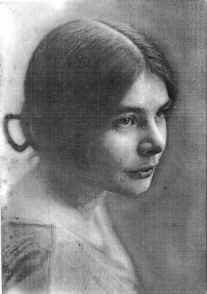
Sofia Mogilevskaya
https://upload.wikimedia.org/

Sofia Mogilevskaya, a prolific Russian author of stories for children and young readers. On April 2, we celebrated Intl Children's Book Day, so nothing better to honor Sofia Mogilevskaya.

I could not find any information about this author, only this picture and some of her children's books. So, I follow Google Doodle informations.


Google Doodle Sofia Mogilevskaya's 116th birtday

Born in Moscow on this day in 1903, Mogilevskaya was raised in a musical household. Her father was an accomplished cellist and music teacher who taught her to play piano. 

Childhood memories of him performing for Leo Tolstoy made a deep impression on her, especially when the young musician changed her focus to journalism and eventually literature. 


Malenkaja khozjajushka

Sofia Mogilevskaya

After ending her studies at the Moscow Conservatory, Mogilevskaya began contributing articles and essays to magazines, translating fairy tales, and writing fiction. Once she settled on becoming a writer, her writing habits remained a daily practice for more than 40 years. 

In 1941, her first children’s book Mark of the Country Gondelupy was published. Later, her experience working in an orphanage during World War II inspired her 1949 book House in Tsybiknur.


Maxim
Sofia Mogilevskaya
illustration: Vassily Shulzhenko

Whether she was writing a fairy tale, a historical work like her books on important figures from Russian music and theater, or educational works like Girls, This Book is for You!, Mogilevskaya’s writing always showed a deep respect for children. 


Crafting Immersive Experiences in Humanities, Social Sciences, & STEM

credits: unknown
via Digital Bodies

Education:

The discussion of new discoveries and a better understanding of the role of women in many different areas of study such as Humanities or Science, and how their ideas and findings can lead to new markets for humanities and science knowledge are important aims. 

I'm happy to know that Portugal is the European country with a greater number of women in science and research.

Constantly evolving education at all ages and levels in our ever-changing world is crucial.

Girls and women are more and more proving in different situations at school and in business that they are equal to men in intelligence and capacity.

The aim is to encourage creativity in the field of humanities, science and STEM and highlight the importance of developing innovative skills at an early age.

"Through the work of humanities scholars, we learn about the values of different cultures, about what goes into making a work of art, about how history is made. Their efforts preserve the great accomplishments of the past, help us understand the world we live in, and give us tools to imagine the future."

Stanford University


“How important it is for us to recognize and celebrate our heroes and she-roes!” 

Maya Angelou

G-Souto

04.04.2019

Copyright © 2019G-Souto'sBlog, gsouto-digitalteacher.blogspot.com®
Creative Commons License
Schools : Teaching Great Women in Humanities & Science by G-Souto is licensed under a Creative Commons Attribution-NonCommercial-NoDerivatives 4.0 International License.

Wednesday, March 8, 2017

Schools : Talking about International Women's Day : Three films on women's role !


Fable
credits:  Christian Schloe

"On International Women’s Day, let us all pledge to do everything we can to overcome entrenched prejudice, support engagement and activism, and promote gender equality and women’s empowerment."

 UN Secretary-General, António Guterres

To honour the achievements and contributions of women in the society, people across the globe celebrate International Women's Day on March 8 every year. 

It has been observed since the early 1900s and is now recognised each year on March 8. Is is not affiliated with any one group, but brings together governments, women's organisations, corporations and charities. 

The original aim – to achieve full gender equality for women the world – has still not been realised. A gender pay gap persists across the globe and women are still not present in equal numbers in business or politics. Figures show that globally, women’s education, health and violence towards women is still worse than that of men.
According to the World Economic Forum, the gender gap won't close until 2186.
  • Theme 2017
The theme of the Women's Day 2017 is: "Women in the Changing World of Work: Planet 50-50 by 2030.


The idea of this theme is to consider how to accelerate the 2030 Agenda, building momentum for the effective implementation of the new Sustainable Development Goals, especially goal number 5: Achieve gender equality and empower all women and girls; and number 4: Ensure inclusive and quality education for all and promote lifelong learning. The theme will also focus on new commitments under UN Women’s Step It Up initiative, and other existing commitments on gender equality, women’s empowerment and women’s human rights.


  • Google Doodle:


This International Women's Day, Google Doodle chosen to look to the past to celebrate some of the female pioneers who paved the way to where we are today.


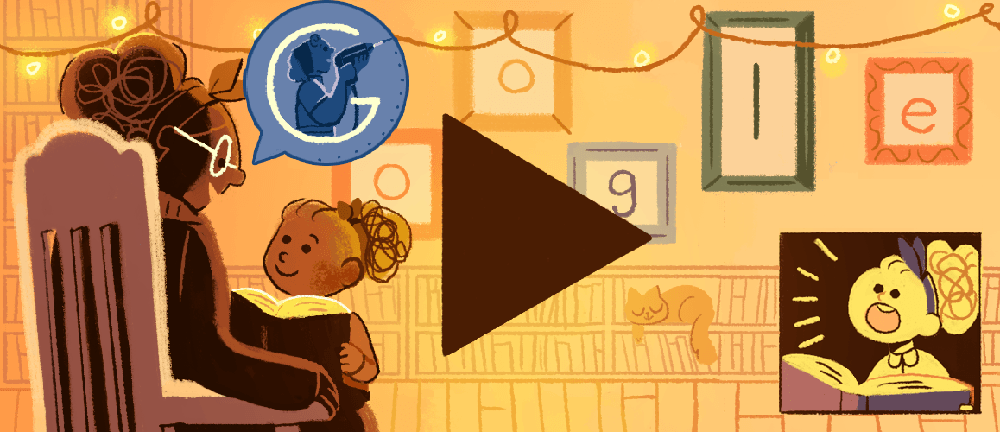
Google Doodle Women's Day 2017 slideshow


Google slideshow Doodle features a little girl whose grandmother tells her the best bedtime story ever: the tale of her favorite historical heroine. The little girl then visits 13 remarkable women in her imagination, taking us along on a journey that spans centuries and circles the globe. 
Among these 13 women, we can find Sally Ride, American astronaut & the first woman in space; Ada Lovelace, English mathematician, writer, & the world’s first computer programmer; Suzanne Lenglen, French tennis champion who popularized the sport.


Films to explore at school: Women's role

  • 20th Century Women


20th Century Women 
Mike Mills, 2016

As educational resources to include into school curriculum on this Women's Day, I would like to propose three films: 

20th Century Women. Director Mike Mills tells the story of his own mother, and other two young women from his childood; 

Suffragette. Director Sarah Gravon tells the foot soldiers of the early feminist movement, women who were forced underground to pursue a dangerous game of cat and mouse with an increasingly brutal State. 

Hidden Figures. Director Theodore Melfi, the story of a team of female African-American mathematicians who served a vital role in NASA during the early years of the U.S. space program.


Mike Mills’ autobiographical 20th Century Women is not just about the three women of his title, his own 55-year-old single mother Dorothea (Annette Bening) and the two younger women, Abbie and Julie (Greta Gerwig and Elle Fanning). 

Dorothea realizes his young son Jamie (Lucas Jade Zuman), now 15, needs more than just a mother to raise him, so she recruits Abbey and Julie to help out.


20th Century Women 
Mike Mills, 2016

Dorothea, his mother, is a free-thinking and independent woman, devoted to raising her son Jamie as a moral individual, but strangely determined not to take action against her unhappiness. Dorothea takes in boarders in her enormous southern California house, which is under continuous renovation, a girl and a man. Here the three women:

"Dorothea, born in 1924, Depression-raised, trained as a pilot in the second world war, the first draughtswoman in her architecture practice, but, sadly, too early a pioneer to make much difference."


20th Century Women 
Mike Mills, 2016

Abbey, a would-be photographer with a New Wave haircut, and Julie Jamie’s friend since kindergarten, halfway between worldly and bewildered, and the object of Jamie’s affection.

20th Century Women about  raising a kid by a single mother in the 70's. Could a single woman be a good mother when she has experienced the madness of the 60s and 70s? Does too much freedom kill freedom? 

Dorothea is concerned that she is no longer able to connect with her son. She asks Julie and Abbie to help raise him, stating that he will listen to them since he already has a good relationship with both.

By soliciting the help of two young women, a punk artist and a lovely neighbor, Dorothea hopes to offer Jamie the best education possible. Jamie later learns about his mother's plan and is embarrassed. 

  • Sufragette


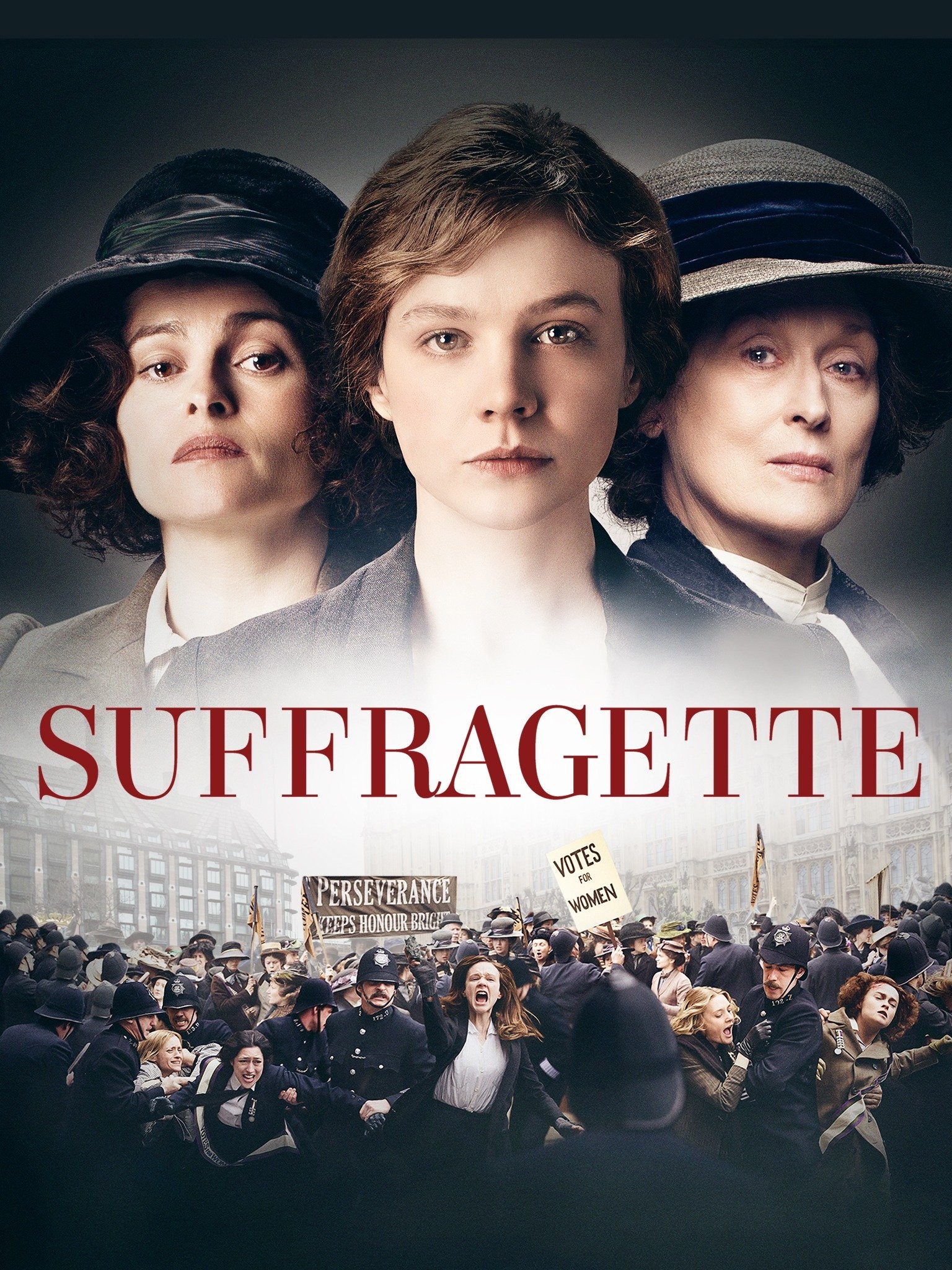
Suffragette
Sarah Gravon, 2015


Sarah Gravon's Suffragette, a historic film about British historical period drama.  Women's suffrage in the United Kingdom, directed by Sarah Gavron and written by Abi Morgan, and stars Carey Mulligan, Helena Bonham Carter, Brendan Gleeson, Anne-Marie Duff, Ben Whishaw, and Meryl Streep.


Suffragette
Sarah Gravon, 2015

History:

In early 20th century Britain, the cause of female suffrage was usually ignored by the press and dismissed by politicians. To gain support for their right to vote, suffragettes turned away from peaceful protest and embraced militant tactics that grew to include window breaking and arson. Their fight for equality, which escalated in violence in 1912 and 1913, is depicted in this film Suffragette. 

The movie shows historical figures and fictional characters interacting as they struggle to get women the vote. 

Six real-life suffragettes (plus one man) who either appear in Suffragette or whose stories are reflected in the film are:


British suffragette Emmeline Pankhurst, 1911
(1858 - 1928)
credits: Topical Agency/ Getty Images

Hannah Mitchell (fictional character Maud Watts); Emmeline Pankhurst (real-life character of Emmeline Pankhurst; Edith Ellyn and her husband ( in real-life couple who both supported female suffrage Barbara Ayrton Gould and her husband Gerald Gould); Edith Garrud; Emily Wilding Davison (real-life figure). 


Emily Davison/Natalie Press

Davison's death was a watershed moment for suffragettes. Their movement received worldwide attention and 6,000 women turned out for the funeral  - Suffragette even incorporates archival footage of women trailing behind Davison's coffin. Women and men were finally granted equal voting rights in the United Kingdom in 1928.


Suffragette 
Sarah Gavron, 2015

“When we spoke to the academics that consulted on the film they said they weren’t surprised that today it’s still hard to get women’s history taken seriously. It took a long time to get on the school curriculum ­– I wasn’t taught anything about it and later read a few lines at the bottom of a history book. I think it’s partly a symptom of inequality and the fact that these stories have been written out of our history.”

Sarah Gravon


“We’re half the human race,” Maud tells the inspector tasked with quelling the protest. “You can’t stop us all.”


  • Hidden Figures:


Hidden Figures
Theodore Melfi, 2016


Hidden Figures, the story of a team of three African-American women mathematicians and scientists, Katherine Johnson, Dorothy Vaughan  and Mary Jackson who served a vital role in NASA during the early years of the US space program. 


When asked to name her greatest contribution to space exploration, Katherine Johnson talked about the calculations that helped synch Project Apollo’s Lunar Lander with the moon-orbiting Command and Service Module. She also worked on the Space Shuttle and the Earth Resources Satellite, and authored or coauthored 26 research reports.

NASA

  • Education:
"The 21st century must be the century of women’s equality."

 UN Secretary-General, António Guterres

Three different films but very inspirational, based on real facts, real women,  pioneers women. 


Suffragette 
Sarah Gavron, 2015
Suffragette a drama about the suffragette movement - inequality voting rights for women in the UK. 


20th Century Women about family and identity in US in the 70's. 


Hidden Figures
Theodore Melfi, 2016

Hidden Figures, based on the untold true story.

Three touching films based on pioneers women in different areas. I loved the three movies. Absorbing true stories of great women, their courageous, warmth and candor.

Three films we can easily include into school curriculum on Women's Day. 

Suffragette a group of women who fight for equal voting rights. The film does an important job in reminding us of this: a drama about human rights so recently and dearly won.


Suffragette 
Sarah Gavron, 2015

Suffragette is a reminder to girls who are casual about democratic gender equality that vote for women were not something that naturally evolved due to the ruling class’s innate decency. They had to be fought for.

20th Century Women, Dorothea the first woman draughtsman in her architecture practice, too early a pioneer perhaps, free-thinking and independent woman, a single mother trying raise her son alone and helped by two independent women


20th Century Women 
Mike Mills, 2016

20th Century Women about  raising a kid by a single mother in the 70's. Could a single woman be a good mother when she has experienced the madness of the 60s and 70s? Does too much freedom kill freedom? 

Dorothea is concerned that she is no longer able to connect with her son. She asks Julie and Abbie to help raise him, stating that he will listen to them since he already has a good relationship with both.

By soliciting the help of two young women, a punk artist and a lovely neighbor, Dorothea hopes to offer Jamie the best education possible. Jamie later learns about his mother's plan and is embarrassed. 


Hidden Figures
Theodore Melfi, 2016

Hidden Figures. The story of a team of African-American women mathematicians and scientists, Katherine Johnson, Dorothy Vaughan  and Mary Jackson who served a vital role in NASA during the early years of the US space program. 


Hidden Figures
Theodore Melfi, 2016

Teachers will explore the three films on their own way, by preparing thematic activities previously. 

Level: Junior High School: +12 years-old.

Curriculum: Cross-curricular


credits: UNESCO


Resources:


Throughout history, women have made extraordinary contributions to their societies. Some are well known, some less so, but all have been trail blazers. 

The discussion of new discoveries and a better understanding of the role of women in many different areas of study such as humanities or science, and how these ideas and findings can lead to new markets for humanities and science knowledge are important aims. 

Constantly evolving education at all ages and levels in our ever-changing world is crucial. 


"UNESCO statistics have shown that women are currently four times less likely than men to master digital skills, even though these skills will be at the centre of future societies."

Audrey Azoulay, Director-General UNESCO

"Equality also lies in ridding the media and collective imagination of prejudice by highlighting the women scientists, artists and politicians who are moving."

UNESCO Former Di
rector-General, Irina Bokova


G-Souto

08.03.2017
update: 08.03.2020
Copyright © 2020G-Souto'sBlog, gsouto-digitalteacher.blogspot.com®
Creative Commons License
Schools : Talking about International Women's Day : resources by G-Souto is licensed under a Creative Commons Attribution-NonCommercial-NoDerivatives 4.0 International License.