credits: Steve Helber/ AP
Fred Rogers, NYT
Schools across the world are considering to help students understand the tragic events in Charlottesville, U.S. this weekend, home of the University of Virginia.
How to find the right words when overcome with sorrow our own emotion, and every word that comes to our mind can frighten the youngest students: violent demonstrations of racism, dead, mourning, fear?
Schools are so important to spread those values. It's a hard work but teachers do it.

In 2014, Charlottesville was named by the National Bureau of Economic Research as America’s happiest city.
Students, watched television. Given the language and images they heard and saw in news and social networks we must face our students and get ready for their questions about racism.
Students, watched television. Given the language and images they heard and saw in news and social networks we must face our students and get ready for their questions about racism.
“We value diversity, equality, and love in this establishment and in our community,”
a paper sign read, The Atlantic
Diversity! Some of your students are expressing their feelings on such tragic events that are every where on the press, on television, social networks.
Young-adults as social media users are sharing touching tributes to the victims of the killing perhaps.
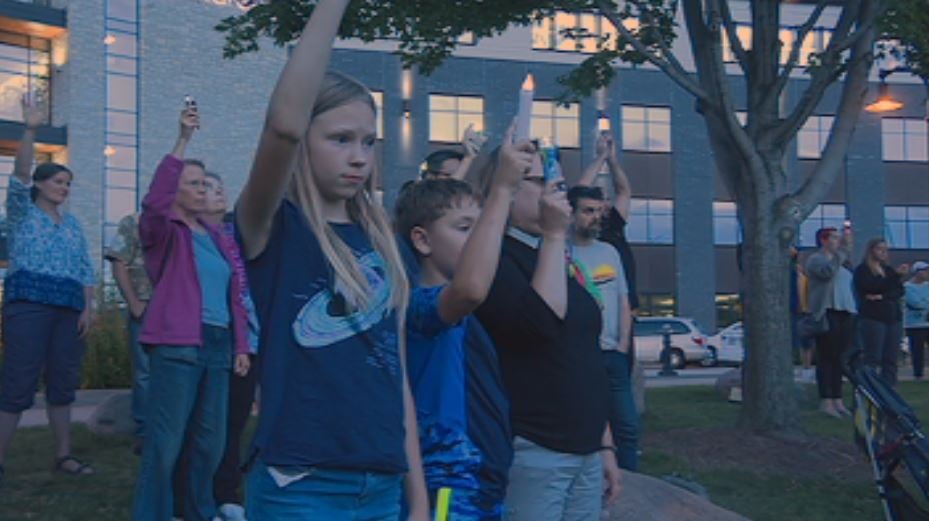
Eau Claire community members shows solidarity with the victims of the tragedy in Charlottesville, Virginia
Education:
Schools and teachers will be prepared to face students. And it’s just as clear that intimidation and violence will be condamned and combated for whatever reason they’re committed, especially if their goal is to undermine freedom and liberty of open societies.
How to talk about at school? Remember Paris, more than twice, Brussels, Nice. Alepo, Berlin, Manchester.
"In talking with them, but also to defend freedom of expression and respect of life."
Back on their understanding is important because it has to be spoken, not to leave the child with what it will come up with some information that they had to correct what kids had not quite understand and answer questions.
"We tend to want to protect the children in our sorrow concerning the tragedy, but in toddlers 3 or 4 years, it can lead them to imagine terrible things, says the analyst.
It does not mean give details. This is the time to reaffirm that nothing can replace the word.

Books. Books can help after a tragedy. Children’s books about people, including kids, who helped in the fight against Nazis and against racism may be a good choice
Given the images and language many children heard and saw in news reports about the violent protests in Charlottesville, Virginia, over the last weekend, children’s books about people - including kids - who helped in the fight against Nazis and against racism now may prove similarly inspiring.
Many teachers think books useful as they struggle to present the upsetting news of tragedies to their students.
Given the images and language many children heard and saw in news reports about the violent protests in Charlottesville, Virginia, over the last weekend, children’s books about people - including kids - who helped in the fight against Nazis and against racism now may prove similarly inspiring.
Many teachers think books useful as they struggle to present the upsetting news of tragedies to their students.

When Hitler Stole Pink Rabbit
Judith Kerr, auhor & illustrator
“The most life-enhancing book you could ever wish to read.”
Michael Morpurgo
Based on the gripping real-life story of Judith Kerr, auhor and illustrator, this poignant, suspenseful middle-grade novel has been a favorite for over forty years.
"Anna is not sure who Hitler is, but she sees his face on posters all over Berlin. Then one morning, Anna and her brother awake to find her father gone! Her mother explains that their father has had to leave and soon they will secretly join him. Anna just doesn't understand. Why do their parents keep insisting that Germany is no longer safe for Jews like them? Because of Hitler, Anna must leave everything behind. "
"When Hitler Stole Pink Rabbit is no ordinary second world war story. Instead of making you cry, it will make you howl with laughter. No matter what is happening in this story, it will keep you entertained."
The story is told through a series of very funny events, whether it's escaping on the midnight train to Switzerland, or learning French from scratch.
When Hitler Stole Pink Rabbit by Judith Kerr is an internationally acclaimed story of one Jewish family’s flight from Hitler’s Germany has become a much-loved classic, and has been in print since its debut 45 years ago. Perfect for Holocaust Remembrance Month.
And very useful on the tragic events in Charlottesville where Neo-Nazis is a word students heard on television and read on the press.
Invite the students to watch the video (above) : Judith Kerr discusses her drawing life, the genesis of The Tiger Who Came to Tea and the Mog stories, the anniversary of her childhood memoir, When Hitler Stole Pink Rabbit - and her last book, a "jolly" take on widowhood.
Ages: 7-12 years (Middle grade)
Based on the gripping real-life story of Judith Kerr, auhor and illustrator, this poignant, suspenseful middle-grade novel has been a favorite for over forty years.
"Anna is not sure who Hitler is, but she sees his face on posters all over Berlin. Then one morning, Anna and her brother awake to find her father gone! Her mother explains that their father has had to leave and soon they will secretly join him. Anna just doesn't understand. Why do their parents keep insisting that Germany is no longer safe for Jews like them? Because of Hitler, Anna must leave everything behind. "
"When Hitler Stole Pink Rabbit is no ordinary second world war story. Instead of making you cry, it will make you howl with laughter. No matter what is happening in this story, it will keep you entertained."
The story is told through a series of very funny events, whether it's escaping on the midnight train to Switzerland, or learning French from scratch.
When Hitler Stole Pink Rabbit by Judith Kerr is an internationally acclaimed story of one Jewish family’s flight from Hitler’s Germany has become a much-loved classic, and has been in print since its debut 45 years ago. Perfect for Holocaust Remembrance Month.
And very useful on the tragic events in Charlottesville where Neo-Nazis is a word students heard on television and read on the press.
Invite the students to watch the video (above) : Judith Kerr discusses her drawing life, the genesis of The Tiger Who Came to Tea and the Mog stories, the anniversary of her childhood memoir, When Hitler Stole Pink Rabbit - and her last book, a "jolly" take on widowhood.
Ages: 7-12 years (Middle grade)

A lyrical and timely story about a little girl who learns the power of kindness, bravery, and friendship in the face of uncertainty.
When the news reports are flooded with tales of hatred and fear, a girl asks her papa what she can do to make the world a better place.

“Come with me,” he says. Hand-in-hand, they walk to the subway, tipping their hats to those they meet. The next day, the girl asks her mama what she can do—her mama says, “Come with me,” and together they set out for the grocery, because one person doesn’t represent an entire race or the people of a land. After dinner that night, the little girl asks if she can do something of her own—walk the dog . . . and her parents let her go. “Come with me,” the girl tells the boy across the hall. Walking together, one step at a time, the girl and the boy begin to see that as small and insignificant as their part may seem, it matters to the world."
This lovely picture book, set to be published next 5 September is available for pre-order. It offers smaller children a gentle, encouraging, age-appropriate response to disturbing news reports. A little girl is saddened by something she sees on the news, but the details are, wisely, never specified
Ages: 5-8 years (Primary grades; Middle grade).
Picture book, 44 p.p. G.P. Putnam’s Sons Books for Young Readers.

Stella by Starlight

Stella by Starlight
Sharon Draper
Set in the 1930s American South, Stella lives in the segregated South, in Bumblebee, North Carolina, to be exact about it. Some stores she can go into. Some stores she can’t. Some folks are right pleasant. Others are a lot less so. To Stella, it sort of evens out, and heck, the Klan hasn’t bothered them for years.
But one late night, later than she should ever be up, much less wandering around outside, Stella and her little brother see something they’re never supposed to see, something that is the first flicker of change to come, unwelcome change by any stretch of the imagination. As Stella’s community -her world - is upended, she decides to fight fire with fire. And she learns that ashes don’t necessarily signify an end.
“It’s not single acts of heroism but the solidarity of the community, people’s ability to come together both in times of need and to celebrate occasions for joy, that is most moving and inspiring,”
Holly Goldberg Sloan, reviewer NYT
Ages: 9-13 years (Middle grade)
320 pp. Atheneum Books.
Ages: 9-13 years (Middle grade)
320 pp. Atheneum Books.

The Boy in the Striped Pyjamas
John Boyne
The Boy in the Stripead Pyjamas is a novel of a nine year-old Bruno who knows nothing of the Final Solution or the Holocaust. He is oblivious to the appalling cruelties being inflicted on the people of Europe by his country.
All he knows is that he has been moved from a comfortable home in Berlin to a house in a desolate area where there is nothing to do and no one to play with.
Until he meets Shmuel, a boy who lives a strange parallel existence on the other side of the adjoining wire fence and who, like the other people there, wears a uniform of striped pyjamas.
Students love so much read this book! They could understand how friendship is strong and cross fences and intolerance.
A film based on this book (2008) can be displayed in the classroom before or after reading the book. It's up to you as teachers.
Students will be invited to read some pages online. And listen some lines here to improve English pronunciation (Foreign language curriculum).
The Boy in the Stripead Pyjamas won several important Awards.
"It's a novel that inspires thought and difference of opinion, it's a book that deserves to be read, to be discussed..."
Ages: 8-14 years (Middle grades).

The Whispering Town
Jennifer Elvgren.
This picture book is a dramatic story of neighbors in a small Danish fishing village who, during the Holocaust, shelter a Jewish family waiting to be ferried to safety in Sweden. It is 1943 in Nazi-occupied Denmark. Anett and her parents are hiding a Jewish woman and her son, Carl, in their cellar until a fishing boat can take them across the sound to neutral Sweden.
The soldiers patrolling their street are growing superstitious, so Carl and his mama must make their way to the harbor despite a cloudy sky with no moon to guide them. Worried about their safety, Anett devises a clever and unusual plan for their safe passage to the harbor.
Based on a true story. A Finalist for the 2014 National Jewish Book Award. A 2015 Sydney Taylor Honor Book for Older Readers!
Ages: 5-8 years (Primary grades; Middle grade)
32pp. Kar-Ben Publishing.

March Trilogy
John Lewis, Andrew Aydin & Nate Powell
graphic novel
This triple-bestseller status is only the latest in a string of recent honors for March, the three-volume graphic novel memoir which brings the history of the civil rights movement to urgent new life through the eyes of John Lewis.
"In this celebrated three-part graphic memoir John Lewis, the Georgia congressman and civil rights icon, worked with the writer Andrew Aydin and the artist Nate Powell to recount his coming-of-age during the civil rights movement of the 1960s."
In May, the nation’s largest public school system, New York City Schools, announced the addition of March to their official “Passport to Social Studies” curriculum.

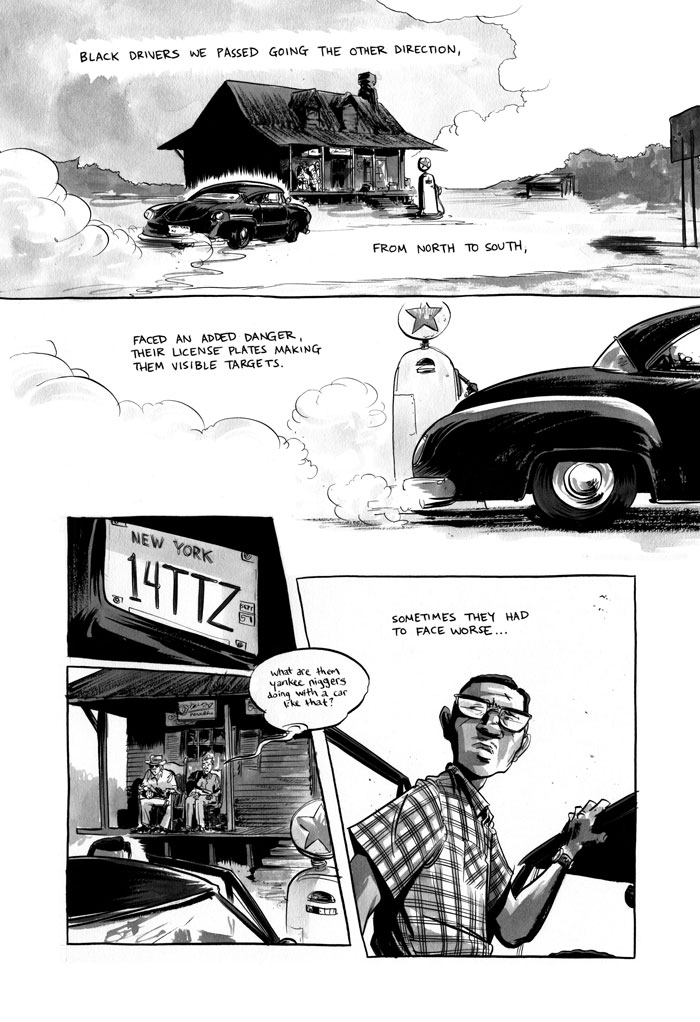
March trilogy, book I
John Lewis, Andrew Aydin & Nate Powell
graphic novel
A few weeks ago at Comic-Con, the authors accepted an Eisner Award (often called “the Oscars of comics”) Best Reality-Based Work and led a commemorative "children’s march" joined by hundreds of students and readers, with Congressman Lewis in 'cosplay' as his younger self complete with trench coat and backpack.
"March can help a new generation understand that the arc of the moral universe doesn't just bend toward justice; humans must struggle to bend it. To read Lewis's graphic memoir... is to be reminded that what so many have taken for granted in American life today was hard fought and recently won. March calls on all of us to keep our eyes on the prize."
Drew Gilpin Faust, President of Harvard University
Ages: Young adult; ages 10 and up; Middle grade and more.
Illustrated. 560 pp. Top Shelf Productions.

tribute to the victims
credits: Tasos Katopodis/EPA/REX/Shutterstock
Some thoughts:
It's possible that kids and young people will have a partial or distorted view of the news reports.
Teachers and parents, just talk and share thoughts with your students or kids, no matter their age. Because they have a lot of questions, not just today, tomorrow and in the coming days.
The important is to start with students words, to follow the thinking of the child or young-adult and not to impose our adult words.
More than ever, we must have the right word to express our emotion, our tears, our sorrow, but also our need for gathering and unity.
The oldest in high junior schools will be happy to feel part of the adult community and stay with us to demonstrations, to think in their head and in their heart to those who are not there.
In the coming days, the schools will serve as a sounding board for what is said in the family.
In the coming days, the schools will serve as a sounding board for what is said in the family.
It is a debate that should have place in the family. And not only when freedom is reached. It is not enough discussion of these topics.
Freedom and respect starts at home and continues at school. Parents and schools/ teachers have their own rules that must be respected for both sides parents/ teachers vs. kids/ students. Values start in the family and continues in the school.
"In talking with them, but also to defend freedom of expression and respect of life."
Back on their understanding is important because it has to be spoken, not to leave the child with what it will come up with some information that they had to correct what kids had not quite understand and answer questions.
Nelson Mandela
G-Souto
16.08.2017
Copyright © 2017G-Souto'sBlog, gsouto-digitalteacher.blogspot.com®