Showing posts with label IT and curricula. Show all posts

Friday, March 28, 2014

Education : Earth Hour 2014


This Saturday night, March 29 2014 at 8:30PM (local time), hundreds of millions of people will turn their lights off in a symbolic gesture for the planet following WWF's Earth Hour. 

Lights in homes, buildings and famous landmarks will be turned off for an hour tomorrow to mark WWF's annual event.

We will use our power wih Earth Hour Blue. Of course I could not forget this important call to support such an important world project. Neither our students.

They are working some while ago to join this wonderful commitment to save the planet.

With just one day to go until Earth Hour - New Zealand is the first country to switch off the lights - a record of 158 countries and 7 000 cities and towns will be participating in the world's largest event for the planet. 

In Portugal, 91 cities and towns will be participating in this wonderful event.

Now in its eighth year Earth Hour, organised by WWF, has evolved into the largest environment grassroots movement connecting hundred of millions of people across all seven continents.

Students were excited since the first year we participated in Earth Hour 2008. Sifter that, all every Earth Hour have been celebrated in school, Languages curricula until last year. 


Students like to commit on environmental causes. A lot! They dare and they do! I wrote about Earth Hour 2011 ; Talking about Earth Hour with students ; And today is Earth Hour 2013.

Students are preparing some posts on their blogs. They are amazing! They continue their environmental blogs even they left school. We only met on the internet now.

All of you are prepared, of course, activities and projects finished to celebrate tomorrow, right?

I am sure that you prepared your lessons carefully and your students are well motivated to dare to save the Planet, tomorrow night at 8:30-9:30PM (local time).

Don't forget the interactive map to discover events all around the world. Amazing!


Turn it Off by Jason Bruges

Other ideas? 

Looking at the stars, hopefully easier with Earth Hour's temporary drop in light pollution - going for a run, having a candlelit dinner, or a picnic in the park of your city or town, heading to the high ground in the city to watch the lights, getting a board game out (Scrabble on a table still beats the iPhone version), for example.

In Portugal, a big yoga lesson will take place in 10 cities at 8:30 (one hour).


See ! Impossible to resist to Earth Hour Ambassador Spider Man. Students are huge fans of comic novel and of course movies based on it. 

They loved the new saga the Amazing Spider Man featured by Andy Garfield, the new Ambassador. They can't wait for the Amazing Sider Man 2.


Super Hero? 

Earth Hour propose the Instragam Challenge. Students can join super hero ambassador Spider Man and share some photos about how they are super heroes for the Planet by publishing the photos on Instagram using #EarthHour #SpiderMan and #YourPower.

The best photos have prizes. For more information read Join the Instagram Challenge.

Level : Middle and Secondary Education.


Only 17 hours and some minutes in New Zealand, one day and two hours in Portugal to celebrated Earth Hour. 

Follow Facebook or Twitter.

That's the limit of my imagination. What are yours? Probably better ideas to do in the dark this Saturday?

One bright suggestion? We will see us under the starts?

G-Souto 

28.03.2014

Copyright © 2014G-Souto'sBlog, gsouto-digitalteacher.blogspot.com®

Creative Commons License
Education: Earth Hour 2014 by G-Souto is licensed under a Creative Commons Attribution-NonCommercial-NoDerivatives 4.0 International License.

Monday, March 4, 2013

February rundown of the most-read posts


Photo: Steven McCaig | Getty Images

"Once you believe something's real, you transfer everything that you feel onto it."

Robert Legato 

This rundown of the most-read posts of February is shorter because I have been very busy. Blogging is a pleasure not a work. So, first the work and then the pleasure.

So, I really thank my readers who continue to follow my posts and reading the last ones.

The readers, educators no doubt!, of my blog know that I love to share some pedagogical proposals as possible and activities to include into in their lessons.

The classroom must be an open window to the world. Students must feel free to talk and share ideas about all the subjects they care about, in and around every curriculum.

When I find some interesting ideas, I love to transform them in pedagogical resources considering how they add to my thinking and practice.

Paperman is the most read post of the last month. The innovative animated short Paperman (Disney) from first-time director John Kahrs is just stunning. 


Paperman 
|John Kahrs
https://www.disneyanimation.com/shorts/paperman/


My students love to have a different lesson on Valentine's Day, February 14th! So, I always prepare something new to my class on this day.

When I published it I wrote about Oscar nominees. Now, let's talk about Oscar winners! 

And Paperman is the winner of the 10 animated shorts being considered for an Oscar last February 24th at the Academy Awards. 

A little urban fairy tale. Charming! I love the touch of red in this otherwise gray world. Meg lipstick. Of course!


Paperman (short)
Disney


Is It Destiny? 

Paperman! is a captivating short animated film about destiny and the power of second chances. Do you believe in destiny? I do. Sometimes...

Education:

Passion is essential in school world. We must keep our students passionate in our lessons.

Everyday we must introduce something captivating in our lessons, even we are teaching important skills in serious curriculum. Passion is what will make our students enter in the classroom waiting for something special in the middle of a lesson everyday. 

They will really realize that teachers love what they do, that we think about them when we are preparing a lesson for the next day. 

Keep your students passionate in your lessons.

Activities:

Start the lesson asking them to use their smartphones and share Paperman's link. Each student will watch the entire six-and-a-half-minute video just for fun. 

Surprise is essential to keep students wired!

Keep an eye on their reactions, began a word wall. Word walls offer readily available support to readers and writers, and let you teach skills in a meaningful context. 


RoboPary 2013

Mais uma vez o mote está dado para atrair centenas de jovens das escolas portuguesas. 

A 7ª edição do RoboParty que vai decorrer de 14 a 16 Março 2013 já excedeu as expectiativas dos organizadores. Cem equipas inscritas e umas tantas em lista de espera, embora o prazo de inscrições já tenha encerrado.

Roboparty consiste num evento pedagógico que reúne equipas de 4 pessoas (três jovens e um adulto) durante 3 dias e duas noites. 
 
Ensina a construir robôs móveis autónomos, de uma forma simples, divertida e com acompanhamento por pessoas qualificadas.


RoboParty 2012
https://www.roboparty.org/

The RoboParty 2013 as RoboParty 2012 aims to immerse students from the 1st grade to college studies, as well among the general public in the exciting world of Science and Technology (Electronics, Robot Programming, and Mechanics).

Find out in 2 minutes what is RoboParty in this informative leaflet.


Education:

"Use the motivational effects of robotics to excite students about science and technology." 
Robotics has aroused great curiosity among young people. There are more groups and robotics clubs throughout Portugal concentrated in universities, secondary and vocational schools.

The result of events like this it is a fun, exciting and stimulating environment in which students discover the important connection between classroom lessons and real-world applications.


Another awesome interactive Google doodle that we can include into in our lessons! 

February 19th, Google interactive Doodle celebrated the 540th anniversary of Nicolaus Copernicus, mathematician and astronomer. Copernicus's work helped popularize the idea that Earth revolves around the Sun, instead of the other way round, as was commonly believed at the time.


Nicolas Copernicus
Credits: Wellcome Library, London 


Education:

It is not the first time that I include Doodles of the day in school curricula. It's a wonderful motivation and it can surprise your students. 

Well, there are a lot of funny and engaging activities about Sciences and Humanities that we can create and share with our students, on informal learning or hybrid learning (online learning) and face-to-face teaching with BYOD (bring your own device). 


International Mother Language Day

"In this age of new technologies, books remain precious instruments, easy to handle, sturdy and practical for sharing knowledge, mutual understanding and opening the world to all. Books are the pillars of knowledge societies and essential for promoting freedom of expression and education for all."

Irina Bokova, UNESCO Director General 

This year, the theme of the International Mother Language Day was and still is :

 "Books for Mother tongue education”.

IMLD 2013 aims to remind key stakeholders in Education that in order to support Mother language education, it is essential to support the production of books in local languages.
Mother language education in its broader sense refers to the use of mother tongues in the home environment and in schools.


©Google / ©UNESCO
Interactive Atlas of the World’s Languages in Danger


"To preserve a language, people should nourish that language, use it and produce materials in that language in both soft and hard copies. 

Technology can’t be blamed because it’s a tool and that’s how people use it. Once we start using the language then it gets passed on to the next generation. 

So, I share with you something special: In Portugal, there is a national dialect -Mirandês - spoken by 15 000 people in a small area, in the northeastern of Portugal, along the frontier with Spain, covering the municipality of Miranda do Douro and a part of the municipality of Vimioso.  


L Princepico (mother language)
Antoine de St-Exupéry

Le Petit Prince has an edition in Mirandês since April 2011. Its aim is to disseminate the Mirandese language lack written form. 

Mirandese language:

The Mirandese language is been used for years as a language passed on to the next generations by speakers only. Since 1986–87 it has been taught to students between the ages of 10 and 11, and so is recovering.

Believe me! You will have a motivated class that will learn literature or science. To us, "the attitude" of changing methods, and the creative mind to facilitate different learning activities at our young students!

Schools are very important environments of teaching and learning. They have an important role aiming to renew and reinvigorate global knowledge as they have the mission to educate children and adolescents as future citizens.

These resources are educational challenges to promote some good values in the new generations that will be vigilant and helping to find path towards precious solutions to society and planet. Humanities and Sciences are the basic curricula.

I really hope that you will enjoy every pedagogical proposal written in February and you will discover some new pedagogical ideas to include into your lessons.

I thank you very much to all the colleagues from around the world that kindly read my blog but are shy (?) to become followers.


Obstacles don’t have to stop you. If you run into a wall, don’t turn around and give up. Figure out how to climb it, go through it, or work around it.

Michael Jordan


G-Souto

04.03.2013
Copyright © 2013G-Souto'sBlog, gsouto-digitalteacher.blogspot.com®

Licença Creative Commons
February rundown of the most-read posts by by G-Souto is licensed under a Creative Commons Attribution-NonCommercial-NoDerivatives 4.0 International License.

Tuesday, September 25, 2012

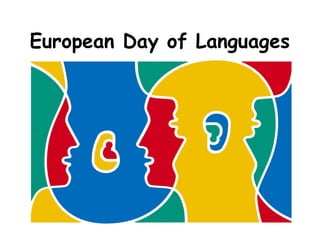
Let's celebrate the European Day of Languages


European Day of languages


"Europe is rich in languages – there are over 200 European languages in daily use and many other languages are spoken by citizens whose family origins are in other continents. 

Respect for cultural and linguistic diversity and support for language learning are at the core of the work of the Council of Europe."


Snežana Samardžić-Marković
Director General of Democracy of the Council of Europe


At the initiative of the Council of Europe, Strasbourg, the European Day of Languages has been celebrated every year since 2001 on 26 September.


Following the success of the Year, the Council of Europe declared a European Day of Languages  to be celebrated on 26th of September each year. 


  • The general objectives of the "European Day of Languages" are:


  1. Alerting the public to the importance of language learning and diversifying the range of languages learnt in order to increase plurilingualism and intercultural understanding;
  2. Promoting the rich linguistic and cultural diversity of Europe, which must be preserved and fostered;
  3. Encouraging lifelong language learning in and out of school, whether for study purposes, for professional needs, for purposes of mobility or for pleasure and exchanges.


"Linguistic  diversity is an important resource to be recognised, valued, used and cherished. Language learning brings benefits to all ages – no one is too old to learn a new language and  enjoy the opportunities it opens up. Learning other peoples' languages is another way of helping us to understand each other better and overcome our cultural differences."

Snežana Samardžić-Marković
Director General of Democracy of the Council of Europe


Education:

"Plurilingualism is much more the normal human condition than monolingualism. There are millions of people who think they know no language other than their mother tongue; however many of them know some level of another language. And yet the opportunities to learn a new language are today greater than ever."

On the occasion of the European Day of Languages, a range of events are organized across Europe. 

Activities for and with children in schools, television and radio programmes, language classes and conferences. 

In order to learn more about language diversity students can take part in different activities proposed by their teachers or following a school project. 

Of course, it is important that you include ICT & social media into your lessons, such as:


  • Facebook,
  • Twitter, 
  • Instagram, 
  • YouTube.


In the classroom - Some Activities:


  • First of all, let the students discover some Language facts as a motivation for EDL 2012;
  • Games: students can find some games on Kid's Corner to play and learn  about EDL;
  • Traditions: invite students todo a research about European traditions and share national traditions between different European schools;
  • Music: organize a musical event to promote Languages curriculum (mother language, foreign languages) as a cross-curricular activity and share such performances with other students via EDL website;
  • Quizzes: motivate the students to create their own quizzes by watching some here;

  • Movies: showing movies in different languages and promoting some activities about the language(s) of the movie(s);

  • Language café or breakfast in school canteen serving specialties from a range of countries, inviting colleagues and teachers;
  • Blogs: introducing social media in Languages you can invite students to start a blog about European Languages;*
  • Intercultural exchanges: students love exchange projects, contact with other students, discover their interests, learn foreign languages.*


* In French and Portuguese curriculum, my students had good exchanges with students from several European schools from Austria, Romania, Spain, Italy, Switzerland (by email or/and by letters), and a school exchange project with Holland. Read some impressions about this last one.

* Blogs are an interesting activity to include IT into Languages curriculum (mother language or/and foreign languages)

In 2005, a group of students aged 10-13 started a blog as an activity for the European Day of Languages.

Dia Europeu das Línguas 2005 was the first project IT & Languages in secondary education.

By groups, they chose a country and elaborated a post where it should appear  the word "Hello" (translated), the flag and a tradition. You can watch here for example, but feel free to watch other ten countries in different posts.

Among the students, there was some students with special needs, and they really were well integrated in the activities.

In 2006, 2007, different students continued the project. In 2008, we celebrated The International Year of Languages

Students like to communicate and interact with other students from European schools and countries, So, they can get a taster of the various languages of Europe. 


  • How to participate:

There are a vast number of ways in which you can celebrate the European Day of Languages depending on the level you teach, the time and means you have available.

Read more here


  • How to promote:

Your school wants to promote the events of your students? Right! Fortunately there's plenty you can do to publicize your initiative. Let's give it a start here


Materials:

Ask your National Relay for posters, logo, stickers, lanyards here


National Relays:

National authorities and the various partners are given a free hand to organize activities. 

To coordinate the activities organised at national level, the Council of Europe asks participating countries to nominate National Relay Persons for the EDL. 

The function of a Relay is to act as a multiplier for organizations, schools and association.

Please find you National Relay here


  • Some important links for Teachers for EDL 2012:


European Day of Languages


Council of Europe - Edication and Languages


Portail Langues | Académie de versailles (Français)

EUROCID | Centro Informação Europeia Jacques Delors | Português

"Everybody deserves the chance to benefit from the cultural and economic advantages language skills can bring. Learning languages also helps to develop tolerance and understanding between people from different linguistic and cultural backgrounds." 


G-Souto

25.09.2012

update 12.05.2026

copyright © 2012G-Souto'sBlog, gsouto-digitalteacher.blogspot.com 


Licença Creative Commons
Let's Celebrate the European Day of Languages by G-Souto is licensed under a Creative Commons Attribution-NonCommercial-NoDerivatives 4.0 International License.