Showing posts with label Nicolau Copernicus. Show all posts

Monday, March 4, 2013

February rundown of the most-read posts


Photo: Steven McCaig | Getty Images

"Once you believe something's real, you transfer everything that you feel onto it."

Robert Legato 

This rundown of the most-read posts of February is shorter because I have been very busy. Blogging is a pleasure not a work. So, first the work and then the pleasure.

So, I really thank my readers who continue to follow my posts and reading the last ones.

The readers, educators no doubt!, of my blog know that I love to share some pedagogical proposals as possible and activities to include into in their lessons.

The classroom must be an open window to the world. Students must feel free to talk and share ideas about all the subjects they care about, in and around every curriculum.

When I find some interesting ideas, I love to transform them in pedagogical resources considering how they add to my thinking and practice.

Paperman is the most read post of the last month. The innovative animated short Paperman (Disney) from first-time director John Kahrs is just stunning. 


Paperman 
|John Kahrs
https://www.disneyanimation.com/shorts/paperman/


My students love to have a different lesson on Valentine's Day, February 14th! So, I always prepare something new to my class on this day.

When I published it I wrote about Oscar nominees. Now, let's talk about Oscar winners

And Paperman is the winner of the 10 animated shorts being considered for an Oscar last February 24th at the Academy Awards

A little urban fairy tale. Charming! I love the touch of red in this otherwise gray world. Meg lipstick. Of course!


Paperman (short)
Disney


Is It Destiny? 

Paperman! is a captivating short animated film about destiny and the power of second chances. Do you believe in destiny? I do. Sometimes...

Education:

Passion is essential in school world. We must keep our students passionate in our lessons.

Everyday we must introduce something captivating in our lessons, even we are teaching important skills in serious curriculum. Passion is what will make our students enter in the classroom waiting for something special in the middle of a lesson everyday. 

They will really realize that teachers love what they do, that we think about them when we are preparing a lesson for the next day. 

Keep your students passionate in your lessons.

Activities:

Start the lesson asking them to use their smartphones and share Paperman's link. Each student will watch the entire six-and-a-half-minute video just for fun. 

Surprise is essential to keep students wired!

Keep an eye on their reactions, began a word wall. Word walls offer readily available support to readers and writers, and let you teach skills in a meaningful context. 


RoboPary 2013

Mais uma vez o mote está dado para atrair centenas de jovens das escolas portuguesas. 

A 7ª edição do RoboParty que vai decorrer de 14 a 16 Março 2013 já excedeu as expectiativas dos organizadores. Cem equipas inscritas e umas tantas em lista de espera, embora o prazo de inscrições já tenha encerrado.

Roboparty consiste num evento pedagógico que reúne equipas de 4 pessoas (três jovens e um adulto) durante 3 dias e duas noites. 
 
Ensina a construir robôs móveis autónomos, de uma forma simples, divertida e com acompanhamento por pessoas qualificadas.


RoboParty 2012
https://www.roboparty.org/

The RoboParty 2013 as RoboParty 2012 aims to immerse students from the 1st grade to college studies, as well among the general public in the exciting world of Science and Technology (Electronics, Robot Programming, and Mechanics).

Find out in 2 minutes what is RoboParty in this informative leaflet.


Education:

"Use the motivational effects of robotics to excite students about science and technology." 
Robotics has aroused great curiosity among young people. There are more groups and robotics clubs throughout Portugal concentrated in universities, secondary and vocational schools.

The result of events like this it is a fun, exciting and stimulating environment in which students discover the important connection between classroom lessons and real-world applications.


Another awesome interactive Google doodle that we can include into in our lessons! 

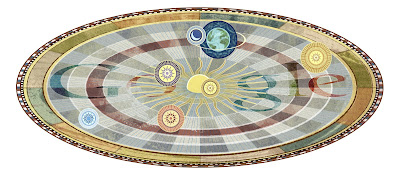
February 19th, Google interactive Doodle celebrated the 540th anniversary of Nicolaus Copernicusmathematician and astronomer. Copernicus's work helped popularize the idea that Earth revolves around the Sun, instead of the other way round, as was commonly believed at the time.


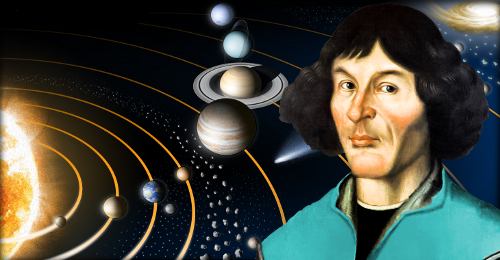
Nicolas Copernicus
Credits: Wellcome Library, London 


Education:

It is not the first time that I include Doodles of the day in school curricula. It's a wonderful motivation and it can surprise your students. 

Well, there are a lot of funny and engaging activities about Sciences and Humanities that we can create and share with our students, on informal learning or hybrid learning (online learning) and face-to-face teaching with BYOD (bring your own device). 


International Mother Language Day

"In this age of new technologies, books remain precious instruments, easy to handle, sturdy and practical for sharing knowledge, mutual understanding and opening the world to all. Books are the pillars of knowledge societies and essential for promoting freedom of expression and education for all."

Irina Bokova, UNESCO Director General 

This year, the theme of the International Mother Language Day was and still is :

 "Books for Mother tongue education”.

IMLD 2013 aims to remind key stakeholders in Education that in order to support Mother language education, it is essential to support the production of books in local languages.
Mother language education in its broader sense refers to the use of mother tongues in the home environment and in schools.


©Google / ©UNESCO
Interactive Atlas of the World’s Languages in Danger


"To preserve a language, people should nourish that language, use it and produce materials in that language in both soft and hard copies. 

Technology can’t be blamed because it’s a tool and that’s how people use it. Once we start using the language then it gets passed on to the next generation. 

So, I share with you something special: In Portugal, there is a national dialect -Mirandês - spoken by 15 000 people in a small area, in the northeastern of Portugal, along the frontier with Spain, covering the municipality of Miranda do Douro and a part of the municipality of Vimioso 


L Princepico (mother language)
Antoine de St-Exupéry

Le Petit Prince has an edition in Mirandês since April 2011. Its aim is to disseminate the Mirandese language lack written form. 

Mirandese language:

The Mirandese language is been used for years as a language passed on to the next generations by speakers only. Since 1986–87 it has been taught to students between the ages of 10 and 11, and so is recovering.

Believe me! You will have a motivated class that will learn literature or science. To us, "the attitude" of changing methods, and the creative mind to facilitate different learning activities at our young students!

Schools are very important environments of teaching and learning. They have an important role aiming to renew and reinvigorate global knowledge as they have the mission to educate children and adolescents as future citizens.

These resources are educational challenges to promote some good values in the new generations that will be vigilant and helping to find path towards precious solutions to society and planet. Humanities and Sciences are the basic curricula.

I really hope that you will enjoy every pedagogical proposal written in February and you will discover some new pedagogical ideas to include into your lessons.

I thank you very much to all the colleagues from around the world that kindly read my blog but are shy (?) to become followers.


Obstacles don’t have to stop you. If you run into a wall, don’t turn around and give up. Figure out how to climb it, go through it, or work around it.

Michael Jordan


G-Souto

04.03.2013
Copyright © 2013G-Souto'sBlog, gsouto-digitalteacher.blogspot.com®

Licença Creative Commons
February rundown of the most-read posts bbG-Souto is licensed under a Creative Commons Attribution-NonCommercial-NoDerivatives 4.0 International License.

Tuesday, February 19, 2013

Schools : Nicolaus Copernicus in sciences curriculum : resources & activities


 Portrait of Copernicus (probably painted in the 1780s) 
Collection of the Regional Museum in Toruń

Nicolaus Copernicus, Polish Mikołaj Kopernik was born on February 19, 1473, in Toruń, Royal Prussia, Poland. A Polish astronomer who proposed that the planets have the Sun as the fixed point to which their motions are to be referred; that Earth is a planet which, besides orbiting the Sun annually, also turns once daily on its own axis; and that very slow, long-term changes in the direction of this axis account for the precession of the equinoxes. He died on May 24, 1543, Frauenburg, East Prussia (now Frombork, Poland).


Google Doodle Nicolaus Copernicus' 540 Birthday


  • Google Doodle:
Wow! Awesome interactive Google doodle that we can include into school curricula. Today's Google celebrates with an interactive Doodle the 540th anniversary of Nicolaus Copernicusmathematician and astronomer, a shining star of the Renaissance.

His major contribution to science is his heliocentric theory, which asserts that the sun is the center of our solar system.

Copernicus' work helped popularize the idea that Earth revolves around the Sun, instead of the other way round, as was commonly believed at the time.

As the Earth was popularly assumed the center of the universe, his heliocentric theory rocked convention. Though the mechanics of this theory has mathematical underpinnings, its radical nature still gave Copernicus some pause. It was, therefore, not until his final year that he published his findings in De Revolutionibus orbium coelestium


The interactive Doodle shows the planets all gently orbiting our nearest star. It depicts the known planets of the time - Sun, Mercury, Venus, Earth, Mars, Mars, Jupiter and Saturn  - revolving around the Sun, while the Moon revolves around the Earth. This is solar system as described in De revolutionibus

"The resulting doodle is zen-like and unassuming. Its actions need not scream for attention, much like the slow publication of De Revolutionibus orbium coelestium. The orbits of the solar system are steady and true." 

At the time he was branded a heretic. The idea that the Earth orbited the Sun, conceived without the aid of any equipment, would only be proved half a century later, when Galileo built a telescope and pointed it heavenward. 


Nicolaus Copernicus
credits: Wellcome Library, London 

"Finally we shall place the sun at the center of the Universe. All this is suggested by the systematic procession of events and the harmony of the whole universe, if only we face the facts, as they say, ‘with both eyes open.’"

Nicolaus Copernicus


Astronomer Copernicus, or Conversations with God, 1873 
by Matejko. In background: Frombork Cathedral

  • Some biographical notes:

Born on 19 February 1473 as the son of a merchant in the city of Thorn, Poland, Copernicus studied at Krakow Academy, now the Jagiellonian University, before travelling to Italy to study law at the University of Bologna, in 1496. He stayed there until 1503.


While studying at the University of Bologna, his passions for geography and astronomy were encouraged by a mathematics professor, Domenico Maria de Novara.


He returned to Warmia, to live with his uncle, who enjoyed the title Prince-Bishopric of Warmia. Copernicus was his uncle's secretary and physician and resided in the Bishop's castle at Lidzbark (Heilsberg). This is where he began work on his heliocentric theory.


Nicolaus Copernicus
credits: Wellcome Library, London

Heliocentricism is the astronomical model in which the Earth and planets revolve around a relatively stationary Sun at the center of the Solar System. Though Heliocentricism has now been proven and is widely accepted, it wasn't the case during Copernicus's time, when many, including most religious institutions and leaders, believed that the Earth was at the center of the Universe. This belief has been termed GeocentrismHis heliocentric revolution was condemned by Martin Luther.

By 1532, Copernicus had all but completed his work and had consolidated his observations in a manuscript titled De revolutionibus orbium coelestium. However, he refused to have this published and shared beyond his inner circle as he did not want to risk the scorn "to which he would expose himself on account of the novelty and incomprehensibility of his theses."


Painting made by Aleksander Lasser 
on the occasion of the 400th anniversary of Copernicus' birth (1873)
Collection of the Regional Museum in Toruń

De Revolutionibus Orbium Coelestium was published in 1543, shortly before Copernicus died on May 24 at age 70. Legend has it the first copy was placed in his hands the day he died. 

Composed of six ‘books’, the 400-page manuscript of De revolutionibus written between 1515-30, and amended and corrected over the following decade, had a foreword written by the author and a letter dedicated to Pope Paul III in which the astronomer argued the legitimacy of the heliocentric theory.

In 1616 the Vatican placed it on the Index of Forbidden Books. It was removed only in 1835.


The remains of the astronomer Nicolaus Copernicus have been identified by Polish scientists 465 years after his death.


After centuries of searching, his grave was located in 2005, allowing his remains to be re-interred under a tombstone that bears a representation of Copernicus' model of the solar system.


Copernicus's schematic diagram of his heliocentric theory 
of the Solar System from De revolutionibus orbium coelestium

Education:

It is not the first time that I include Doodles into school curricula. It's a wonderful motivation and it can surprise students. 

Doodles are fun, surprising, and sometimes spontaneous changes that we can include into our lessons to teach about famous writers, poetspioneers, and scientists.

Everyday we must include something captivating in our lessons, even we are teaching important skills of curriculum. 

Passion is what will make our students enter every day in the classroom waiting for something special into the lessons. Students will learn easily.

I am not a math educator. However I believe that sciences are as important as humanities.


credits: Getty Images

After all, this day is symbolic. We can include Copernicus into different lessons to organize an event at school and develop different activities.

Schools are very important environments of teaching and learning. They have an important role aiming to renew and reinvigorate global knowledge as they have the mission to educate children and adolescents as future citizens.

These resources are educational challenges to promote some good values near the new generations. Young students will be vigilant and will help to find new paths towards precious solutions to society and the planet. Humanities and Sciences are the basic curricula.


Some Activities:

I selected several activities that I think may involve your students but you are free to propose your own ideas:

  • Organize an open day (today or/and nex week) at the school with your students to highlight the importance of science to the evolution of the world;
  • Open discussion in the classroom to enphazise  the many different ways science & technologies touch our daily lives;
  • Contact national and local media (radio, newspapers) to highilight the importance of celebrating Science & Copernicus at shool;
  • Ask your students to write articles, comics, little reports in the classroom about the importance of science for sustainable societies and publish the best works in the school newspaper;
  • Build classroom-to-classroom connections between schools via the Internet:  schools websites, schools accounts on Facebook or Twitter, and share science projects that will interest students;
  • Create a video with Animoto (students and teachers)
  • Arrange a visit to a Science Museum near you. Museums are awesome places to have a live lesson.

Levels: All levels (different activities for different grades).


Nicolaus Copernicus


Some thoughts:

So as you see, can we say that formal learning is a non captivating method? Of course, not! Must be creative! 

Well, there are a lot of funny and engaging activities about Sciences and Humanities that we can create and propose to our students, on informal learning (online learning) and formal learning (face-to-face teaching). Don't forget BYOD (bring your own device). 

Believe me! You will have a motivated class that will learn literature or science. 

To us, "the attitude" of changing methods, and the creative mind to facilitate different learning activities at our young students!


"A good goal should scare you a little. And excite you a lot!"  

Joe Vitale

G-Souto

19.02.2013

Copyright © 2013G-Souto'sBlog, gsouto-digitalteacher.blogspot.com®

Licença Creative Commons
Schools : Copernicus & science curriculum : resources & activities bG-Souto is licensed under a Creative Commons Attribution-NonCommercial-NoDerivatives 4.0 International License.


Links for teachers:

Europeana | Nicolaus Copernicus

Copernicus, Nicolaus (1473-1543)

NASA | Nicolaus Copernicus

16t-century skeleton identified as astronomer Copernicus