Showing posts with label sciences curriculum. Show all posts

Thursday, December 13, 2018

Schools : Here's again ! Ready to explore the Geminid meteor shower ?


© Sutie Yang


The biggest meteor shower of the year is set to put on a shooting-star show tonight when the Geminid streak across the sky - at least in places that won’t be overcast. 

The so-called “rock comet” came within 6.4 million miles of earth this past December, although last year’s supermoon made it harder to appreciate the celestial light show. That won’t be a factor this year.
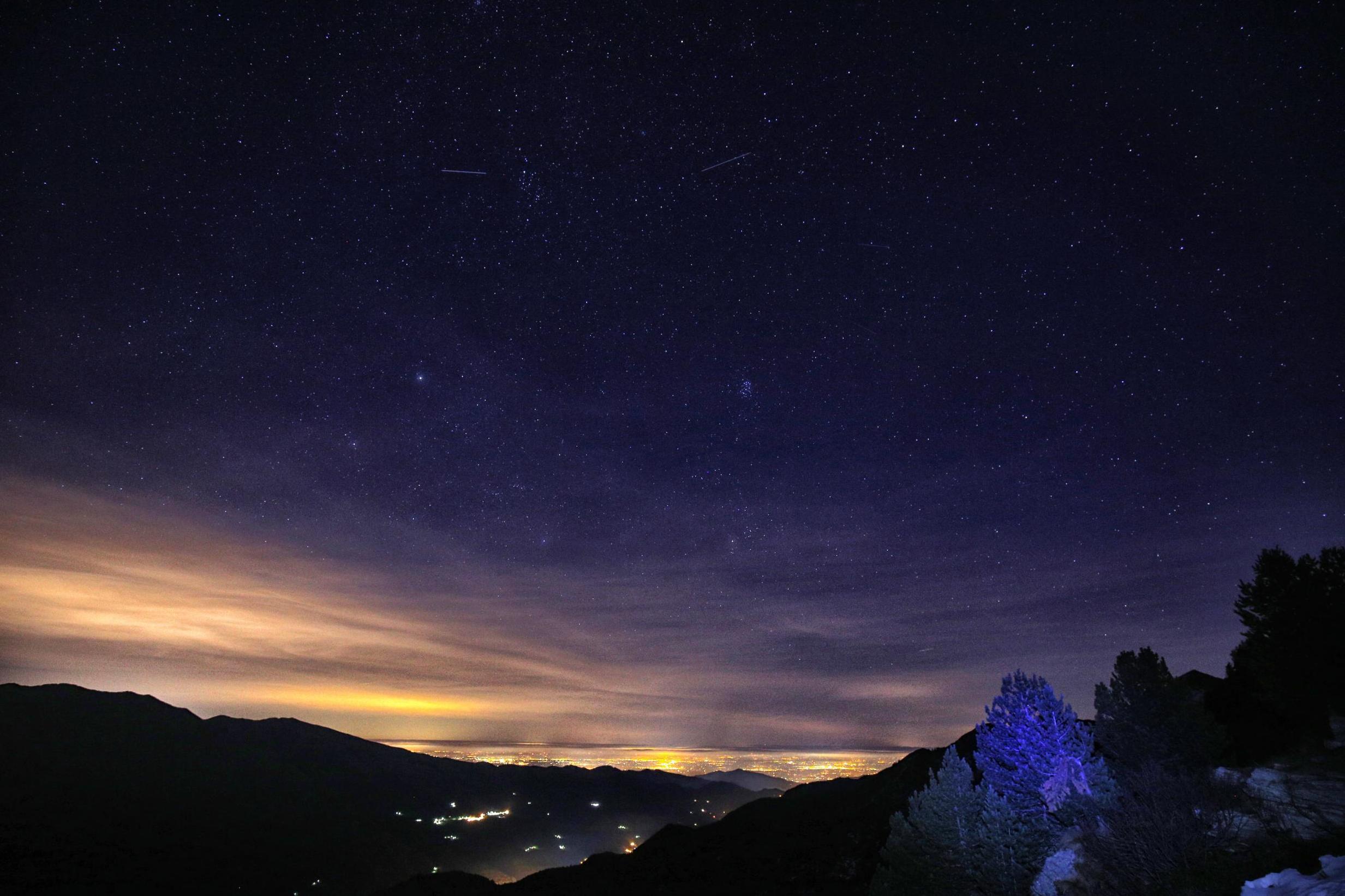


The Geminids will be the last of 2018’s major showers and will enter the Earth’s atmosphere at speeds of up to 70 kilometres per second.
The falling stars are considered different from other meteor showers in being multi-coloured, with white and yellow and a few green, red and blue lights.
The Royal Observatory Greenwich (ROG) says the colours "are partly caused by the presence of traces of metals like sodium and calcium, the same effect that is used to make fireworks colourful”.
People wishing to observe the meteor shower should try to get away from areas with light pollution.


The Geminid meteor shower 2018


Doodle:

Google celebrates the Geminid meteor shower with a Doodle! And it's adorable!

The slideshow Doodle follows the Geminids’ path through Earth’s atmosphere as it lights up the sky. As Phaethon’s orbit leads it near the sun, the extreme heat causes it to fracture and leaves a trail of debris in its orbital path. 


Every December, Earth’s orbit leads us through the trail of 3200 Phaethon and its debris crashes into our atmosphere at 79,000 miles (127,000 km) per hour. Once through the Earth’s atmosphere, the Geminids’ radiant (or where it appears to originate) is the constellation Gemini—from which the meteor shower gets its name. 

The Geminids are considered to be one of the more spectacular meteor shower during a year, with the possibility of sighting around 120 meteors per hour at its peak.


The Geminids appear every year in mid-December when Earth passed through a stream of debris from "rock comet" 3200 Phaethon. Typically more than 100 meteors per hour stream out of the radiant in the constellation Gemini. when the shower peaks on Dec. 13th and 14th.

Some history:

Named after the ancient Greek god Apollo’s son, 3200 Phaethon is an asteroid whose orbit brings it closer to our sun than Mercury. 

First discovered via satellite data 35 years ago, Phaethon is responsible for bringing the spectacular Geminid meteor showers to Earth’s atmosphere each December. With each passing year since the mid-1800s, the proliferation of yellowish streaks of light in the night-time sky have grown more intense.


The Geminid meteor shower 2018

The Geminids. It’s a good time to bundle up, go outside and watch one of Mother Nature’s best sky shows!

If the weather is clear, 2018 should be the best year ever to watch the Geminids - so named because they seem to originate from the constellation Gemini. 

Some information for skywatchers:

No need for a telescope or binoculars: fragments from Phaethon’s debris trail should become visible after 9 pm on December 13, peaking after midnight with as many as 120 meteors per hour. T

The cosmic dust may have resulted from a crash with another flying object, but there’s little danger of any Geminids landing on earth as it normally disintegrates in the earth’s atmosphere. 


Graphic showing the locations of the Geminid radiant and Comet 46P/Wirtanen for 35 degrees north latitude at 10:30 p.m. 
on the night of the Geminid peak (December 13)


What do Geminid watchers need to do this year?
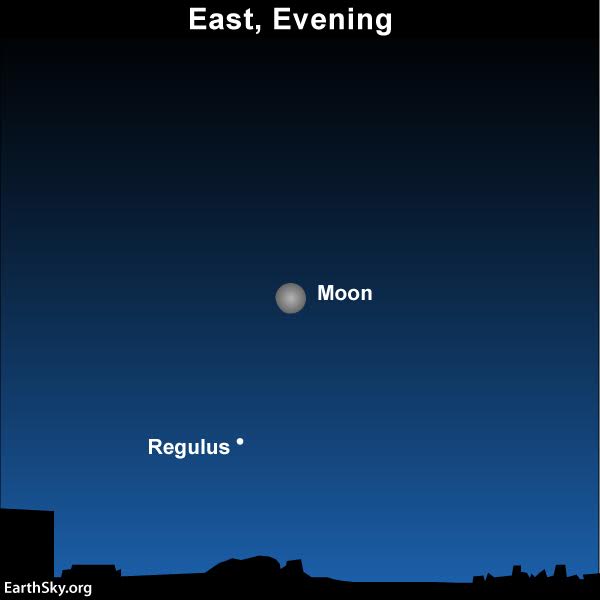
It’s pretty simple, actually. The nearly First Quarter Moon sets around 10:30 p.m. local time, so wait until then to go out – the light from the Moon washes out the fainter meteors, which are more numerous. 
Find the darkest place you can, and give your eyes about 30 minutes to adapt to the dark. Avoid looking at your cell phone, as it will mess up your night vision. 
Lie flat on your back and look straight up, taking in as much sky as possible. You will soon start to see Geminid meteors. As the night progresses, the Geminid rate will increase, hitting a theoretical maximum of about 100 per hour around 2 a.m.


The Geminid meteor shower 2018


Education:

Wow! Here's again the spectacular Geminids meteor shower, this 13 December until dawn December 14! The awesome Geminid meteor shower will be back with its awesome show.

The winter, cold temperatures contribute in making this shower neglected by the public, while it offer bright, very enjoyable meteors. 

Most of us are excited about the Geminids shower. Schools, teachers, students and all Skywatchers lovers. 

I'm not a Sciences teachers. I'm Humanities and Arts teacher. But, I love science and all the high technology near science.

The Geminids, along with the August Perseids, are the two most active annual meteor showers. They can always be relied upon to put on a good show, and that is especially true this year, because the moon will be only a few days old, setting early in the evening.


The Geminid meteor shower 2018

This year the European teachers and students are still at school for a few days, just ending school time before Holiday season.

Using the smartphones, students will need a cable release chord. Luckily they can actually use their iPhone headphones' cable volume button to activate the shutter. And they also need an app designed to take long exposure photos.

Sciences curriculum will be enhanced with this awesome event! The Geminids meteor shower.


Do you want a better science lesson ? 

For optimal viewing conditions, get as far away from city lights as possible, and remember to dress warmly as you enjoy one of the greatest shows on/or above earth.

Some useful links:

NASA Science | News
Space.com | Geminid meteor shower 2018
EarthSky | Geminid meteor
NASA | The Geminid are coming

Social media in education:
Earth Sky @earthskyscience
NASA @NASA
Hoping will lucky!


G-Souto

13.12.2018

Copyright © 2018G-Souto'sBlog, gsouto-digitalteacher.blogspot.com®

Creative Commons License
Schools : Here's again ! Ready to explore the Geminid meteorshower ? by G-Souto is licensed under a Creative Commons Attribution-NonCommercial-NoDerivatives 4.0 International License.

Tuesday, January 30, 2018

Science : Super Blue Moon & Lunar eclipse ? Wow ! Let's talk !


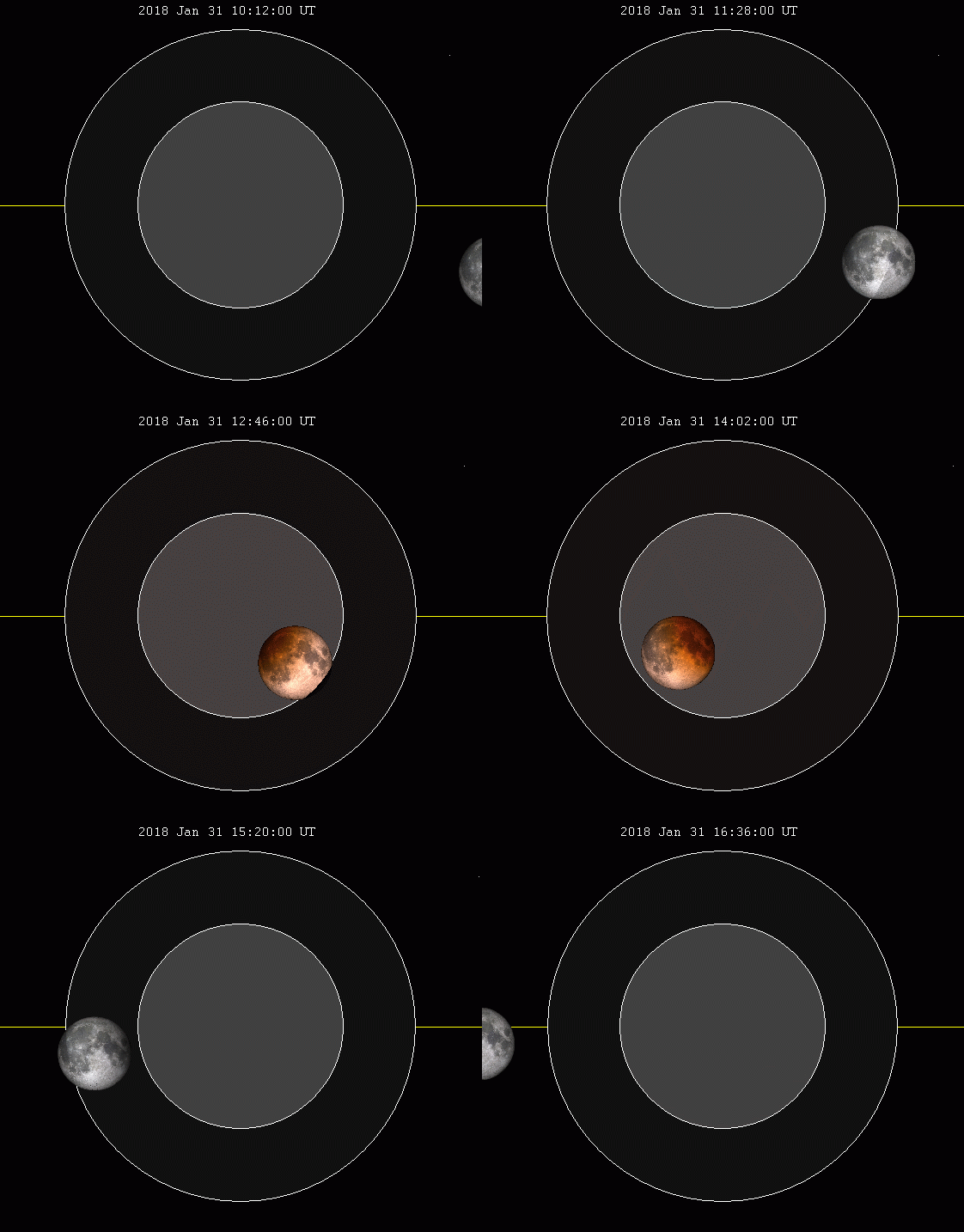
The Blue Moon – second of two full moons in one calendar month – will pass through the Earth’s shadow on January 31, 2018, to give us a total lunar eclipse. 

The last time that we had a Blue Moon total lunar eclipse, reckoning in world time (UTC, or GMT), was December 30, 1982.

No, this time I will not sing Blue Moon! But the song is on my mind while I'm writing about the moon-blue.


credits: Astronomy Ohio 

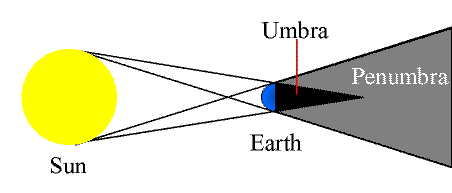
Totality, when the moon will be entirely inside the Earth’s dark umbral shadow, will last a bit more than one-and-a-quarter hours. 

The January 31 2018 much of the world will have the opportunity to observe a Blue Moon: A somewhat rare occurrence that doesn't have anything to do with the moon's color.

Full moon is also the third in a series of three straight full moon supermoons – that is, super-close full moons. 


credits: EarthSky

It’s the first of two Blue Moons in 2018. So it’s not just a total lunar eclipse, or a Blue Moon, or a supermoon. It’s all three … a super Blue Moon total eclipse!

It’s not just a total lunar eclipse, or a Blue Moon, or a super moon. It’s all three! A super Blue Moon total eclipse!

A lunar trio will be visible in the sky tomorrow before dawn:
🌕Supermoon – When the Moon is at/near its closest point to Earth 🔵Blue Moon – The 2nd full moon in a month 🔴Blood Moon – The red tint Earth’s shadow casts on the Moon during a lunar eclipse

NASA

Is it the first Blue Moon total eclipse in 150 years, as some social media memes are now claiming? Yes, it is, if you’re not considering the whole world, but only the Americas. 


credits: Eclipse computer 

It’s a Blue Moon by the monthly definition of the term: the second of two full moons to fall within a single calendar month. The first Blue Moon comes on January 31, 2018, and the second on March 31, 2018.

The full moon happens at the same instant worldwide, the hour differs by time zone.


credits: NASA


Who can watch?


Visible in the USA and India, this blue moon total eclipse will be entirely observed  in French Polynesia, Nouvelle-Calédonie and La Réunion,
In Europe, Africa and a large part in South America in the morning.


credits: NASA 
This NASA chart shows the lunar eclipse times for the US
https://www.nasa.gov/

Why Blue Moon?


For the longest time nobody knew exactly why the second full Moon of a calendar month was designated as a Blue Moon. 
One explanation connects it with the word belewe from the Old English, meaning, “to betray.” Perhaps, then, the Moon was “belewe” because it betrayed the usual perception of one full Moon per month.
However, in March 1999 issue of Sky & Telescope magazine, Phillip Hiscock revealed one somewhat confusing origin of this term. 
It seems that the modern custom of naming the second full Moon of a month “blue,” came from an article published in March 1946 Sky & Telescope magazine. 
The article was “Once in a Blue Moon,” written by James Hugh Pruett. In this article, Pruett interpreted what he read in a publication known as the Maine Farmers’ Almanac, and declared that a second full Moon in a calendar month is a “Blue Moon.” 

in Farmer's Almanac


The Harvest Moon
artist: George Hemming Mason, 1872

Education:
So, the Jan. 31 full moon is special for three reasons: it’s the third in a series of “supermoons,” when the Moon is closer to Earth in its orbit - known as perigee -- and about 14 % brighter than usual. 

It’s also the second full moon of the month, commonly known as a “blue moon.” If you live in North America, Alaska, or Hawaii, a lunar eclipse will be visible before sunrise on Jan. 31. 

For those in the Middle East, Asia, eastern Russia, Australia and New Zealand, the “super blue blood moon” can be seen during moon rise in the morning on the 31st.

If your local weather is calling for clouds this morning, you can still see the super blue blood moon. 


NASA TV's live feed will probably be your best chance to see it live if there's bad viewing weather in your location. 

The Griffith Observatory in Los Angeles is also doing a live feed at the lunar eclipse.


Oh, my ! It should offer some pretty photo opportunities for sky watchers. Ask students to take some photos if they are lucky or do small videos (some seconds) with their smartphones and tablets to explore in Science classroom next tomorrow or during the week.

Remember! No matter what has come in or out of our lives in the past few years, once in a while we are given the chance to have everything we’ve always wanted. We just have to make the choice now to not let it go. Because certain chances only come around once in a blue moon.


Hope you will enjoy the beauty of this awesome scientific event. And of course with an open mind to the magic of the moment not only in the sky, also into our life.


I could not resist. Here I am singing Blue Moon by Chris Isaak!


Blue moon!
Blue moon you saw me standing alone
Without a dream in my heart
Without a love of my own
Blue moon, you knew just what I was there for
You heard me saying a prayer for 
Someone I really could care for
And then there suddenly appeared before me
The only one my arms will ever hold.

Lyrics Hart, Lorenz / Rodgers, Richard


G-Souto
30.01.2018
Sources:
NASA/ EarthSky/ Farmer's Almanac
Creative Commons License
Science : Super Blue Moon eclipse ? Wow ! Let's talk ! by G-Souto is licensed under a Creative Commons Attribution-NonCommercial-NoDerivatives 4.0 International License.

Friday, October 20, 2017

Schools : Here comes the Orionid meteor shower !


étoiles filantes 
© Luna Joulia


Bonne nouvelle! Depuis cette nuit, le 20 octobre et jusqu’au 7 novembre, une pluie de météores permettra d’observer nombre d’étoiles filantes, avec un pic maximum dans la nuit du 20 au 21 octobre. Préparez vos vÅ“ux!


Eh! Oui! La magie des étoiles filantes nous touche de très près. On aime faire nos voeux et les envoyer directement à chaque étoile filante qu'on voit!


Les amoureux d’étoiles faites attention à vos voeux. Moi aussi, si j'ai la chance de faire les miens.
On est ravis d’apprendre que ce soir, la nuit du 20 au 21 octobre, on pourra avoir ce plaisir habituellement estival. On continue en anglais?


Orionid meteor shower/ Falling stars

Love shooting stars? Then you’ll love the Orionid Meteor Shower, the second meteor shower of October, which peaks October 21-22 each year.
One of the best sky shows of the year, will peak between Oct. 20 and 22, when the Orionid meteor shower reaches its best viewing. 

They’ll probably be most prolific in the few hours before dawn on October 21, but we can try watching before dawn on October 22, too.


An image of Halley's Comet taken in 1986
The meteors that streak across the sky are some of the fastest and brightest among meteor showers, because the Earth is hitting a stream of particles almost head on.
The particles come from Comet 1P/Halley, better known as Halley’s Comet. This famous comet swings by Earth every 75 to 76 years, and as the icy comet makes its way around the sun, it leaves behind a trail of comet crumbs. At certain times of the year, Earth's orbit around the sun crosses paths with the debris. 


Tonight, could we watch meteors in the annual Orionid shower? 
Scientists say that we have a good chance, even though this morning before dawn might have presented the peak numbers. 
We can watch pieces of Halley's Comet during the Eta Aquarids (in May) and the Orionid meteor shower (in October and November), NASA meteor expert Bill Cooke said. 
The comet last visited Earth in 1986 and will return next in 2061.


  • Orionids:

The Orionids are named after the direction from which they appear to radiate, which is near the constellation Orion (The Hunter). 
The Orionids, which peak during mid-October each year, are considered to be one of the most beautiful showers of the year. 

If the meteors originate from Comet Halley, why are they called the Orionids? 

The answer is that meteors in annual showers are named for the point in our sky from which they appear to radiate. The radiant point for the Orionids is in the direction of the constellation Orion the Hunter. Hence the name Orionids.


via EarthSky


Orionid meteors are known for their brightness and for their speed. These meteors are fast - they travel at about 148,000 mph (66 km/s) into the Earth's atmosphere. 

Fast meteors can leave glowing "trains" (incandescent bits of debris in the wake of the meteor) which last for several seconds to minutes. 

Fast meteors can also sometimes become fireballs: Look for prolonged explosions of light when viewing the Orionid meteor shower.

The Orionids are also framed by some of the brightest stars and planets in the night sky, which lend a spectacular backdrop for theses showy meteors.

Skywatchers in 2017 will not have moonlight to contend with, as the first-quarter moon will have set long before the meteors put on their best show. 
If you miss the peak, the show is also visible between Oct. 15 and 29, as long as the moon isn't washing the meteors out.
Sometimes the shower peaks at 80 meteors an hour; at others it is closer to 20 or 30. Cooke predicted that in 2017, the peak would be at the smaller end of the scale, echoing the peaks of 2016 and years before.


Get ready stargazers! The Orionid meteor shower peak begins tonight, welcoming a spectacular natural light show that could see a flurry of shooting stars spawned by Halley's Comet brighten the dark, moonless sky.

The 2025 Orionid meteor shower peak begins overnight on Oct. 20-21, when 10-20 shooting stars may be visible streaking across the night sky from a point of origin known as a "radiant", located close to the red star Betelgeuse in the constellation Orion.


Orion
credits: credit: manpuku7 via Getty Images


While tonight is the peak, Orionid shooting stars can be seen from Oct. 2 to Nov. 7 as Earth passes through the debris trail shed by comet 1P/Halley. During that time, particles cast off from that ancient body collide with our planet at speeds of up to 41 miles per second (66 kilometers per second), burning up in a magnificent display as they're overwhelmed by the friction of atmospheric entry.

Orionid meteors will be visible to skywatchers in both the Northern and Southern Hemispheres (weather permitting).
To see the Orionid meteor shower at its best, go to the darkest possible location, lean back and relax. You don't need equipment like telescopes or binoculars as the secret is to take in as much sky as possible and allow about 30 minutes for your eyes to adjust to the dark.
The best time to view the Orionid meteor shower is between midnight and dawn when the shower's radiant, the Orion constellation, is high in the sky.


 credits: Eerik via Getty Images

As it's the case with most night time sky watching events, light pollution can hinder your view of the Orionid meteor shower. If possible, get far away from city lights (which can hinder the show). 
Typically, Orionid meteors are dim and hard to see from urban locations, so you should find a dark (and safe) rural location to get the best views of Orionid activity. 
The Orionids are active from Sept. 26 to Nov. 22 according to the American Meteor Society and will peak between Oct. 20 and Oct. 21. 
This year, the moon will not interfere with Orionid meteor shower hunting efforts as it will be in the new moon phase during the peak. 
Note: To calculate sunrise and moonrise times in your location check out this custom sunrise-sunset calculator.


meteor showers infographic
credits: Nasa Meteor American Society
https://www.space.com/
Education:
Most of us are excited about Orionid shower. Science students too. Do you remember the Summer Solstice 2016 & ‘Strawberry (June 2016)? Or Catch Some Falling Stars, the Quadrantids (January 2016). Don't miss Eta Aquarid meteor shower (May 2016), Here comes the 2nd Supermoon, the Mega Beaver moon (November 2016), Stay up & watch the Total Eclipse ! (August 2017). Wow what a sky! And so many educational resources.

It's school time to teachers and students. So, prepare your students to sky watching and ask them to do some good shots, or videos with smartphones, or tablets to discuss the theme tomorrow or next lesson. May be compare it with the Perseid meteor shower of last year?

The science curriculum will be enhanced with the help of this incredible event.
Meteor showers aren’t just one-night events. In fact, they can last for several days
Do you want a better science lesson ? Enjoy the show!
Hoping to be lucky! The sky is bright. Could I send my wishes tonight?  

“Twinkle, twinkle little star, how I wonder what you are.”  
G-Souto 
20.10.2017

update: 20.10.2025
Copyright © 2025G-Souto'sBlog, gsouto-digitalteacher.blogspot.com®


Creative Commons License
Schools : Here comes the Orionid meteor showers ! by G-Souto is licensed under a Creative Commons Attribution-NonCommercial-NoDerivatives 4.0 International License.
Sources: Space.com/ NASA/ EarthSky