My thoughts about Education Humanities, Technology and Digital Culture. Interested on social media tools in educational contexts and
gamification in education.
Bonne nouvelle! Depuis cette nuit, le 20 octobre et jusqu’au 7 novembre, une pluie de météores permettra d’observer nombre d’étoiles filantes, avec un pic maximum dans la nuit du 20 au 21 octobre. Préparez vos vœux!
Eh! Oui! La magie des étoiles filantes nous touche de très près. On aime faire nos voeux et les envoyer directement à chaque étoile filante qu'on voit!
Les amoureux d’étoiles faites attention à vos voeux. Moi aussi, si j'ai la chance de faire les miens.
On est ravis d’apprendre que ce soir, la nuit du 20 au 21 octobre, on pourra avoir ce plaisir habituellement estival. On continue en anglais?
Love shooting stars? Then you’ll love the Orionid Meteor Shower, the second meteor shower of October, which peaks October 21-22 each year.
One of the best sky shows of the year, will peak between Oct. 20 and 22, when the Orionid meteor shower reaches its best viewing. They’ll probably be most prolific in the few hours before dawn on October 21, but we can try watching before dawn on October 22, too.
The meteors that streak across the sky are some of the fastest and brightest among meteor showers, because the Earth is hitting a stream of particles almost head on.
The particles come from Comet 1P/Halley, better known as Halley’s Comet. This famous comet swings by Earth every 75 to 76 years, and as the icy comet makes its way around the sun, it leaves behind a trail of comet crumbs. At certain times of the year, Earth's orbit around the sun crosses paths with the debris.
Scientists say that we have a good chance, even though this morning before dawn might have presented the peak numbers.
We can watch pieces of Halley's Comet during the Eta Aquarids (in May) and the Orionid meteor shower (in October and November), NASA meteor expert Bill Cooke said.
The comet last visited Earth in 1986 and will return next in 2061.
Orionids:
The Orionids are named after the direction from which they appear to radiate, which is near the constellation Orion (The Hunter).
The Orionids, which peak during mid-October each year, are considered to be one of the most beautiful showers of the year.
If the meteors originate from Comet Halley, why are they called the Orionids?
The answer is that meteors in annual showers are named for the point in our sky from which they appear to radiate. The radiant point for the Orionids is in the direction of the constellation Orion the Hunter. Hence the name Orionids.
via EarthSky
Orionid meteors are known for their brightness and for their speed. These meteors are fast - they travel at about 148,000 mph (66 km/s) into the Earth's atmosphere.
Fast meteors can leave glowing "trains" (incandescent bits of debris in the wake of the meteor) which last for several seconds to minutes.
Fast meteors can also sometimes become fireballs: Look for prolonged explosions of light when viewing the Orionid meteor shower.
The Orionids are also framed by some of the brightest stars and planets in the night sky, which lend a spectacular backdrop for theses showy meteors.
Skywatchers in 2017 will not have moonlight to contend with, as the first-quarter moon will have set long before the meteors put on their best show.
If you miss the peak, the show is also visible between Oct. 15 and 29, as long as the moon isn't washing the meteors out.
Sometimes the shower peaks at 80 meteors an hour; at others it is closer to 20 or 30. Cooke predicted that in 2017, the peak would be at the smaller end of the scale, echoing the peaks of 2016 and years before.
The show in October 2025:
Get ready stargazers! The Orionid meteor shower peak begins tonight, welcoming a spectacular natural light show that could see a flurry of shooting stars spawned by Halley's Comet brighten the dark, moonless sky.
The 2025 Orionid meteor shower peak begins overnight on Oct. 20-21, when 10-20 shooting stars may be visible streaking across the night sky from a point of origin known as a "radiant", located close to the red star Betelgeuse in the constellation Orion.
Orion
credits: credit: manpuku7 via Getty Images
While tonight is the peak, Orionid shooting stars can be seen from Oct. 2 to Nov. 7 as Earth passes through the debris trail shed by comet 1P/Halley. During that time, particles cast off from that ancient body collide with our planet at speeds of up to 41 miles per second (66 kilometers per second), burning up in a magnificent display as they're overwhelmed by the friction of atmospheric entry.
Orionid meteors will be visible to skywatchers in both the Northern and Southern Hemispheres (weather permitting).
To see the Orionid meteor shower at its best, go to the darkest possible location, lean back and relax. You don't need equipment like telescopes or binoculars as the secret is to take in as much sky as possible and allow about 30 minutes for your eyes to adjust to the dark.
The best time to view the Orionid meteor shower is between midnight and dawn when the shower's radiant, the Orion constellation, is high in the sky.
As it's the case with most night time sky watching events, light pollution can hinder your view of the Orionid meteor shower. If possible, get far away from city lights (which can hinder the show).
Typically, Orionid meteors are dim and hard to see from urban locations, so you should find a dark (and safe) rural location to get the best views of Orionid activity.
It's school time to teachers and students. So, prepare your students to sky watching and ask them to do some good shots, or videos with smartphones, or tablets to discuss the theme tomorrow or next lesson. May be compare it with the Perseid meteor shower of last year? The science curriculum will be enhanced with the help of this incredible event.
Meteor showers aren’t just one-night events. In fact, they can last for several days
Do you want a better science lesson ? Enjoy the show!
Hoping to be lucky! The sky is bright. Could I send my wishes tonight?
“Twinkle, twinkle little star, how I wonder what you are.”
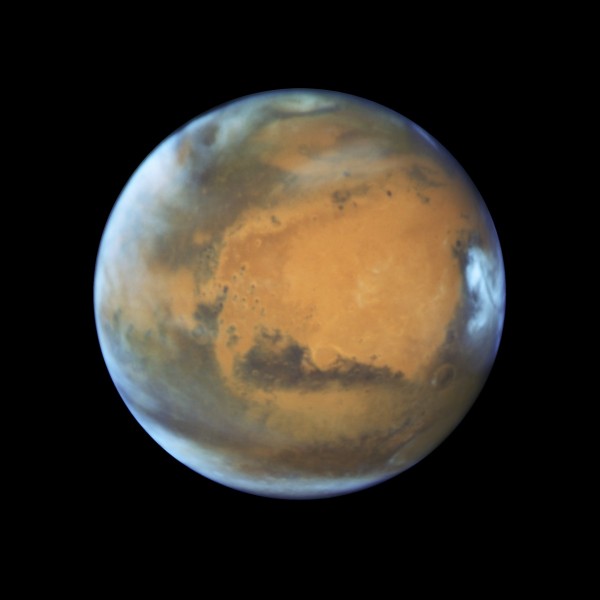
On May 30,2016, tomorrow, the red planet Mars comes closer to Earth than it has been since November, 2005.
Great time to get a close-up look at Mars, even if you don't have a telescope. The next Mars Close Approach is July 31, 2018.
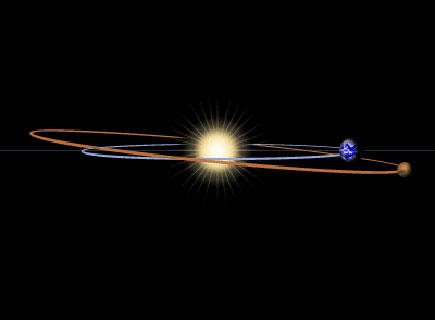
It lies 46.8 million miles (75.3 million km) from Earth on this date. This is Mars’ closest point for this year. That’s in spite of the fact that Earth passed between Mars and the sun (the martian opposition) on May 22.
The red planet is closer to Earth than it has been for 11 years. Yes, that's still a long way off, but sometimes Mars is 249 million miles (400 million kilometers) from Earth.
"Mars Close Approach is May 30, 2016. That is the point in Mars' orbit when it comes closest to Earth. Mars will be at a distance of 46.8 million miles (75.3 million kilometers). Mars reaches its highest point around midnight -- about 35 degrees above the southern horizon, or one third of the distance between the horizon and overhead. Mars will be visible for much of the night."
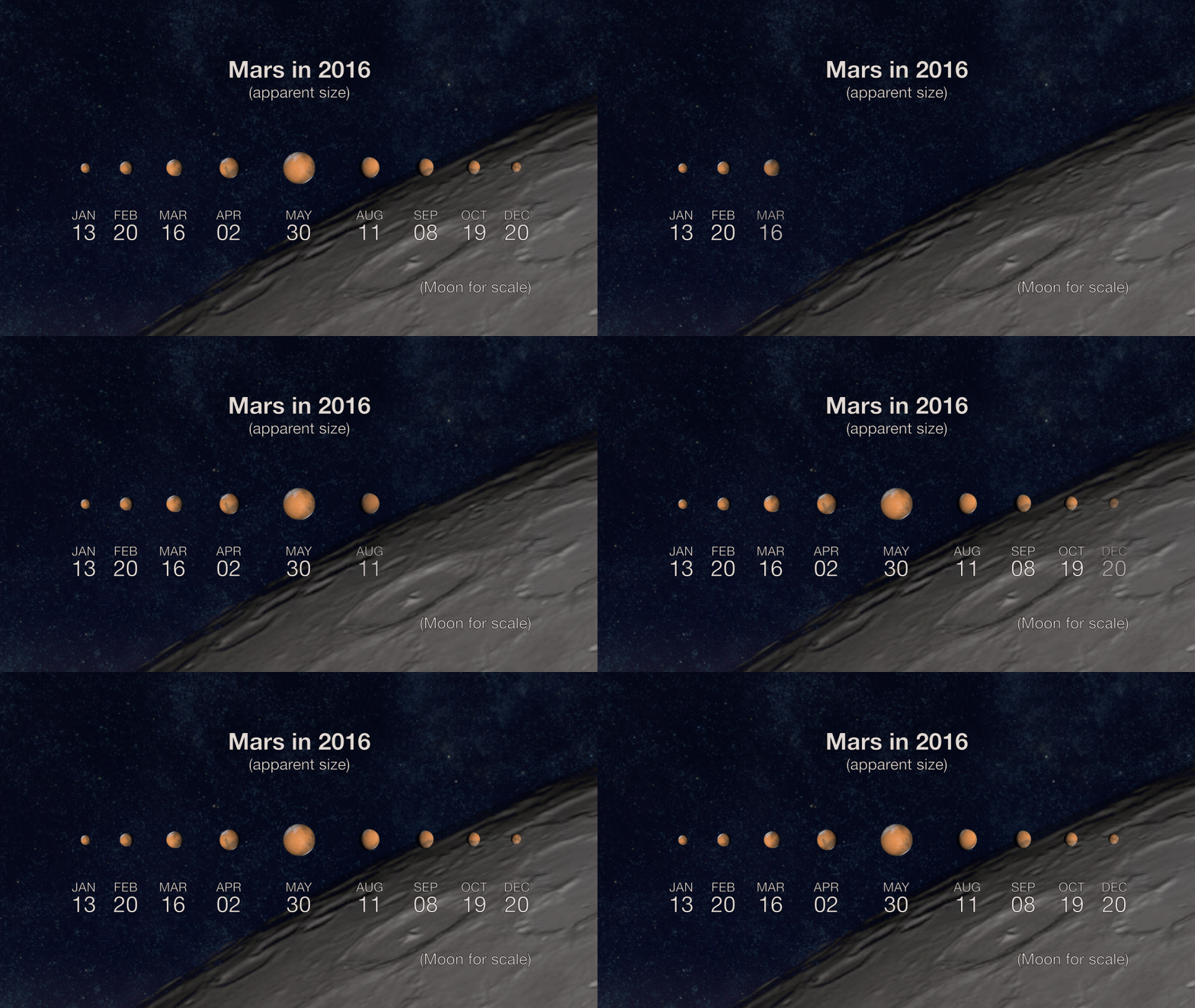
What does this close approach mean for sky watchers? It means Mars will appear bigger and brighter until June 3, according to NASA.
You don't need a telescope or binoculars to see Mars as it moves in for its close-up. In fact, you'll probably be able to find it without a star chart or an astronomy app.
Generally speaking, Mars is brightest in 2016 from about May 18 to June 3. It is now shining nearly on par with the planet Jupiter, and it’s not very often that Mars can match Jupiter in brilliance!
You might think Mars should be brighter when closest to Earth on May 30 than when it was at opposition on May 22. Although Mars is still plenty bright, it’s a tiny bit fainter than at its May 22 opposition. That’s because of something known as opposition surge. Mars directly reflects sunlight back to Earth at opposition, accentuating Mars’ brilliance. Before and after opposition, sunlight is reflected at a slightly slanted angle relative to Earth, thereby reducing Mars’ brightness.
Tonight’s close encounter between the Earth and Mars will be the closest until around the time of the Martian opposition on July 27, 2018.
Another interesting event near by. Your school class has an account on #Facebook?
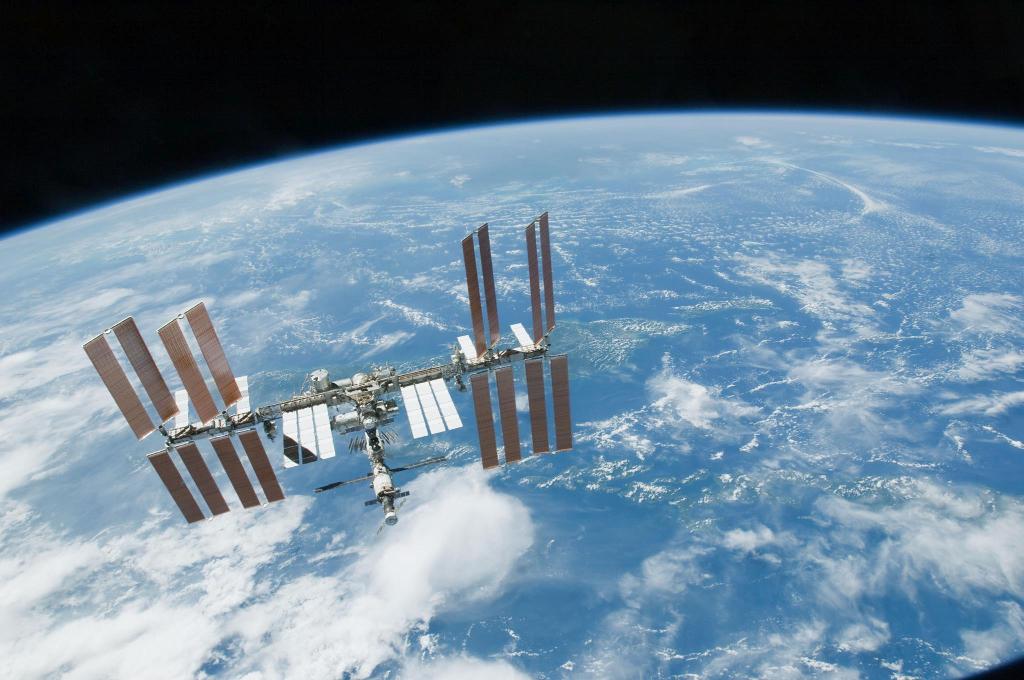
"Join Mark Zuckerberg as he connects with the astronauts on the International Space Station to ask questions from you, the users of Facebook via a Facebook Live event on Wednesday, June 1 at 12:55pm ET/11:55am CT/10:55am MT/09:55am PT/16:55 UTC."