Showing posts with label maths. Show all posts

Thursday, September 7, 2023

Oh ! La ! Rentrée 2023-2024 ? Pas comme les autres ?! Quelques lignes !


MASKOT / GETTY IMAGES/MASKOT


crédits: pas identifié
via Google Images

Le cartable, livres et tablettes sont sortis du placard ou de la table d'étude. Ce fut l’heure la rentrée scolaire. Les vacances sont bel et bien terminées. 


Quelque 12 millions d’élèves ont fait leur retour à l’école le dernier lundi, 4 septembre. Une rentrée 2023/2024 où les pénuries persostentes d’enseignants, malgré la promesse d’un professeur.


crédits: pas identifié
via Académie de Lyon


Malgré la promesse d’un professeur devant chaque classe à la rentrée, plus de 3 100 postes n’ont pas été pourvus aux concours cette année. Un problème qui se répète en Espagne et au Portugal.


La rentrée scolaire de l’année 2023-2024 apportera plusieurs changements importants pour les élèves de primaire, de collège et de lycée. 


Pour cette année 2023-2024, de nombreux changements majeurs sont attendus pour tous les niveaux, du CP à la terminale, à la fois pour élèves et pour les professeurs.

De l’interdiction des abayas ou qamis à la nouvelle réforme du Bac en passant par le dispositif "devoirs faits".Voilà liste abrégée des nouveautés à l’école cette année. 


crédits: Stéphane Mahe / REUTERS


  • Savoirs fondamentaux

A leur entrée au collège, plus d'un quart des élèves n'ont pas le niveau attendu en français, rappelle le ministère de l'Éducation. Et "à peine un élève sur deux sait lire un texte avec aisance et la dégradation de l'orthographe est devenue préoccupante"

Gabriel Attal, le nouveau ministre de l'éducation national a aussi fait savoir son intention de "remettre les savoirs fondamentaux au cœur de l’école ". 


L’apprentissage du français sera renforcé dès le CP avec "deux heures consacrées à l’apprentissage et la pratique de la lecture" chaque jour. 

En CM1, les élèves qui ont des difficultés en lecture bénéficieront d’une pratique quotidienne renforcée, avec notamment la lecture de textes longs (au moins 1 000 mots). En CM2, les élèves devront produire au moins un texte écrit chaque semaine.


crédits:  De Syda/Productions


Au collège, une heure par semaine de renforcement ou d’approfondissement en français ou en mathématiques sera mise en place en 6e. 

Chaque élève en bénéficiera. Pour permettre l’introduction de cette heure de soutien, l’heure de technologie en classe de sixième est supprimée.


Lycée : maths obligatoires
crédits: iStock

Cette rentrée 2023-2024 verra aussi la réintroduction d’un enseignement des mathématiques obligatoire pour tous les lycéens de la filière générale en première. 

Dès septembre, ceux qui n’ont pas pris la spécialité mathématiques auront une heure et demie de cours en plus par semaine consacrée à cette discipline.


crédits: Canopé


  • Devoirs faits obligatoire en 6e

En parallèle de l’heure de renforcement en français et en maths, le dispositif "devoirs faits" devient obligatoire à la rentrée pour tous les élèves de 6e. Il permet aux nouveaux collégiens de travailler dans le calme et dans l’établissement, avec si besoin l’aide d’un adulte. 

Le but : « Donner davantage d’autonomie aux élèves et ainsi réduire les inégalités devant les apprentissages », précise le ministère.


crédits: Nicolas Tavernier/REA

  • Le Bac change 'encore' de forme:

Face aux critiques sur l’organisation des épreuves de spécialité en mars, qui a entraîné l'absentéisme et la démotivation au dernier trimestre, le gouvernement a revu sa position. Dès 2024, les épreuves de spécialités seront organisées en juin.

Le grand oral change également légèrement de forme, avec la suppression des cinq minutes dédiées au projet d’orientation des élèves, pour passer plus de temps sur les savoirs. 

Quant au bac français, le nombre de textes au programme pour les épreuves orales sera ramené de 20 à 16 pour « mieux les approfondir et mieux les préparer ».


crédits:pas indiqué
via Google Images
 

  • Lycée : la réforme du lycée professionnel:

Concernant les élèves scolarisés en lycée professionnel, ils vont toucher un peu d’argent pendant leur période en entreprise : 50 euros par semaine en classe de seconde, 75 euros en première et 100 euros en terminale. Cette indemnité, qui n’existait pas, sera prise en charge par l’État.

Après le lycée, le parcours "Ambition emploi" doit aider les jeunes bacheliers sans solution d’insertion ou de poursuite d’études. 

Ils seront reçus dans leurs établissements par un conseiller de mission locale. Pour ceux qui ont échoué à l’examen, une réinscription dans leur lycée leur sera proposée.


crédits: Julien Georget


  • La lutte contre le harcèlement, une priorité et un nouveau plan:

Le harcèlement scolaire est une priorité nationale en cette rentrée. Alors, un élève responsable de harcèlement scolaire pourra désormais être transféré dans une autre école, évitant d’imposer ce changement à celui qui en est victime.


crédits:  © Maxppp - Stéphanie Para

https://www.francebleu.fr/infos/


De nouvelles mesures de lutte contre le harcèlement scolaire ont été prises en vue de cette rentrée 2023-2024. Un décret paru au Journal officiel, le 16 août 2023, prévoit notamment qu'un élève jugé responsable de faits de harcèlement pourra être changé d'établissement, évitant d'imposer ce changement à celui qui en est victime.


Un auteur de cyberharcèlement contre un élève d’un autre établissement pourra aussi être sanctionné.


Dans les collèges et lycées, le décret étend "le champ de la procédure disciplinaire aux cas dans lesquels des élèves commettent des actes de harcèlement à l'encontre d'élèves situés dans un autre établissement", précise le texte, qui évoque notamment les cas de cyberharcèlement. Le chef d'établissement est alors autorisé à "saisir le conseil de discipline départemental".

Le gouvernement va présenter "un plan interministériel" de lutte contre le harcèlement scolaire, fin du mois de septembre.


  • Remplacement des professeurs et pacte enseignant:

À partir de cette rentrée 2023, tous les enseignants vont gagner plus de 2 000 euros (nets) par mois. En plus de ce 'socle', il est possible de s’engager dans des missions rémunérées : c’est le 'pacte enseignant'.

Il doit permettre notamment 'le remplacement systématique des enseignants absents' pour de courtes durées dans les collèges et lycées. 

Gabriel Attal, le ministre de l'éducation, a réaffirmé qu’il y aurait "un professeur devant chaque classe" à la rentrée, notamment grâce à ce pacte. 

À cette heure, aucun chiffre sur le nombre d’enseignants engagés n’a été communiqué.


crédits: © Brian Finke/ Gallery Stock/PhotoSenso

Comment réinventer des méthodes face à des éléves ultra-connectés?! 

« Pourquoi est-ce que j’apprendrais un poème de Victor Hugo alors que je peux le trouver sur Internet ? Et puis de toute façon, je m’ennuie en cours, ça ne sert à rien… » 

La déclaration de Basile, 13 ans, en 4e, beaucoup d’adolescents pourraient la reprendre à leur compte. 

Les profs se sentiront-ils aussi démotivés devant cette nouvelle réalité! Seront-ils vien préparés ? Sont-ils bien formés pour en faire face? 


Et puis il y a les inégalités sociales, de plus en plus considerables...

Selon Guilluame Prévost l’ambition éducative de l’école ne peut se limiter aux seuls enseignements. Le poids des inégalités scolaires en France montre que les enfants ont besoin d’être mieux accompagnés dans leur développement personnel pour réussir leurs apprentissages et former leur projet de vie.

"Cessons de confondre éducation et enseignement. Nos élèves ont autant besoin d’éducateurs bien formés que d’enseignants aussi diplômés que déconsidérés. L’enseignement n’est pas une fin en soi : c’est une modalité d’apprentissage qui a ses vertus, mais qui peut aussi se révéler inadaptée quand les besoins du développement de l’enfant, physiques, intellectuels ou affectifs, l’orientent davantage vers l’expérience, la prise de responsabilité et l’expression collective."

Guillaume Prévost, Le Monde, 4 septembre 2023


G-Souto

07.09.2023
copyright © 2023G-Souto'sBlog, gsouto-digitalteacher.blogspot.com®


Oh! La! Rentrée 2023-2024 : Pas comme les autres ? Quelques lignes ! by G-Souto is licensed under a Creative Commons Attribution-NonCommercial-NoDerivatives 4.0 International License.

sources: Ministère de l'Éducation/ Le Monde-Éducation/ HuffPostFr


Wednesday, February 5, 2020

Meet the Scottish scientist Mary Sommerville, the queen of 19th Century Science !


Mary Fairfax Greig Somerville
Oil on canvas by Thomas Phillips, 1834
via Wikipedia 

On the 2 February 1826, one of Somerville’s experimental physics papers was read by the Royal Society of London, the UK’s National Science Academy. 

It became the first paper by a female author to be published in the prestigious Philosophical Transactions, the world’s oldest science publication, which is still active today.


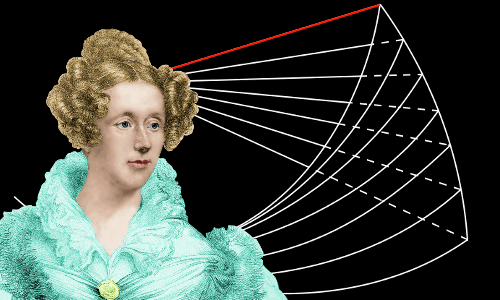
Google Doodle :


Google Doodle Celebrating Mary Somerville
Doodler: Doodler Alyssa Winans

"I was especially inspired by how many books she wrote in a time when being a female writer was a challenge. I tried to sneak that into the art as well."

Alyssa Winans

The Doodle celebrated Mary Shelley last 2 February. It includes a nod to Somerville’s contribution to Neptune’s discovery, as well as the Somerville Crater.

"When we think of history’s great scientists, names such as Isaac Newton, Galileo Galilei, or Nicolaus Copernicus likely come to mind. The funny thing is that the term “scientist” wasn’t coined until 1834 - well after these men had died - and it was a woman named Mary Somerville who brought it into being in the first place.

Biography facts:

Mary Fairfax was born in 1790. Brought up in the Scottish Borders with a strong passion for the sea and the outdoors, she lacked any formal education. 

Mary Somerville was an almost entirely self-taught polymath whose areas of study included math, astronomy, and geology.

Born in Jedburgh, Scotland, on December 26th, 1790, into a distinguished family of humble means, Sommerville spent her early years helping her mother with chores around the house and enjoying nature in the family garden. 


Mary Somerville
Wikiart/Somerville College, University of Oxford Supplied by The Public Catalogue Foundation

At the age of 10, her father returned from overseas and decided to send her to a boarding school for a proper education. Miss Primrose’s Boarding School for a single year where she learnt just enough maths to be able to keep accounts. 

It was at boarding school that her art teacher explained how the fundamentals of painting could be traced back to Euclid’s Elements of Geometry. 


Mary Sommerville
Wikimedia Commons/ATI Composite

After acquiring a copy of the classic book, Somerville delved into teaching herself astronomy and mathematics. Following years of independent learning and research, she went on to publish her own scientific papers and books.

Her parents tried to stop her studying because they thought it would kill her. Her sister had died and they thought studying was to blame.

But Mary ploughed on and carried out detailed and highly-accurate studies of the solar system.


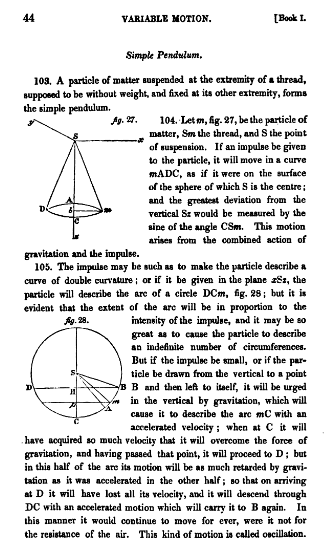
Page 44 from Mechanism of the Heavens 
Mary SomervilleWikipedia Commons


Page 157 from Mechanism of the Heavens
Wikipedia Commons

She was so accurate that she noticed a wobble in the orbit of Uranus and suggested there could be another planet out there.

In 1831, Somerville’s The Mechanism of the Heavens revolutionized the existing understanding of the solar system. This highly-praised essay laid the groundwork for her breakthrough book, The Connection of the Physical Sciences (1834), which became among the best selling science books of the 19th century. Its third edition in 1836 provided the clues astronomer John Couch Adams needed to discover Neptune.


The Connection of the Physical Sciences (1834)

Mary Sommerville

Somerville racked up a bevy of memberships and titles among the scientific elite. In 1834, for example, Somerville gained honorary membership into the Society of Physics and Natural History of Geneva and to the Royal Irish Academy. 

A year later she was voted into the Royal Astronomical Society. Somerville was one of the first two women, along with Caroline Herschel, to be admitted to the Royal Astronomical Society; by 1870 she had also been inducted into the American Geographical and Statistical Society, the American Philosophical Society, and the Italian Geographical Society.

Mary Somerville continued reading and educating herself until the day she died in 1872, at almost 92 years old. 

When she died in 1872, The Morning Post declared in her obituary that "Whatever difficulty we might experience in the middle of the nineteenth century in choosing a king of science, there could be no question whatever as to the queen of science"

Seven years after her death, the University of Oxford’s counterpart to Girton College was created and named after ‘the Queen of Science’, as she was heralded upon her death. 

It was a final recognition of what she had strived to achieve during her lifetime; the dispensation of scientific knowledge to a wider audience and especially the education of women.


Self portrait Mary Somerville (undated)
from the Somerville College Collection


She was not just a mathematician, astronomer, or physicist; she possessed the intellectual acumen to weave these concepts together seamlessly.

Not one to be pigeonholed, Somerville was also a vocal advocate for equal rights and the first person to sign the 1866 women’s suffrage petition.

In 2016, the Institute of Physics celebrated Sommerville’s innovative thinking, which paved the way for the ever-increasing number of women in STEM fields, by introducing the Mary Somerville Medal and Prize for scientists who engage the public through their work.


Education:

"The 19th century’s “Queen of Science” will surely inspire new generations in her homeland. But the legacy of self-taught mathematician Mary Fairfax Somerville reaches way beyond Scotland: she was a brilliant translator of science for the public and a passionate advocate for women’s education."

In Burntisland she started teaching herself Latin. For the most part she kept quiet about this – one of her aunts had told her in no uncertain terms to stop reading Shakespeare and spend her time on needlework. 


Mary Somerville
credits: NYPL/ Science source/ Getty Images

However, Mary told her uncle, Thomas Somerville, about her studies. He was delighted and started giving her Latin lessons every day before breakfast.

See? As you know,  I am not a woman of Sciences. I am a woman of Humanities who included IT a long time ago into mu school curricula.

However, both Sciences and Humanities can be a important part of a global education.


via James Madison University

As an educator, I recognize the great value of women in science as Mary Somerville to inspire girls and young women to achieve their goals in science, cosmology, astronomy or STEM. And completing science study with Latin and Philosophy and modern languages.


  • Resources: Google Arts & Culture


Invite students to meet Mary Queen of Science on Google Arts & Culture. Find out how her expertise led her to become the joint first female member of the Royal Astronomical Society.


Mary Somerville
via Famous Scientists
Mary Somerville inspired us that we should strive for our passions and dreams, even though there are a lot of obstacles along the way. 

Have no access to learn something that we truly love? Then read books about it or ask others to teach you on it! There are many ways to learn about something, and women can learn about anything! Right?


"Her grasp of scientific truth in all branches of knowledge, combined with an exceptional power of exposition, made her the most remarkable woman of her generation."

Sir David Brewster, inventor of the kaleidoscope, wrote in 1829

G-Souto

05.02.2020
Copyright © 2020G-Souto'sBlog, gsouto-digitalteacher.blogspot.com®

Creative Commons License

Schools :  Meet the Scotish scientist Mary Somerville, the queen of 19th Century Science ! by G-Souto is licensed under a Creative Commons Attribution-NonCommercial-NoDerivatives 4.0 International License.


Monday, March 23, 2015

Students : Apply for the European Space Camp 2015


Estão abertas as inscrições, até 1 de abril de 2015, para o European Space Camp que terá lugar em Andøya, Noruega, de 25 de Junho a 2 de Julho de 2015.
Tópicos:
  • Física aeroespacial como lançamento de foguetões;
  • Construção de circuitos; 
  • Telemetria e inclui o lançamento de um foguetão durante essa semana. 
Os participantes terão oportunidade de assistir a palestras de alguns dos melhorescientistas e investigadores europeus sobre temas tão diversos como o LHC no CERN e as auroras boreais. 
Quem pode concorrer:
  • Estudantes entre 17 e 20 anos com interesse pela área do Espaço. 
Os alunos terão também que ser fluentes em inglês e ter conhecimentos de física e matemática. 
Mais informações e inscrições no site do European Space Camp.
Outras informações: Bolsas
Os estudantes com a nacionalidade de um dos países membros da Agência Espacial Europeia poderão concorrer a uma das duas bolsas financiadas por esta instituição. 
Mais informações sobre estas bolsas no site da ESA.


ESC2014
https://www.facebook.com/europeanspacecamp

Applications for European Space Camp 2015 was open on the 1st of January 2015 and will end on 1st April 2015

Some information:
The first Space Camp took place at the Andøya Space Center in 1996, with 20 participants from across Scandinavia in attendance. 

After this initial success, European Space Camp quickly became an annual event and as of 2012, has attracted over 400 participants from over 20 countries across the world.


credits: European Space Camp (2014)

Programme:

The scientific part of the camp is divided between lectures and group work. 

Some of the best lecturers from across Europe lecture on topics as diverse as Rocket Physics, the work of CERN and the Northern Lights. 

Group work enables participants to spend a week in the life of a scientist and tackle a problem relating to the rocket launch at the end of the week. 

There are five groups in total: Rocket System Design, Experimental Instrumentation, Payload, Rocket Telemetry and Rocket Physics. 

The highlight of the week is of course the rocket launch, which takes place near the end of the week, with just enough time to analyse the results of the launch.


credits: European Space Camp (2014)
An important part of Space Camp is getting to know the other participants and there will be a series of social activities organised as a result. 

There will be the opportunity to hike up a mountain, go on a sea safari, to play volleyball in the spectacular surroundings of the Andøya Space Center and to swim under the midnight sun followed by a trip to the sauna...
A
Applications 2015:

Applications for European Space Camp 2015 was open on the 1st of January 2015 and will end on 1st April 2015.

Who can apply:

Students 17-20 years-old.

Curricula : Physics ; Mathematics;

Note:  Students must have good skills in English if they are not English native speakers.

Where:

Team Space Camp is currently working hard at the Andøya Space Center, preparing for European Space Camp 2015. 

"We are super excited and would encourage anyone who might be interested in participating to apply and get the chance to be part of a very exciting and unforgettable week that includes lectures from some of Europe's top scientists, participants from all over the world and the chance to work on and launch a real scientific rocket."

The European Space Agency has very kindly agreed to sponsor travel costs for the two ESA scholars this year. 

But if you are not from Europe then you can still apply for the ESC scholarship, more information here

Date:

To apply for ESC 2015, which will take place from the 25th of June, to the 2nd of July 2015, please follow the below instructions. 

Criteria:

All eligibility criteria are listed under the FAQ tab. 

The deadline for applications is the 1st of April 2015, by which time you must have submitted a complete application form and uploaded any files to support your application. Successful participants will be informed in May 2015.

Application information:

If you are a Norwegian applicant, and your fylkeskommune is one of our scholarship providers (click on the 'scholarship' tab and scroll down), please contact the relevant person handling ESC scholarships at your county for information on their selection criteria. 

Please do not apply through our website, as the selection criteria are different. 

If you are not Norwegian, or if your fylkeskommune is not a scholarship provider, you may apply using the electronic application form below (which will be made available on 1st January 2015).

Note:

Participants in need of a visa to visit Norway do not need to worry about obtaining a visa now; 

If their application is successful, there will be enough time between participants being selected and the start of ESC 2015 to obtain a visa. 

You will not need to apply for a visa to visit Norway if your country is listed at this site: Norwegian Directorate of Immigration

Application form:


If you have any questions please see our FAQ page or send us an email with your query to contact@spacecamp.no.

Deadline: 1st April 2015


Education:

Stil on time ! It will be a awesome experience for students. Such an interesting way to get some good knowledge on space science. And participat on a rocket launch! Amazing week, no doubt.

Teachers, inform your students if they have good competences in physics, and mathematics, and of course in English.

Motivate your students girls, please! You know how good are some young girls in science!


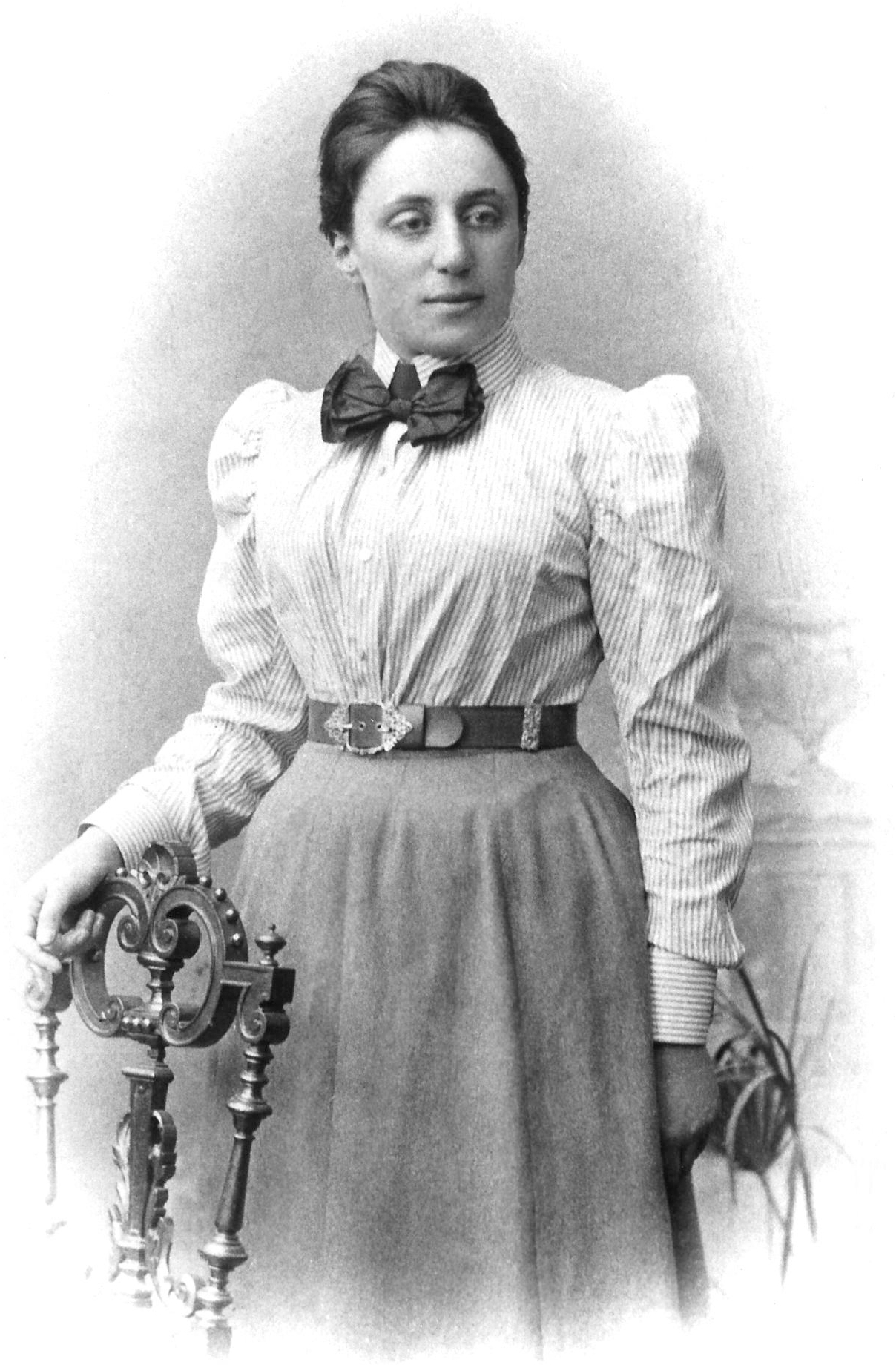
Emmy  Noether (1882-1935)

Consider Emmy Noether, the legendary physicist once referred by Albert Einstein as, “The most significant creative mathematical genius thus far produced,” a fitting endorsement for a mathematician who made groundbreaking contributions to the fields of abstract algebra and theoretical physics, all the while overcoming deep seated sexism in her line of work. Google celebrates the 133th anniversary of Emmy Noether with a doodle, today 23March.

Noether was passionate about math, despite living in an era where women were often excluded from these subjects. 

While studying at the University of Erlangen as just one of two women at the school, Noether was only allowed to audit classes and needed to obtain permission from her professors in order to attend. 

After passing her graduation exam, she taught at the school’s Mathematical Institute for seven years without pay, frequently covering her father’s classes when he was out sick and publishing her own papers.


Emmy Noether Doodle

"In this doodle,each circle symbolizes a branch of math or physics that Noether devoted her illustrious career to. From left to right, you can see topology (the donut and coffee mug), ascending/descending chains, Noetherian rings (represented in the doodle by the Lasker-Noether theorem), time, group theory, conservation of angular momentum, and continuous symmetries–and the list keeps going on and on from there! Noether’s advancements not only reflect her brilliance but also her determination in the face of adversity."

Sophie Dia, Doodler


G-Souto

23.03.2015
copyright © 2015G-Souto'sBlog, gsouto-digitalteacher.blogspot.com®
Creative Commons License
Students : Apply for the European Space Camp 2015 by G-Souto is licensed under a Creative Commons Attribution-NonCommercial-NoDerivatives 4.0 International License.