Showing posts with label Spring equinox. Show all posts

Saturday, March 21, 2020

World Poetry Day & Spring time : let's talk about poetry & hope !


Spring
William Blake

"Sound the flute!
Now it's mute!
Birds delight,
Day and night,
Nightingale,
In the dale,
Lark in sky, -
Merrily,
Merrily, merrily to welcome in the year.(...)

William Blake, Spring (Songs of Innocence)

On a Spring afternoon, a poem we can recite that makes spring seem more intensely itself. Even on a rainy afternoon like this one.

Yes, today we celebrate World Poetry Day. The observance of World Poetry Day is also meant "to encourage a return to the oral tradition of poetry recitals, to promote the teaching of poetry, to restore a dialogue between poetry and the other arts such as theatre, dance, music and painting, and to support small publishers and create an attractive image of poetry in the media, so that the art of poetry will no longer be considered an outdated form of art, but one which enables society as a whole to regain and assert its identity."

United Nations


  • William Blake:

Spring is a lyric poem written and illustrated by William Blake. It was first published in Songs of Innocence (1789) and later in Songs of Innocence and Experience (1794).


Songs of Innocence and Experience
William Blake

Songs of Innocence and of Experience is an illustrated collection of poems by William Blake. It appeared in two phases. A few first copies were printed and illuminated by William Blake himself in 1789.


William Blake
by Thomas Philips, 1807


Little boy,
Full of joy;
Little girl,
Sweet and small;
Cock does crow,
So do you;
Merry voice,
Infant noise;
Merrily, merrily, to welcome in the year.(...)


William Blake was an English poet, painter, engraver, and visionary. Largely unrecognized during his lifetime, Blake is now considered a seminal figure in the history of the poetry and visual arts of the Romantic Age. 

Blake was placed at number 38 in the BBC's poll of the 100 Greatest Britons. Though in his lifetime his work was largely neglected or dismissed  he is now considered one of the leading lights of English poetry, and his work has only grown in popularity.

While he lived in London his entire life, except for three years spent in Felpham, he produced a diverse and symbolically rich œuvre, which embraced the imagination as "the body of God" or "human existence itself".

(...)
Little lamb,
Here I am;
Come and lick
My white neck;
Let me pull
Your soft wool;
Let me kiss
Your soft face;
Merrily, merrily, to welcome in the year.

William Blake, Spring


Education

  • Style & Interpretation:

The poem is split into three stanzas. The rhyme scheme goes AABBCCDDE. The last line of each stanza is the same to show the joy the author has for this time of year. The poem is written in dactylic feet. 

"Spring" is a happily written poem with a hint of rhyme. Devoted to Blake's favorite things, each stanza describing a particular thing. The first stanza is about birds and a bush, the second a little boy and a little girl, and in the final stanza the lamb and "I". This format shows the transition from innocence to a bit of romance, where the child and lamb become close. 


Useful link for students:

The William Blake Archive


Pink Peach Tree in Blossom (Reminiscence of Mauve),1888
by Van Gogh
Kröller-Müller-Museum

Spring is back! Yesterday, the 2020 March was the first day of Spring 2020. Also known as the vernal equinox. It may still be frosty around Portugal, but birds are singing outdoors, on the trees. We listen and try to not think about the social isolation.

Lisboa Ainda

Lisboa não tem beijos nem abraços
não tem risos nem esplanadas
não tem passos
nem raparigas e rapazes de mãos dadas
tem praças cheias de ninguém

(...)

fechada dentro de si mesma ainda é Lisboa
cidade aberta
ainda é Lisboa de Pessoa alegre e triste
e em cada rua deserta

ainda resiste

Manuel Alegre, Lisboa Ainda, 20 March 2020
Portuguese poet on his Facebook page


Kids painting spring birds
credits: Creative Moon blog for kids

May be birds feel that we need some joy - they are very happy, believe me! - around the sadness caused by the coronavirus that appeared in Europe some weeks before Spring. We stay home and avoid contact with other people, all over Europe. We obey to the social distance rules.

So we can't feel the the happiness of Spring. We don't go for a walk, even Japan cancelled the traditional Cherry Blossom Season

However, we the humans are kind. Creativity, kindness ans canals offers hope amid outbreak around all Europe. And Italians are so inspiring!


Education:

Teachers don't have students at school. Students are at home. The number of children, youth and adults not attending schools or universities because of COVID-19 is soaring. Governments all around the world have closed educational institutions in an attempt to contain the global pandemic
(link is external). 
Teachers help them to study at home. It's not Easter time. Students are on quarantine. But teachers are in contact with their students on WhatsApp, Skype, email, social media and some educational platforms.

However kids are anxious! All the family is. They don't go to school because a virus. At home on TV, on Internet and on social media are talking and talking about it. There are some real images. But so cruel to kids!

Why not to tell a story of hope - spring is here - reading aloud to the little ones  the book And Then it's Spring by Julie Fogliano, illustrated by Erin E. Stead. 

After, ask the students to go on YouTube watching the video.


And Then it's Spring
written by Julie Fogilano
illustrated by Erin E. Stead
Roaring Brook Press, 2012

Synopsis

Following a snow-filled winter, a young boy and his dog decide that they've had enough of all that brown and resolve to plant a garden. They dig, they plant, they play, they wait . . . and wait . . . until at last, the brown becomes a more hopeful shade of brown, a sign that spring may finally be on its way. Julie Fogliano's tender story of anticipation is brought to life.


"Many treasures lie buried within this endearing story, in which humor and anxious anticipation sprout alongside one another."

Kirkus


There's must be always in our hearts, don't you agree?


G-Souto

21.03.2020
Copyright © 2020G-Souto'sBlog, gsouto-digitalteacher.blogspot.com®

Creative Commons License
World Poetry Day & Spring time : let's talk about poetry and hope ! by G-Souto is licensed under a Creative Commons Attribution-NonCommercial-NoDerivatives 4.0 International License.

Tuesday, April 10, 2018

March in Review & Science : How far is far ? S. Chandrasekhar


Artist’s illustration of the Chandra spacecraft in orbit
Photo Credit: Marshall Space Flight Center

“Twinkle, twinkle little star, how I wonder what you are.”  

How far is far? To help put ‘space’ in perspective, Chandra X-ray Observatory takes us on a journey from some of the smallest to some of the largest distances in our universe.


The clearest way to define distance is as “the amount of space between two points.” But how far is far?

This short video compares distances from the very small to the very far, from the distance between gravitational waves to the distance to some of the farthest galaxies.

An interesting digital resource to include into your science lesson.

  • And why 'Chandra' telescope?

Chandra X-ray Observatory is in orbit around the Earth. It was launched in 1999. And next year marks the 20th anniversary of NASA's Chandra X-ray Observatory launch into space. 


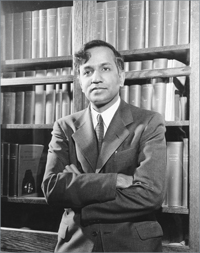
S. Chandrasekhar
credits: AIP

“Twinkle, twinkle little star, how I wonder what you are.” 

Roger Brissenden outlines some recent successes of the telescope and discusses the achievements of Subrahmanyan Chandrasekhar the Indian born astrophysicist after whom the telescope is named. 


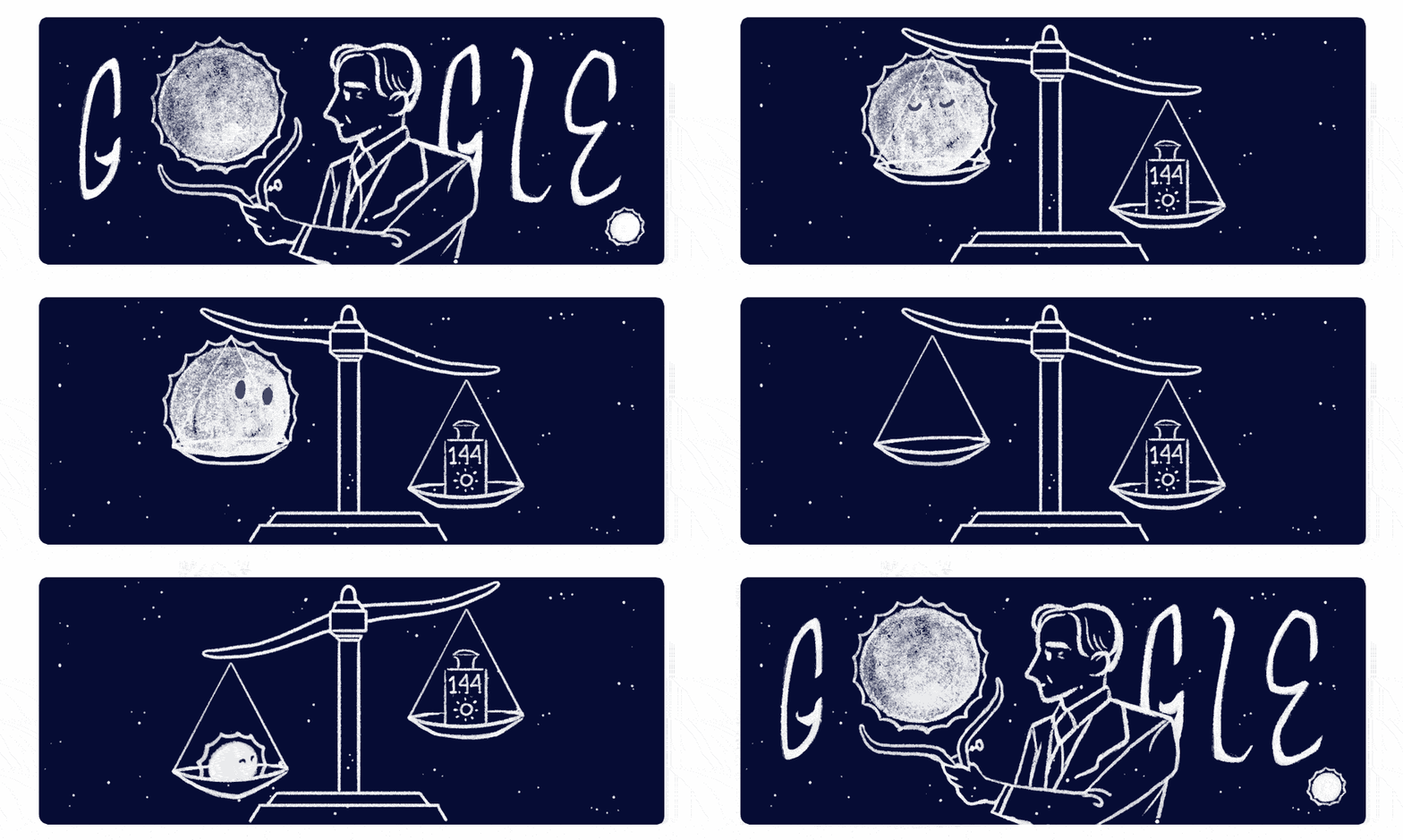
Google S. Chandrasekhar’s 107th Birthday (2017)
https://www.google.com/doodles/


Arguably the greatest astrophysicist of the twentieth century, his name is in every astronomy book. From the upper mass limit of a white dwarf, Chandrasekhar’s limit, to the orbiting Chandra X-ray telescope, he left his mark on the very concepts and vocabulary that physicists and astronomers use today. Prof Subrahmanyan Chandrasekhar received the Nobel Prize in Physics 1983.


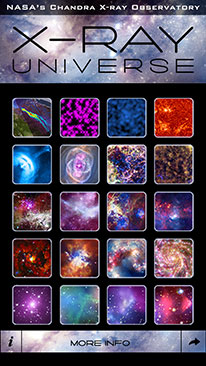
X-ray Universe:
NASA's Chandra X-ray Observatory 
iPhone app

Education:

Teachers, invite your students to visit Chandra X-ray Observatory website. There are featured resources, app, interactive games, activities and quizzes that you can explore into your lessons.

As well, at the end of every month I put together a list of the most popular posts. You will find posts written in English and Portuguese. 

And now, it's time to the review of the most popular posts of March:
    Here are the most popular posts of the last month:


Wherever you are, I hope you are happy to come back to school after Easter holiday.
Thanks all the educators from around the world who kindly continue to read my blog every day. 

The classroom must be an open window to the world. Students must feel free to talk and share ideas about all the subjects they care about, in and around every curriculum.

Have a nice time wherever you are! Here, rainy time!

G-Souto

10.04.2018
Copyright © 2018G-Souto'sBlog, gsouto-digitalteacher.blogspot.com®


Creative Commons License
March in Review & Science : How far is far ? S. Chandrasekhar by G-Souto is licensed under a Creative Commons Attribution-NonCommercial-NoDerivatives 4.0 International License.

Saturday, March 24, 2018

Schools : Daylight Saving Time ? Oops ! Spring Forward, let's go ! Resources


Daylight saving cartoon


It's that time of year when most of us in European countries and North America have to move their clocks forward by one hour. USA states did on March 11, 2018, 3:00am local daylight time instead. Also called Spring Forward, Summer Time, and Daylight Savings Time.


It is that time of year, when wake-up calls mean sunshine and days get a bit longer. Early risers rejoice and those of you who hit the snooze button - at least you get to do it with a bit of light in your room. However, this year students are happy, because DST starts on Easter season. Wow! They are lucky!


Well, at this time of the year, time changes! In Europe clocks changes next Sunday 25 March  (almost in all countries!).


However there's a great campaign against the day light saving time. 
People around the world are far way to change their time. Efforts to kill off daylight saving time are nearly as old as the time shift itself. And many of the commonly offered rationales for daylight saving time no longer hold true.


The implementation of Daylight Saving Time has been fraught with controversy since Benjamin Fran
klin conceived of the idea. 


And then there's the physiological cost of DST: fatigue! The Centers for Disease Control and Prevention regard insufficient sleep as a public health problem in general - and the hour you lose in the spring makes it worse. 


"Lack of sleep has many ramifications, from minor to major, depending on your accumulated sleep debt. Short term, lack of sleep tends to have an immediate effect on your mental and emotional states."


About 60 percent of people feel the effects of lost sleep the Monday after they Spring forward, the "consumer education" arm of sleep products manufacturers. 


Daylight Saving Time wasn't introduced in Europe until 1914 and America until 1918, when it was meant to conserve energy for World War I. 


The practice became widespread on 21 March 1918 as a way to reduce the number of hours homes needed to use lighting and electricity. 


The thought was, essentially, Franklin
's: that people tend be more active in the evenings, so the extra daylight there would mean fewer hours where people lit their houses at night. 


In 1942, during World War II, DST was enacted again, but year-round. Afterwards, well, adoption varied.


credits: Manjunath Kiran/AFP/Getty Images


Education:

That's right, Daylight Saving Time starts on Sunday.  That means that on Monday morning some students may come to class complaining about their lost hour of sleep. They may also wonder why we have Daylight Saving Time.


Like anytime you lose sleep, Springing forward causes decreases in performance, concentration, and memory common to sleep-deprived individuals, as well as fatigue and daytime sleepiness.


Well, teachers know that DST can be disruptive for some teenagers and school children everywhere. Students feel tired in the morning courses during the first week.


The rationale behind changing the times on the clock makes little (or more likely, no) sense to them.


Be patient! Day Light Saving Time must go on this year. So, here you have some resources. 


credits: Adrienne Hedger


Resources:

The following videos offer concise explanations of Daylight Saving Time:

  • Videos


You can include one or two of these videos into your school curriculum to provide a good explanation of the rationale for Daylight Saving Time. Students will understand better the reasons of DST. And please, discuss pros and cons with your students. They will explain better their reasons to be so sleepy in the first weeks after DST.


Kids are always curious to know why 'things' happen! Here a good way to let them learn about Day Light Saving, Spring Equinox and some traditions of different civilizations.


In Portugal and the UK clocks change soon after the start of Spring. We have the same time (GMT). 


This year watches will go forward by one hour at 1am on 25 March, which is the final Sunday of the month. 


This marks the start Daylight Saving Time - which means there will be less sunlight in the morning and more in the evenings. 


Students will be invited to do some research about DST in other countries around the world as some different traditions in every country.


  • Curricula: Sciences; Languages, History, Geography. 

  • Level : Primary education; Secondary Education.


Teachers must adapt the activities to the levels they are teaching, of course. It's very important!


Wishing all a Happy Spring time! I love Spring !

G-Souto

24.03.2018

update 29.03.2025
Copyright © 2018G-Souto'sBlog, gsouto-digitalteacher.blogspot.com®

Creative Commons License
Schools : Daylight Saving Time ? Oops ! Spring Forward, let's go ! Resources by G-Souto is licensed under a Creative Commons Attribution-NonCommercial-NoDerivatives 4.0 International License.