Showing posts with label Mars. Show all posts

Sunday, July 12, 2026

Science ! Let's talk about the Seven Sisters, the Pleiades !


credits: Manfred_Konrad via Getty Images


The night sky can be a wondrous place filled with stars, but there are some brilliant celestial lights that shine brighter than others.


Yesterday night, 11 July  Moon met the Seven Sisters Pleiades and 13 July Moon wil be near Aldebaran, Mars and the Pleiades.


credits: Muhammad Alaa in Sanabu, Assiut, Egypt


The Pleiades, do you know ?


The Pleiades is a bright star cluster and a popular skywatching target.

The Pleiades are an asterism, or pattern of stars, as well as an open star cluster, made up of more than 1,000 stars. 

They are located in the constellation Taurus and are about 410 light-years from Earth. 

Recently astronomers discovered that the Pleiades star cluster has more than 3,000 sibling stars that originated from the same giant molecular cloud.


The Taurus Constellation
credit: manpuku7 via Getty Images


The Seven Sisters ?


The Pleiades, or "Seven Sisters" (Messier 45), is a  young, bright open star cluster in the constellation Taurus. Located about 444 light-years away, it contains over 1,000 stars, though only 6 to 7 are typically visible to the naked eye


Also known as the "Seven Sisters" and Messier 45, they derive their English name from Greek legend in which the stars represent the daughters of the ocean nymph Pleione.


  • Mythology :


Many ancient cultures had myths and stories associated with the Pleiades. 


In Greek mythology, the Pleiades were the seven daughters of Atlas, a Titan who held up the sky, and the oceanid Pleione, protectress of sailing. 


The Pleiades Greek Mythology

The sisters were Maia, Electra, Alcyone, Taygete, Asterope, Celaeno and Merope. Also, the Pleiades were sometimes said to be nymphs in the train of Artemis. They were half-sisters of the seven Hyades. The Hyades pattern is another star cluster near the Pleiades stars.


According to the myth, when the hunter Orion pursued the sisters, Zeus transformed them into doves and placed them in the heavens to protect.


According to a Polynesian legend, the Pleiades was once a single star: the brightest in the sky. The Polynesian god Tane disliked this star bragging about its beauty. So the god smashed the star into pieces, creating the Pleiades star cluster.


Pleiades and Halloween : The modern-day festival of Halloween originates from an old Druid rite that coincided with the midnight culmination of the Pleiades cluster. People believed the veil dividing the living from the dead was at its thinnest when the Pleiades culminates – reaches its highest point in the sky – at midnight.


credits: Earth.org


Shortly before sunrise tomorrow morning, look for the thin waning crescent moon, glowing with earthshine. It’ll lie close to the horizon, with the red planet Mars and bright orange giant star Aldebaran somewhat higher in the east. You might see the tiny dipper-shaped Pleiades star cluster, too. 

Chart via EarthSky


  • How to watch :


Observing the night sky can be done with no special equipment, although a sky map can be very useful, and a good telescope or binoculars will enhance some experiences and bring some otherwise invisible objects into view.


  • Resources:

Here the five best night sky sights of July 2026. Mark your calendar skygazers students !


  • Best stargazing locations, recommended by the EarthSky community

Follow here


Education:
It’s time for the best of 2026 in the night sky! Mark your calendars for these special stargazing events in this year. From planetary pairings to epic eclipses, and from intriguing evening sky scenes to inspiring morning views, there’s much to see.


via Pinterest

July is a wonderful month to stargazing. The Pleiades! An awesome event to share with your students if you still in class. That's depends from the country.


Most of us are excited about this. Sciences teachers and students. Stargazers as well. 


The last publishing has been in April 2025 : Science Education: Don't miss the Pink Moon to light up the sky on April 12, remember?

Wow ! So long I don't publish about science and shy ! 

Let's do now ! Teachers id you are still in person lessons at schools, invite your students to be ready as stargazers. 


If not, contact your students by social media and ask them to take some photos if they are lucky, or capture small videos (some seconds) with their smartphones and tablets to explore in Science classroom after school holidays.


After Summer holiday, teachers and students will discuss their experiences and knowledge about the Pleiades. it will be fantastic !


Curricula: Cross-curricular: History; Sciences; Languages & Literature (traditions, mythology, poetry, prose).

Level : All levels.

Teachers must consider the activities to every level or curriculum they are teaching.

Sciences curriculum will be enhanced with another spectacular event. The Pleiades!


G-Souto

12.07.2026
Copyright © 2026G-Souto'sBlog, gsouto-digitalteacher.blogspot.com®


Science : Hey stargazers ! Let's talk about the Seven Sisters, the Pleiades+ ! by G-Souto is licensed under a Creative Commons Attribution-NonCommercial-NoDerivatives 4.0 International License

Sources: EarthSky/ Space.com/ Wikipedia


Monday, June 6, 2016

May rundown of the most read posts


Put Your Head into Gallery | Gagosian Gallery


Are you mad about Art ? I am! I write often about Art, as you know if you are a regular reader. Of course you are. My last post was about the artist Lotte Reiniger.
You have a dream of one day seeing a piece of your own displayed and admired in a famous art gallery? Well, I'm not enough mad about it. Ok! But your students will love! Remember my post Schools: Take a Selfie with a Painting.(2014). A huge success among students.
Now a new project Tezi Gabunia, interactive installation allows you/ them to experiment this thrill. 


Put Your Head into Gallery | Tate Modern
Through four different models of world famous galleries, his installation Put Your Head into Gallery, literally allows one to become a feature of the exhibit.
The project includes four miniature recreations of Saatchi Gallery (Tezi Gabunia), The Louvre (Rubens), Tate Modern (Hirst), and Gagosian Gallery (Liechtenstein).

Transportable feature of the models makes these galleries accessible for everyone. Moreover, anyone can look into gallery, take a photo and become an exhibition.
"The installation aims make the art scene accessible to everyone by bringing the prominent buildings to the audiences, as opposed to the other way around.
Nothing better that let your students discover the wonders of new technology by sharing this project.

Oh! By the way tomorrow we will celebrate the 2016 edition of the United Nations World Oceans Day, held each year on 8 June. People all over the globe are celebrating in multiple events to mobilize society and protect the ocean, its biodiversity and its resources. Ask your students to join this event.


Education:
If you are lucky and you're teaching near this gallery, don't loose the opportunity to let your students enjoying this awesome experience.
Include the events into your curriculum at school and let your students participate with some nice activities.
I couldn't miss to share with teachers  two importantant events as introduction of the rundown of the most read posts in May.

Here are the most popular posts of the last month:


Hope you enjoyed the different themes and resources published on May on my blog It was a fantastic month full of good pedagogical themes - museums, ICT, arts, environment, science, exhibitions, citizenship - different pedagogical resources to motivate some of your lessons.

I'm back to posting the normal roundup every week. 


G-Souto 


07.05.2016
Copyright © 2016G-Souto'sBlog, gsouto-digitalteacher.blogspot.com®

Creative Commons License
May rundown of the most read posts by G-Souto is licensed under a Creative Commons Attribution-NonCommercial-NoDerivatives 4.0 International License.

Sunday, May 29, 2016

Education : "Mars in our Sky Night" in sciences curriculum


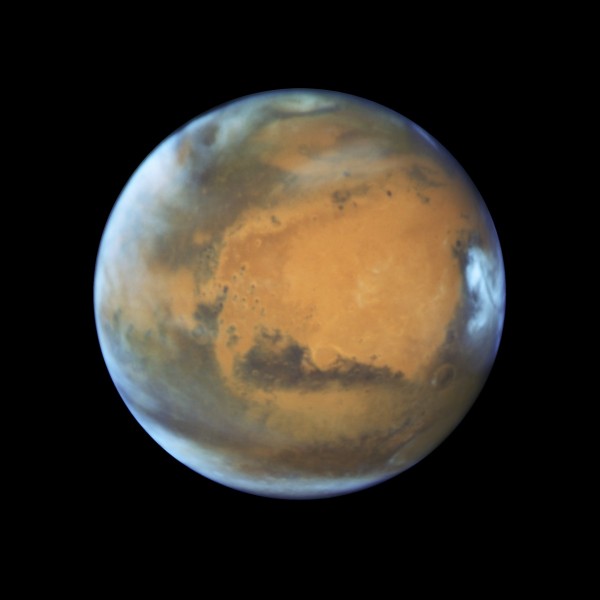
Mars/ The red planet
credits: NASA
image from the Hubble Space Telescope, May 12
On May 30, 2016, tomorrow, the red planet Mars comes closer to Earth than it has been since November, 2005. 
Great time to get a close-up look at Mars, even if you don't have a telescope. The next Mars Close Approach is July 31, 2018.
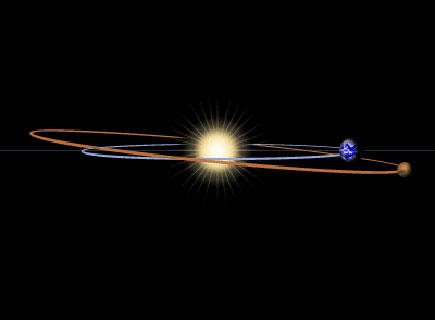
It lies 46.8 million miles (75.3 million km) from Earth on this date. This is Mars’ closest point for this year. That’s in spite of the fact that Earth passed between Mars and the sun (the martian opposition) on May 22.
The red planet is closer to Earth than it has been for 11 years. Yes, that's still a long way off, but sometimes Mars is 249 million miles (400 million kilometers) from Earth.
"Mars Close Approach is May 30, 2016. That is the point in Mars' orbit when it comes closest to Earth. Mars will be at a distance of 46.8 million miles (75.3 million kilometers). Mars reaches its highest point around midnight -- about 35 degrees above the southern horizon, or one third of the distance between the horizon and overhead. Mars will be visible for much of the night."


credits:  NASA/JPL-Caltech 
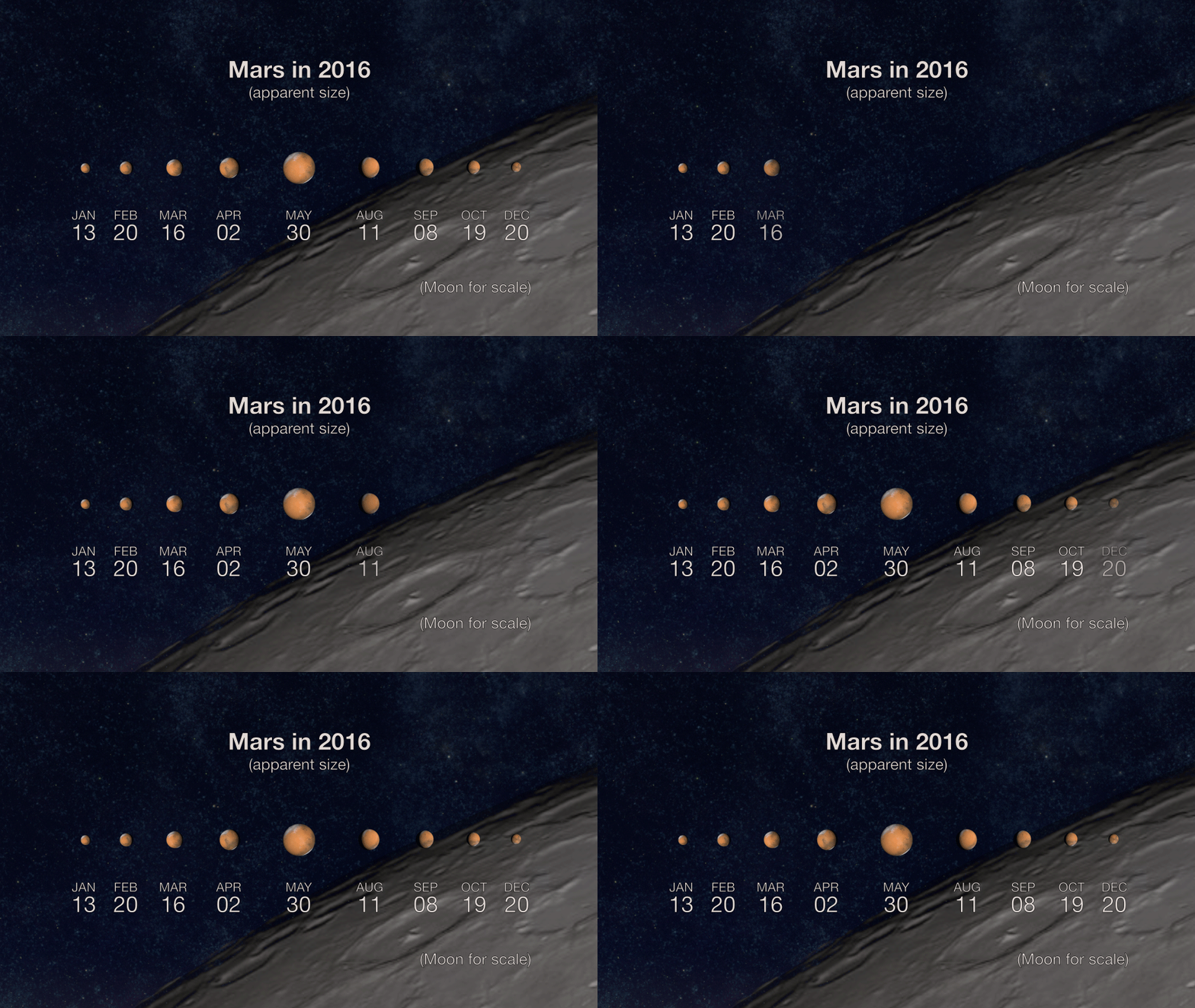
What does this close approach mean for sky watchers? It means Mars will appear bigger and brighter until June 3, according to NASA.
You don't need a telescope or binoculars to see Mars as it moves in for its close-up. In fact, you'll probably be able to find it without a star chart or an astronomy app.


Generally speaking, Mars is brightest in 2016 from about May 18 to June 3. It is now shining nearly on par with the planet Jupiter, and it’s not very often that Mars can match Jupiter in brilliance!
You might think Mars should be brighter when closest to Earth on May 30 than when it was at opposition on May 22. Although Mars is still plenty bright, it’s a tiny bit fainter than at its May 22 opposition. That’s because of something known as opposition surge. Mars directly reflects sunlight back to Earth at opposition, accentuating Mars’ brilliance. Before and after opposition, sunlight is reflected at a slightly slanted angle relative to Earth, thereby reducing Mars’ brightness.
Tonight’s close encounter between the Earth and Mars will be the closest until around the time of the Martian opposition on July 27, 2018.


Moon for scale
credits: NASA/JPL-Caltech
http://mars.nasa.gov/
Education:
Tomorrow, 30 May, the red planet Mars comes closer to Earth. Another awesome event to share with your students.

Most of us are excited about this. Sciences teachers and students. Skywatchers as well. 

The last publishing has been on May 4: Science Education: Don't miss Eta Aquarid meteor shower, remember?

Teachers invite your students to be ready as skywatchers. Sciences curriculum will be enhanced with another spectacular event. Mars closest to Earth.


Earth/ Mars
credits: NASA

The Red Planet comes close enough for exceptional viewing only once or twice every 15 or 17 years.

Do you want a better science lesson ? Live science learning. Wow! No special equipment. 

Activities: 

Teachers, students can be skywatchers, and at the same time do some good shots, or videos with iPhones, smartphones or tablets. 

The event will be discussed next Sciences lesson in the clasroom. 

Resources: 


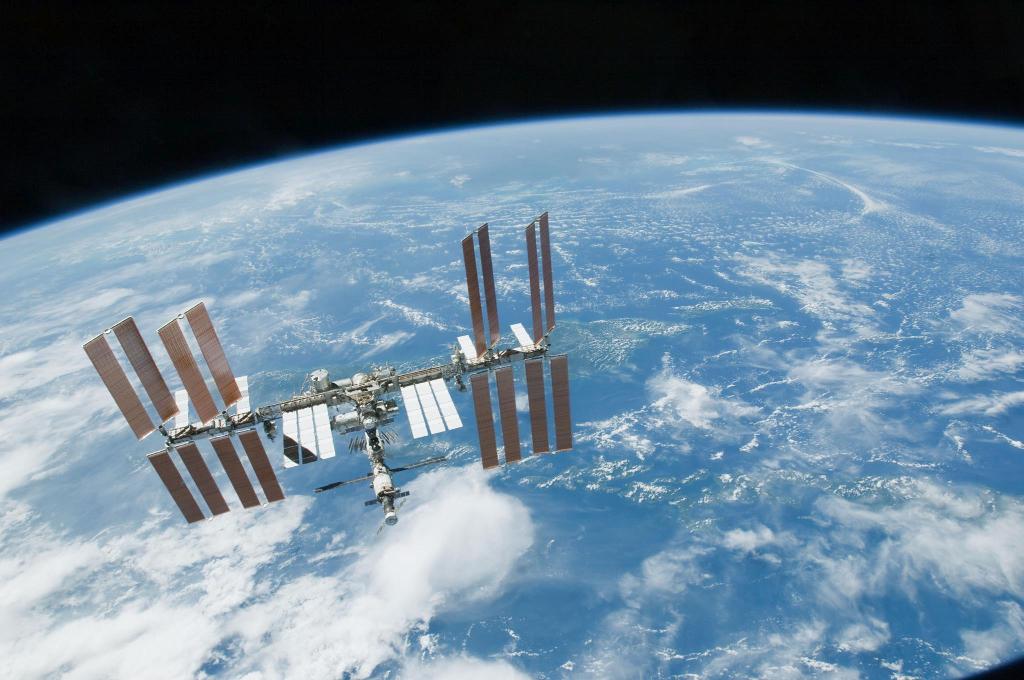
Event: Join Mark Zuckerberg to Connect with Space Station


Important!

Another interesting event near by. Your school class has an account on #Facebook?
"Join Mark Zuckerberg as he connects with the astronauts on the International Space Station to ask questions from you, the users of Facebook via a Facebook Live event on Wednesday, June 1 at 12:55pm ET/11:55am CT/10:55am MT/09:55am PT/16:55 UTC."

Mark Zuckerberg will ask your Questions (students) to astronauts on  on June 1st 2016.
Submit Qestions now ! What an excitment!


29.05.2016
Copyright © 2016G-Souto'sBlog, gsouto-digitalteacher.blogspot.com®

Creative Commons License
Education : "Mars in our Sky Night" in sciences curriculum ? by G-Souto is licensed under a Creative Commons Attribution-NonCommercial-NoDerivatives 4.0 International License.

References:

NASA | Earth Sky