Showing posts with label iliteracy. Show all posts

Saturday, September 5, 2015

Schools : International Literacy Day 2015


"New technologies, including mobile telephones, also offer fresh opportunities for literacy for all. We must invest more, and I appeal to all Members States and all our partners to redouble our efforts – political and financial – to ensure that literacy is fully recognized as one of the most powerful accelerators of sustainable development. The future starts with the alphabet."  
Irina Bokova,
UNESCO Director-General

For over 40 years now, UNESCO has been celebrating International Literacy Day by reminding the international community that literacy is a human right and the foundation of all learning. 


The theme of International Literacy Day 2015 is: Literacy and Sustainable Societies

Literacy is a key driver for sustainable development. Literacy skills are the prerequisite for the learning of a broader set of knowledge, skills, attitudes and values, required for creating sustainable societies. 


UNESCO wishes to use this day to draw attention to the importance of reading, writing and language. Every year World Literacy Day launched Literacy Week, during which many organisations run self-motivated activities that focus on literacy – in a concerted effort to counter illiteracy.


Education:


Literacy is a basic human right, a tool of personal empowerment and a means for social and human development. 

59% of the world’s youth illiterate population are female.
Educational opportunities depend on literacy. Literacy is at the heart of basic education for all.


Activites : some ideas:
  • Use any increased flexibility offered in the curriculum to respond to issues as they arise.
  • Provide space for teachers and students to discuss and reflect on these issues.
  • Pupils get a lot of their information about global issues from the media so help them to interrogate this information critically and consider a range of perspectives.
A good quality basic education equips pupils with literacy skills for life and further learning; literate parents are more likely to send their children to school; literate people are better able to access continuing educational opportunities; and literate societies are better geared to meet pressing development.
Ideas + :
Whether it’s reading or writing, literacy is an outlet to an untouchable world – our imagination. 


Readathon:
  • Host a friendly reading challenge to spark students’ interest. Encourage children to read as many books as possible in a week and have them track their progress. Their efforts can be sponsored by family and friends or by incentives created through local libraries and community members
Host a speaker or display a video:
  • Invite a local role model or author to discuss the impact illiteracy has had on their lives. 


Sara Sampaio is a Portuguese model well known all over the world. Teens love her. As you could hear, Sara is proud of his language, Portuguese. But she speak English language fluently among other languages. 

How literacy has been important to her model career, you see? Discuss with the students the impact of literacy in Sara's success?

Of course an author is always interesting and students are found of the authors they read. This is another idea. I practiced often in my time of teaching face to face


Open Mic Night:

  • Invite shcool community to an “Open Mic Night” – serve hot chocolate, ice creams, and pastries to facilitate an opportunity for students and adults - parents, grandparents, friends, brothers, teachers - to share things they have reading or written;
  • Inspire students to build an out-of-this-world literacy habit;
  • #Giveaway : inspire your students to give away sending books to children in Africa or Asia who can't afford books. 
  • Join the global celebration, and be sure to let the International Day of Literacy know how your students are celebrating; 
  • Share pictures and videos on FacebookTwitter, and Instagram using the official hashtag #LiteracyDay

Resources : 


credits : Unesco infographic 2015

Infographic 2015 : Download the Infographic (PDF)

Unesco Brochure 2015 : Download the Brochure (PDF)


Unesco launches Mobile Phones & Literacy: Empowerment in Women’s Hands at the Asian Summit on Education and Skills (ASES) 2015 in Bangalore, India on 8 and 9 September.


The theme for the day which annually raises global awareness on literacy is Literacy and Sustainable Societies. Literacy has long been recognized as a powerful accelerator of sustainable development. At the same time, progress in areas of sustainable development such as health and agriculture serve as an enabling factor in the promotion of literacy and literate environments.


Find further ideas and activities for different levels or curricula on my posts : Schools : International Literacy 2014International Literacy Day 2012 in School 


"Literacy is essential to reach the proposed sustainable development goal to promote ‘inclusive and equitable quality education and lifelong learning for all,” 

Irina Bokova


G-Souto

08.09.2015
Copyright © 2015G-Souto'sBlog, gsouto-digitalteacher.blogspot.com®

Creative Commons License

Schools : International Literacy Day 2015 bG-Souto is licensed under a Creative Commons Attribution-NonCommercial-NoDerivatives 4.0 International License.

Saturday, September 6, 2014

Schools : International Literacy Day 2014


Literacy is a key lever of change and a practical tool of empowerment on each of the three main pillars of sustainable development: economic development, social development and environmental protection.  

Former UN Secretary-General, Kofi Anna

For over 40 years now, UNESCO has been celebrating International Literacy Day by reminding the international community that literacy is a human right and the foundation of all learning. 

The theme of International Literacy Day 2014 is “Literacy and Sustainable Development”.  Literacy is one of the key elements needed to promote sustainable development, as it empowers people so that they can make the right decisions in the areas of economic growth, social development and environmental integration. Literacy is a basis for lifelong learning and plays a crucial foundational role in the creation of sustainable, prosperous and peaceful societies. 


"Literacy skills developed from a basic to advanced level throughout life are part of broader competencies required for critical thinking, the sense of responsibility, participatory governance, sustainable consumption and lifestyles, ecological behaviours, biodiversity protection, poverty reduction, and disaster risk reduction."

This year’s International Literacy Day will be celebrated worldwide. A main global celebration will take place in Dhaka, where the Government of Bangladesh in cooperation with UNESCO will organize the International Conference on “Girls’ and women’s literacy and education: Foundations for sustainable development and the awarding of UNESCO Literacy Prizes” in support for the UN Secretary General’s Global Education First Initiative (GEFI).


Credits : UNESCO

Education:

Literacy is a human right, a tool of personal empowerment and a means for social and human development. Educational opportunities depend on literacy.

There are still 781 million adults and 126 million youths who cannot read or write a simple sentence - numbers that weigh heavily on efforts to alleviate poverty.

Watch the UNESCO 2014 Literacy in the World infographic here:


International Literacy Day is just one way UNESCO strives to increase literacy around the world. 
Literacy is at the heart of basic education for all, and essential for eradicating poverty, reducing child mortality, curbing population growth, achieving gender equality and ensuring sustainable development, peace and democracy. There are good reasons why literacy is at the core of Education for All (EFA).


#ILD14

A good quality basic education equips pupils with literacy skills for life and further learning; literate parents are more likely to send their children to school; literate people are better able to access continuing educational opportunities; and literate societies are better geared to meet pressing development.

Some ideas:

  • Use any increased flexibility offered in the curriculum to respond to issues as they arise.
  • Provide space for teachers and students to discuss and reflect on these issues.
  • Pupils get a lot of their information about global issues from the media so help them to interrogate this information critically and consider a range of perspectives.
NASA in parternaship with the International Reading Association for the celebration of International Literacy Day have interesting activities for # DL14


Credits : NASA / IRA
  • Help your students "Lift Off to Literacy" by engaging them in an extra 60 seconds of literacy activities for 60 days;
  • Inspire students to build an out-of-this-world literacy habit;
  • Display the video NASA astronaut Kjell Lindgren talking about the important role that literacy has played in his life; why NASA is partnering with the International Reading Association for the celebration of International Day of Literacy today September 8, 2014;
  • Find how you can join him in the mission to Lift Off to Literacy;
  • Join the global celebration, and be sure to let the International Day of Literacy know how your students are celebrating; 
  • Share pictures and videos to FacebookTwitter, and Instagram using the official hashtag #ILD14

Find further ideas and activities for different levels or curricula on my post International Literacy Day 2012 in School 


G-Souto

08.09.2014
Copyright © 2014G-Souto'sBlog, gsouto-digitalteacher.blogspot.com®

Creative Commons License
Schools : International Literacy Day bG-Souto is licensed under a Creative Commons Attribution-NonCommercial-NoDerivatives 4.0 International License.

Friday, September 7, 2012

International Literacy Day 2012 in School


International Literacy Day

" Education brings sustainability to all the development goals, and literacy is the foundation of all learning. It provides individuals with the skills to understand the world and shape it, to participate in democratic processes and have a voice, and also to strengthen their cultural identity."

Irina Bokova, Director- general UNESCO

For over 40 years now, UNESCO has been celebrating International Literacy Day by reminding the international community that literacy is a human right and the foundation of all learning. 

The theme of International Literacy Day 2012 is "Literacy and Peace". This theme was adopted by the United Nations Literacy Decade (UNLD) to demonstrate the multiple uses and value that literacy brings to people. 

"Literacy contributes to peace as it brings people closer to attaining individual freedoms and better understanding the world, as well as preventing or resolving conflict. The connection between literacy and peace can be seen by the fact that in unstable democracies or in conflict-affected countries it is harder to establish or sustain a literate environment."


Literacy is a human right, a tool of personal empowerment and a means for social and human development. 

Educational opportunities depend on literacy. Literacy is at the heart of basic education for all.
A good quality basic education equips pupils with literacy skills for life and further learning; literate parents are more likely to send their children to school; literate people are better able to access continuing educational opportunities; and literate societies are better geared to meet pressing development.


Education:

"Everyone has the right to education."


  • Today, nearly 17% of the world’s adult population is still not literate; two thirds of them women, making gender equality even harder to achieve.
  • The scale of illiteracy among youth also represents an enormous challenge; an estimated 122 million youth globally are illiterate, of which young women represent 60.7%.
  • The 67.4 million children who are out of school are likely to encounter great difficulties in the future, as deficient or non-existent basic education is the root cause of illiteracy.
  • With some 775 million adults lacking minimum literacy skills, literacy for all thus remains elusive.
These numbers are scary! We are at the 21th century. Science and High Technlogies are on the top. And so many people can't read? 

Some ideas for different levels or curricula: 

Let's start for a good discussion with our students about the important human right of reading. 

We can display (smartphones, ipads and other devices) the Literacy in the World Infographic here

And after this valious discussion, we can propose different activities.


The Fantastic Flying Books of Mr. Morris Lessmore
https://en.wikipedia.org/


Primary education:

The Fantastic Flying Books of Mr. Morris Lessmore can be a lovely motivation to  stimulate the love for books and reading pleasure in  native  language curriculum or in foreign languages curriculum! This short animated narrative can be a good resource for captivating your little students!


I know how students love to read when their teachers love books. I can assure you. It's a transmissible pleasure! 

"The Fantastic Flying Books of Mr. Morris Lessmore" app (iPad) can be used in the classroom as a precious motivation to introduce the values: 
  • love for books
  • love for libraries
  • love for knowledge

Children's books interactive for iPad are becoming more engaging and, in some cases, are visually stunning. Remembering also Alice in Wonderland for iPad or iPad features & Education.


Middle and Secondary education:

We can reuse and adaptate some of UNESCO's activities introducing them as a regular activities in Language & Civics curriculum:
  • Start a reading club;
  • Participate in a readathon, kicking off a cross-grade reading buddy program;
  • Invite the best readers students to volunteer by helping some poor-readers colleagues at the school library:
  • Donate books and reading materials to their ancient school or community center;
  • Volunteer to teach literacy classes in your community after school, once a week;
  • Become a mentor of a non-literate person. *
Adult education: 

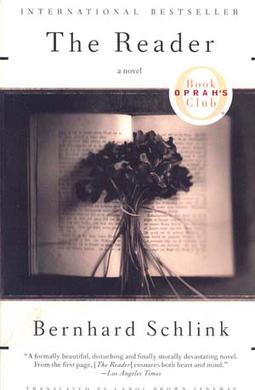
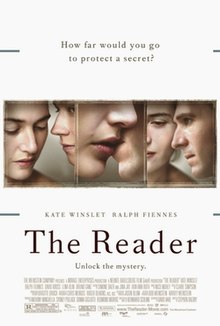
As we talked above about Adult learning, "The Reader" by Bernhard Schlink is an ineteresting book. There's s a film based on te bool.


The Reader by Bernhard Schlink, a law professor and judge.

The Reader has been included in the curricula of college-level courses in Holocaust literature and German language and German literature in the United States.

We can include the book
(translation in different languages) in the Language curriculum of adult learning courses. Of course the Holocaust is an important theme. 

"The story is a parable, dealing with the difficulties post-war German generations have had comprehending the Holocaust"


However, we can emphasize the unhapiness of iliteracy and Hanna's shame at being iliterate so well described by this character in the novel. And the joy she feels when Michael read to her.

Cons:

Some people are uncomfortable with the moral ambiguity. So we must have a good discussion in the course during the lecture.

"Schlink is making a case for the moral value of literature in society not just because reading is important to the characters, but also because Schlink uses the novel as a vehicle for philosophical and moral exploration."

Erin Collazo Miller (free lancer writer)


The Reader
 Bernhard Schlink

The Reader, the film by Stephen Daldry is based on the novel of the same name. Both are wonderful resources.

The performance or display of a movie by teachers in a course of face-to-face teaching activities in a classroom or similar place devoted to instruction like learning environment can be one of the most interesting educational resources for students from primary education to adult education. 

It's a rich interactive approach of exploring Literature for children, youth or adults.

It's your choice. In your lessons, you can start by reading the book or display the movie as a motivation, followed by a comparative study. 


* Of course, you can also extend some of activities that I include for middle and secondary education.

Invite your students to send their literacy stories to joinliteracy(at)unesco.org


"We should teach great books; we should teach a love of reading."

B.F. Skinner

G-Souto

08.09.2012
Copyright © 2012G-Souto'sBlog, gsouto-digitalteacher.blogspot.com®

Licença Creative Commons

International Literacy Day 2012 in School by G-Souto is licensed under a Creative Commons Attribution-NonCommercial-ShareAlike 3.0 Unported License.

References:

Internation Literacy Day
http://www.unesco.org/new/en/unesco/events/prizes-and-celebrations/celebrations/international-days/literacy-day/

The Reader
http://en.wikipedia.org/wiki/The_Reader

The Reader (movie)
http://en.wikipedia.org/wiki/The_Reader_(2008_film)

Open Educational Resources for literacy
http://www.accu.or.jp/litdbase/