Showing posts with label eBooks. Show all posts

Saturday, October 16, 2021

Schools : World Food Day : "Our Actions are our Future." Be a Hero ! Join the contest !


On this day, 16 October, we celebrate the World Food Day. Commemorated annually on 16 October, Secretary-General António Guterres pointed out that currently, almost 40 per cent of humanity, some three billion people, can’t afford to eat healthily.

And as hunger, undernourishment, and obesity are on the rise, the economic impacts of COVID-19“have made a bad situation even worse”, he said, noting that the pandemic has left an additional 140 million people “unable to access the food they need”.


Sustainable agri-food system is one in which a variety of sufficient, nutritious and safe foods is available at an affordable price to everyone. Nobody goes hungry or suffers from any form of malnutrition. 

Nowadays, almost 40% of the world’s population cannot afford a healthy diet and 2 billion people are overweight or obese due to a poor diet and sedentary lifestyle. 

We need to be part of the change. This World Food Day, take action, and share the message!


Theme: "Our Actions are our Future."

  • The food you choose and the way you consume it affect our health and that of our planet.

  • It has an impact on the way agri-food systems work.

  • So you need to be part of the change.


Reference this year’s theme that the power to change is in our hands, he spelled out that “our actions are our future”.


For #WorldFoodDay, ESA astronaut & FAO Goodwill Ambassador, Thomas Pesquet has a message for us all from space...

"Together we can make spaceship Earth sustainable for ourselves & the future generations."

Thomas Pesquet


World Food Day

@FAO


For People & Planet:

At the same time, the way we produce, consume and waste food is taking a heavy toll on our planet. 


“It is putting historic pressure on our natural resources, climate and natural environment - and costing us trillions of dollars a year”

António Guterres, UN General-Secretary


Food & the Environment:


According to the Food and Agriculture Organization of the United Nations (FAO), the global volume of food wastage is estimated at 1.6 billion tons of “primary product equivalents.” Total food wastage for the edible part of this amounts to 1.3 billion tons. This has an impact on the environment:


Environmental impact in eco-points (EPs) per kilogram of avoidable food waste in households and the catering industry. The higher up the chart the category is, the greater the environmental impact per kilogram. 

Reusing food waste may mean that less animal feed, compost, etc. has to be produced. The environmental benefits of these savings have been taken into account in the calculation and in the chart. Image from the Swiss Federal Office for the Environment (FOEN).

Reducing food losses and waste is critical to achieving the UN Sustainable Development Goals (SDGs). Specifically, SDG 12 aims to ensure sustainable consumption and production patterns, which contains a wide range of targets related to food waste.


Education:


Reference this year’s theme that the power to change is in our hands, he spelled out that “our actions are our future”.

No matter our age, we can all be #FoodHeroes! Make change happen & become a food hero too!

Teach your students about the fascinating world behind food and agriculture in the World Food Day Activity Book. 

Invite them to follow the journey of food from the farm to their table and the great efforts food heroes make to get it there, no matter the circumstances. 

And help students to find out how their choices and actions can make a difference. No matter their age, they can be a food hero! 


FAO’s Activity Book Series offers children a chance to engage with global issues in a fun and educational way.

Invite students to download the book. They can as well read online here


Available: Languages

English, French, Portuguese, Spanish, Italian, Armenian, Arabic, Chinese.


No matter our age, we can all be
#FoodHeroes! Make change happen & become a food hero too!


Be a Hero like Peter Rabbit:

On a windowsill, balcony or in a garden, tell your students to take some time to grow their own food! 


It's a great form of exercise and a fun activity to do alone or with family and friends. 


Taking care of our planet is important to Peter Rabbit and his friends, and now, he’s supporting the United Nations and FAO by being a food hero. 

Find out about some actions you can take to become a food hero too, from eating more fruits and vegetables to reducing food waste, buying locally grown food or even growing your own at home. 

Share these cards with your friends on social media to encourage people to take action and find more on our Trello Board.


Schools : Join the Poster Contest 

Calling all children and teens around the world! If you’re between the ages 5 to 19, we want you to use your imagination and create a poster showing a food journey! 

There are many different kinds of journeys that food can take, some that guarantee a healthier future for people and the planet. Choose your favourite and be creative!

Take a photo or scan your poster and submit your entry by filling out the form on our website. 

Deadline: 5 November 2021.

Three winners in each age category will be selected by a jury and announced on the website in December. 

Winners will be promoted by FAO offices around the world and receive a surprise gift bag and Certificate of Recognition.

Don't forget! 

To participate, you must be age 5 - 19. The deadline for entries is 5 November 2021.


The world is full of food heroes – from farmers to drivers, shop assistants, food bank or government representatives – who despite various challenges, work hard to make sure that food makes its way from farms to our table. Let’s celebrate their great efforts this World Food Day. And remember, you can become a food hero too!

"Our world needs more food heroes so act now!"

G-Souto 

05.10.2021
Copyright © 2021G-Souto'sBlog, gsouto-digitalteacher.blogspot.com®


Creative Commons License

Schools : World Food  Day : "Our Actions are our Future". Be a Hero ! Join  the contest GinaSouto is licensed under a Creative Commons Attribution-NonCommercial-NoDerivatives 4.0 International License.


sources: UN | FAO


Thursday, May 25, 2017

Education : International Missing Children's Day : resources books & app !


International Centre For Missing & Exploited Children

"Remembering children who have gone missing, and those who have been found."


Every year, 25 May is commemorated as International Missing Children’s Day.  

In 1983, U.S. President Ronald Reagan proclaimed May 25th National Missing Children’s Day.


Etan Patz
credits: Mark Lennihan/AP
Time Magazine
https://time.com/
The proclamation followed the 1979 disappearance of a six-year-old boy, Etan Patz, on his way to school in New York City. Almost 40 years ago. 

The case generated widespread indignation, and concern for missing children rose across the nation. Since the United States began remembering missing children in this way, other countries around the world have adopted similar commemorations.
25 May is now widely known as Missing Children’s Day, with the forget-me-not flower as its emblem. 


Forget-me-not flower

The forget-me-not flower is the symbol of International Missing Children's Day.
In 2001, 25 May was first formally recognized as International Missing Children’s Day (IMCD), thanks to a joint effort on the part of ICMEC, Missing Children Europe and the European Commission.


http://missinmissingchildreneurope.eu/

250,000 children are reported missing every year in the EU, 1 child every 2 minutes.

Each year, well over 250 000 children slip through child protection systems in Europe. Runaways, parental abductions and children who go missing in the context of migration make up to 81.5% of missing children cases in the EU, but awareness and child protection responses for these children still require support.
A child is reported missing every 2 minutes in Europe. Our network of missing children hotlines is operated by local grassroots organisations in 32 countries in Europe. 

Children and families calling the 116 000 European hotline for missing children receive free and immediate emotional, psychological, social, legal and administrative support.


  • 116 000 hotline for missing children:


Missing Children Europe in 2016 focused on developing a project to monitor and improve the quality of services provided by 19 hotlines across Europe. 
"Achieving this quality criteria will ensure that children and families anywhere in Europe will have access to the same quality of support when faced with the unthinkable."
Children’s day commemorated on May 25 across the globe, Missing Children Europe has launched its new Figure and Trends on missing children report for 2016.

Howeve you can consult all the reports from 2017 until 2019 here


Annual Revue 2016/ Report

"Missing Children Europe's Annual Review describes the vision, efforts, our grassroots member organisations and the impact of the organisation for the past year. It provides a good summary of the work, successes and challenges from 2016."

The report features the evolution and trends on missing children cases in Europe handled by hotlines for missing children and the Cross-Border Family Mediators’ network. Hotlines for missing children are available through the same phone number - 116 000 - in 31 countries in Europe.  

Since 2015, this network of hotlines has helped an increasing number of children. In 2016, there was a 12% increase in children calling the hotlines compared to the previous year.

While 116 000 hotlines seem to have received fewer calls in 2016, these hotlines saw a doubling of contacts received through channels such as text message, email and chat.


In 2016, children running away or thrown out of home made up 57% of missing children cases reported to hotlines, consistently making the largest group of missing children. Parental abductions made up the second largest group at 23% of cases.

Consistent with reports that up to 50% of migrant children go missing from some reception centres in Europe within 48 hours, cases of missing migrant children saw an increase from 2% in 2015 to 7% in 2016. However, underreporting of these disappearances and a lack of clarity on roles and responsibilities regarding the prevention and response to this very vulnerable group remains a worrying issue. Criminal abductions made up less than 1% of cases reported in 2016 while lost, injured or otherwise missing children cases made up 13% of cases.


#LostinMigration

1 in 5 missing children cases were cross-border in nature showing the importance of cross-border cooperation between national governments, hotlines, law enforcement and other child protection authorities.


In 2016, 42% of missing children reported to the 116 000 hotline were found within the year, down from 46% in 2015. While more children have been found in the other four categories of missing children cases, there has been a significant drop in the number of runaways that were found (from 57% in 2015 to 46% in 2016). 


This unveils a vulnerable, often trivialised group of children whose problems at home or reasons for running away have persisted even after the first running away incident. Children running away repeatedly are forced to use increasingly risky strategies to survive, such as sleeping rough or begging and are exposed to huge risks of sexual exploitation.


Hotlines in several countries (Bulgaria, Cyprus, Greece, Romania, Serbia, Slovenia, and Spain) received no funding at all from national governments in 2016. In 2016, 15 hotlines received an action grant from the European Commission which started mid-2016 and will last up to 24 months.


The network of Cross-Border Family Mediators consists of 157 trained mediators from 37 countries, and is coordinated by Missing Children Europe. These trained mediators specialise in preventing and resolving family conflict including parental abductions. Compared to court proceedings, mediation is up to 60% cheaper and takes an average of 43 days to be resolved compared to 18 months when taken to court. However, too few cases seek mediation as a solution.


Remumber/ app
http://remumber.com/en

Resources for parents & educators


  • App Remumber
More and more kids have smartphones. So this generation doesn’t remember phone numbers by heart anymore. 
But what if they lose their phone, or their battery dies? What if there’s a situation where your kid needs to contact you but doesn’t know your phone number?


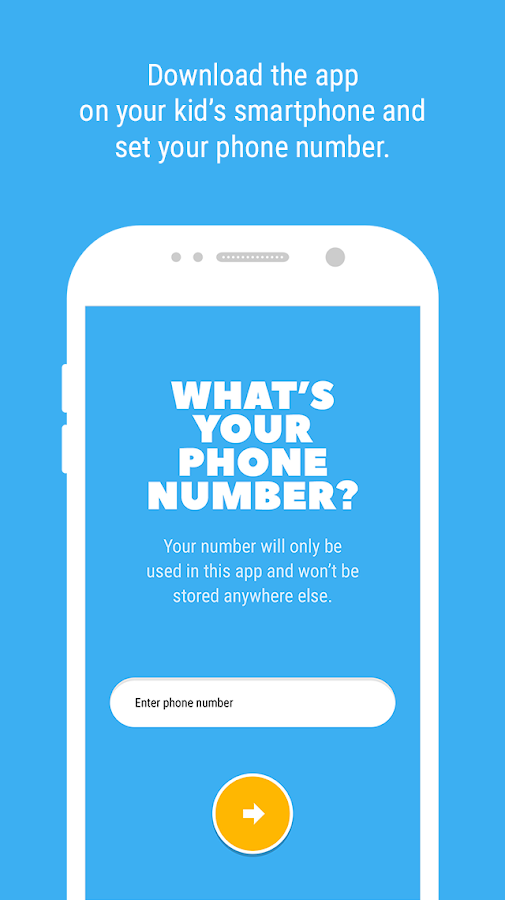
Remumber is an app aimed at young children with smartphones. It helps children remember the phone number of their parents by changing their device security codes to a phone number. That way each time your child unlocks his/her smartphone, they practice dialing your phone number. 

Remumber changes the unlocking code of a mobile or tablet device into a phone number.

So every time your child unlocks the device, he or she practises your phone number until they know it by heart. 


Remumber, app/ Missing Children Europe
Winner Epica Awards 2016

The app uses the phone number that your kids need to remember as a code to unlock the mobile phone or tablet, and they memorize the number gradually: the child must learn by heart the first 4 digits, and then if he/she is stuck and needs a hint for the next numbers, then the rest of the digits are illuminated.

When the child has memorized the entire code, his/her parents are informed via e-mail and can then enter a new number to remember, leave the initial number for further training or uninstall the application.


Download the app:

Missing Children Europe received great feedback from users and was proposed different free media opportunities to communicate about the campaign during summer. But most of all, with hundreds of downloads in the first week, we helped a lot of children to remember their parents’ phone numbers in a couple of days. 


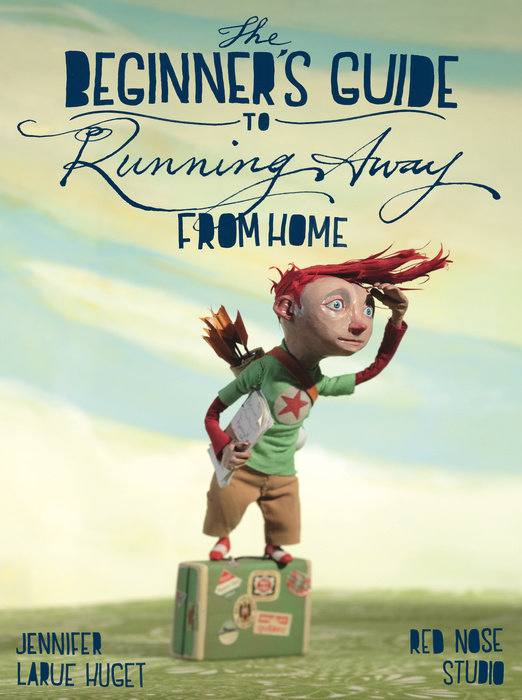
The Beginner's Guide 
to Running Away
from Home
Jennifer Larue Huget
  • Books:
What kid hasn’t wanted to make their parents feel sorry for treating him badly?
And how better to accomplish this than to run away? 

Here’s a guide showing how, from what to pack (gum–then you won’t have to brush your teeth) to how to survive (don’t think about your cozy bed). 

Ultimately, though, readers will see that there really is no place like home. 


Alexander and the Terrible,
Horrible, No Good, Very Bad Day
Judith Viorst
book/ ebook

Like Judith Viorst’s Alexander and the Terrible, Horrible No Good, Very Bad Day, here’s a spot-on portrait of a kid who’s had it. 

"He could tell it was going to be a terrible, horrible, no good, very bad day. He went to sleep with gum in his mouth and woke up with gum in his hair. When he got out of bed, he tripped over his skateboard and by mistake dropped his sweater in the sink while the water was running. He could tell it was going to be a terrible, horrible, no good, very bad day." (...)

Available : book /ebook


Where the Wild Things Are
Maurice Sendak

And like Maurice Sendak’s Where the Wild Things Are, it’s also a journey inside a creative kid’s imagination: that special place where parents aren’t allowed without permission.

Film:


Alexander and the Terrible, Horrible No Good, Very Bad Day
Miguel Arteta,2014

The film is based on the book Alexander and the Terrible, Horrible No Good, Very Bad Day by Judith Viorst (book & ebook).

"Alexander's day begins with gum stuck in his hair, followed by more calamities. However, he finds little sympathy from his family and begins to wonder if bad things only happen to him, his mom, dad, brother and sister - who all find themselves living through their own terrible, horrible, no good, very bad day."


Education :

Myosotis is commonly called "Forget-me-not". And we can not forget every missing child.

As an educator, I can't ! I talk about it with my students helping them to understand the danger they face every day. 

In the classroom, we discuss the theme around some exemples of missing children and young people. 

They understand the difficulties they can face on the street on their way to school, or to home. And on 
the bad use of the Internet or social networks.

I invite them to talk with their parents, grandparents or to help their younger brothers or sisters.

I can't forget missing children in Europe and all over the world. Children are our future and they believe in us and a better world.

G-Souto

25.05.2017

update: 25.05.2020
Copyright © 2017-Souto'sBlog, gsouto-digitalteacher.blogspot.com®


Creative Commons License
Education : International Missing Children's Day : resources  by G-Souto is licensed under a Creative Commons Attribution-NonCommercial-NoDerivatives 4.0 International License.