Showing posts with label teaching and learning. Show all posts

Monday, March 27, 2017

Schools : World Theatre Day : Go to the theater !


World Theater Day
credits: ITI


"So, here we are once more. Gathered again in Spring, 55 years since our inaugural meeting, to celebrate World Theatre Day. Just one day, 24 hours, is dedicated to celebrating theatre around the world.

(...)

Speaking here I am not myself, I am not an actress, I am just one of the many people that theatre uses as a conduit to exist, and it is my duty to be receptive to this - or, in other words, we do not make theatre exist, it is rather thanks to theatre that we exist. The theatre is very strong. It resists and survives everything, wars, censors, penury. 

It is enough to say that “the stage is a naked scene from an indeterminate time” – all’s it needs is an actor.

Isabelle Huppert, message 2017


World Theatre Day
credits: Nicolas Sridi

World Theatre Day was initiated in 1961 by the International Theatre Institute (ITI). It is celebrated annually on the 27th March by ITI Centres and the international theatre community. 

Various national and international theatre events are organized to mark this occasion. 

One of the most important of these is the circulation of the World Theatre Day is International Message through which at the invitation of ITI, a figure of world stature shares "his or her reflections on the theme of Theatre and a Culture of Peace". 


Jean Cocteau
credits: Jean Cocteau official site

The first World Theatre Day International Message was written by Jean Cocteau (France) in 1962. 


  • Goals of WTD:
To promote theatre in all its forms across the world.
  • To make people aware of the value of theatre in all its forms.

  • To enable theatre communities to promote their work on a broad scale so that governments and opinion leaders are aware of the value and importance of dance in all its forms and support it.
  • To enjoy theatre in all its forms for its own sake.

  • To share the joy for theatre with others.

The actor of the World Theatre Day Message 2017 is the French actress Isabelle Huppert.


Isabelle Huppert
credits: ©Sylvie Lancrenon. 
Picture is copyrighted and may be used 
for World Theatre Day issues only by ITI Centres 


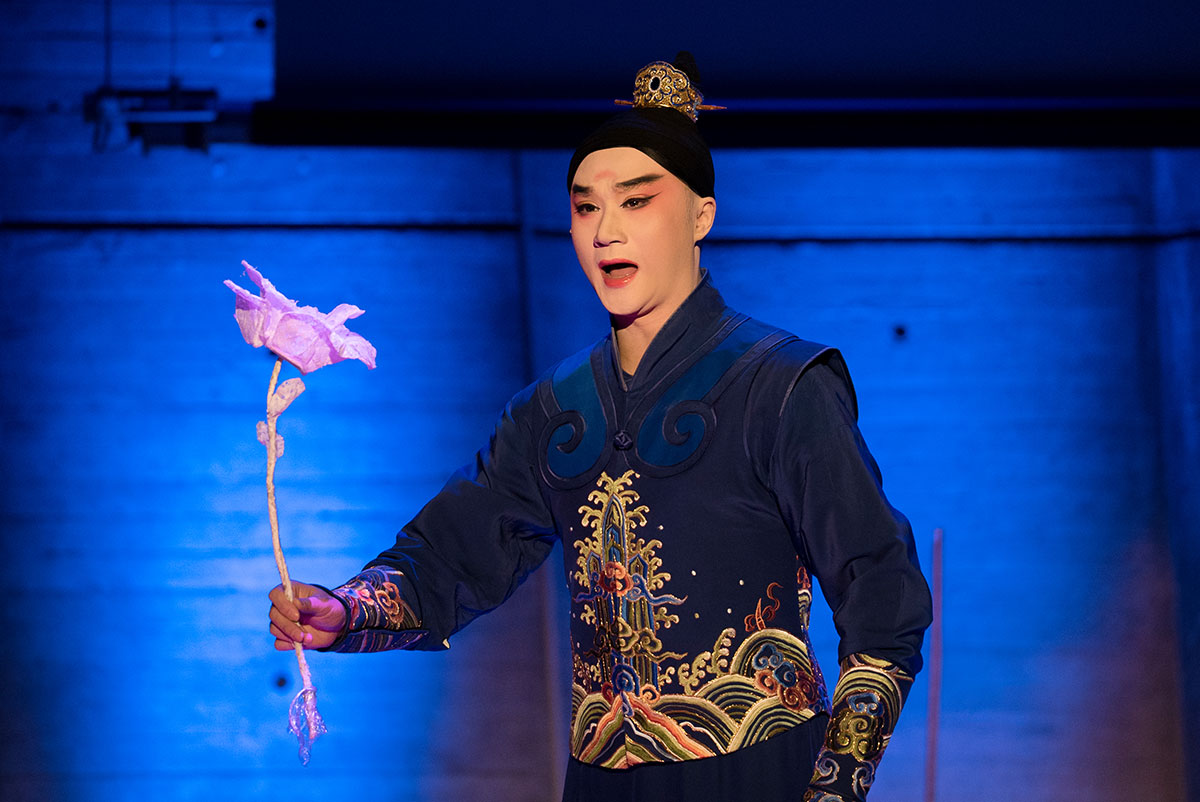
International performances that are part of the programmer include Allassane Sidibe, a storyteller from Togo, a performance with Zhang Jun (UNESCO Artist for peace, Kunqu opera) and an excerpt of the performance The French (based on the novel Ultimatum by Fernando Pessoa/ Álvaro de Campos, directed by Krzysztof Warlikowski (message author 2015)


World Day of Theatre for Children and Young People
http://www.assitej-international.org/


Education:

A story well-told on stage doubtless captivates the children in the audience and somehow transforms them. Leaving the theater after a show, the world seems different: it has been touched by a performance that allows members of the audience to see beyond the surface.

(...)


The tale comes to life beyond our imagination and somehow, transforms us into protagonists, because we entrust the characters with our emotions and fears, our desires and frustrations. Once they are staged, fiction, music, dance, song, poetry, games, magic, and juggling are all harmonically assembled, along with the resources typical of the theatrical arts: wardrobe, lights, scenery, makeup, props. 

The contributions made to our cultural heritage –with an emphasis on literature and theater– invariably lead to children exercising their imaginations and finding greater meaning in life."

Francisco Hinojosa, message 2017, World Day Theater for Children & Young People


Pinocchio/ Tout à Trac
credits: Jérémie Battaglia

On the 27th March 2017, the schools are still working. Easter season is near, but for the moments students are at school

Theatre in education is used to encourage effective learning in schools. It calls for careful consideration of the audience's age and requirements in order to engage them and get the message across. 

It complements school curriculum and illustrate the dynamic relationship between the performing arts and literature, history, science and world cultures. 


Nous Sommes Mille en Équilibre Fragile
Dynamo Théâtre
credits. Pierre-Luc Schetagne
The idea of a high impact performance for a specifically targeted school audience became very popular. Because the audiences are small, students can be encouraged to participate through work in role and through debate. 
Projects can be supported with resource materials and training or support for the teachers.


Ligne de Bus/ Théâtre I.N.E
credits: Eugene Holtz
Teachers may invite an actor/ actress to have a conversation with the students. And why not exciting workshops for young theater enthusiasts. 
The workshops will not only provide instruction on acting and theatre, but will help students build their public speaking skills and confidence by using more nontraditional, artistic teaching methods."
Go to the theatre next the school in your city with your students! Best lesson you can share with you students about theatre.

If you are teaching at a Vocational school of Theatre, of course you will talk a lot and have special actvities to celebrate the day.
Level: All levels

Curriculum: Cross-curricular.


Ondin/ L'Illusion
Théâtre des Marionnettes
credits: Michel Pinault

Resources:

  • Video


  • How to celebrate World Theatre Day : 

Students may be invited to search of celebrations to find out more about the different events organized for WTD 2017 all over the world.

Of course at school there are interesting activities to include into the curriculum. Teachers must prepare the activites thinking the level they are teaching.

Most of all! Go to the theater with your students!


Isabelle Huppert, invited actress WTD 2017
credits: Nicolas Sridi
https://www.world-theatre-day.org/

"Theatre is for me represents the other it is dialogue, and it is the absence of hatred. ‘Friendship between peoples’ – now, I do not know too much about what this means, but I believe in community, in friendship between spectators and actors, in the lasting union between all the peoples theatre brings together – translators, educators, costume designers, stage artists, academics, practitioners and audiences. Theatre protects us; it shelters us…I believe that theatre loves us…as much as we love it… 

I remember an old-fashioned stage director I worked for, who, before the nightly raising of the curtain would yell, with full-throated firmness ‘Make way for theatre!’ – and these shall be my last words tonight. "

Isabelle Huppert, message 2017

G-Souto

27.03.2017
Copyright © 2017G-Souto'sBlog, gsouto-digitalteacher.blogspot.com®

Creative Commons License
Schools . World Theater Day : Go to the theater ! by G-Souto is licensed under a Creative Commons Attribution-NonCommercial-NoDerivatives 4.0 International License.

Wednesday, March 22, 2017

Education : Talking about World Water Day #waterReuse


World Water Day is observed on March 22 every year. A day to recognize the importance of earth's most precious natural resource was proposed 20 years ago (1992) at the United Nations Conference on Environment and Development (UNCED). 

The United Nations General Assembly responded by designating 22 March 1993 as the first World Water Day. It has been held annually since then. Each year, UN-Water — the entity that coordinates the UN’s work on water and sanitation — sets a theme for World Water Day corresponding to a current or future challenge. 


Water is the essential building block of life. But it is more than just essential to quench thirst or protect health; water is vital for creating jobs and supporting economic, social, and human development.
Today, there are over 663 million people living without a safe water supply close to home, spending countless hours queuing or trekking to distant sources, and coping with the health impacts of using contaminated water.


UN-water

2017 Theme: Why Wastewater?

This year, UN focus on wastewater and ways to reduce and reuse as over 80% of all the wastewater from our homes, cities, industry and agriculture flows back to nature polluting the environment and losing valuable nutrients and other recoverable materials.

We need to improve the collection and treatment of wastewater and safely reuse it. At the same time, we need to reduce the quantity and pollution load of wastewater we produce, to help protect the environment and our water resources.


Access to safe water and sanitation services is essential to the human rights and dignity, and the survival, of women and men across the world, especially the most disadvantaged. 

This is vital for progress across the 2030 Agenda for Sustainable Development – water links all 17 Sustainable Development Goals and their interconnected targets.


World Water Day, on 22 March every year, is about taking action to tackle the water crisis. Today, 1.8 billion people use a source of drinking water contaminated with faeces, putting them at risk of contracting cholera, dysentery, typhoid and polio.


Facts and figures:

Wastewater: the untapped resource

Globally, over 80% of the wastewater generated by society flows back into the environment without treatment.


  • The quantity of wastewater produced and its overall pollution load is increasing.


Water Day 2017
credits: UNESCO

  • Pollution from untreated wastewater has adverse effects on human health: 1.8 billion people use a source of drinking water contaminated with faeces. The combination of inadequate sanitation, poor hygiene, and unsafe drinking water is today still responsible for an estimated annual burden of 2 million diarrheal deaths.

  • 663 million peoples still lack improved drinking water sources, and global demand for water is expected to increase by 50% by 2030.

  • The opportunities from exploiting wastewater as a resource are enormous. Safely managed wastewater is an affordable and sustainable source of water, energy, nutrients and other recoverable materials.


http://www.unesco.org/

In fact, water shortages and lack of access may limit economic growth in the years to come, according to the 2016 United Nations World Water Development Report.
The report  was launched on 22 March, World Water Day, in Geneva. The United Nations World Water Development Report 2016, titled "Water and Jobs" contains the latest findings, fact and figures.  


Fresh water for all

Education:
Each year the UN focuses on an aspect of water and the forthcoming event clearly links in with agriculture and nutrition. 

"When a billion people in the world already live in chronic hunger and water resources are under pressure we cannot pretend the problem is ‘elsewhere’."

Coping with population growth and water and jobs here some acts that will help with:

  • follow a healthier, sustainable diet;
  • consume less water-intensive products;
  • reduce the scandalous water wastage;
  • produce more food, of better quality, with less water.


Goal 6
credits: Elyx Yak

So, we must discuss all these items in school curriculum. And bring some new habits to our students and their families.

Target: Primary to Secondary education; Vocational Education.

Curriculum: Cross-curricular Civics; Sciences; Languages; Arts.

World Water Day is an opportunity to learn more and be inspired to tell others. Teachers can read reports, watch videos and download teaching material from the UN-water website to explore in the school curriculum they're teaching.


Let your students use their devices and meanwhile ask them to take some notes doing internet research about countries where the water is a great gift or on the contrary there is no water or countries that use source of drinking-water contaminated.

It can be a good start to an open discussion in the classroom. It will depend from the resources you will chose for the level you are teaching.

Promote your event by adding it on the UN-water global map and share your activities with the world.

After that, ask your students if they know how much water they consume every day and how can we change our diet and reduce our wastewater.


Resources:
  • The wasters guide to wastewater:
We’re all wasters when it comes to wastewater. Every time we use water, we produce wastewater. And instead of reusing it, we let 80% of it just flow down the drain. We all need to reduce and reuse wastewater as much as we can. Here are three ideas for all us wasters!Turn off the tap while you’re brushing your teeth or doing dishes or scrubbing vegetables. Otherwise you’re just making wastewater without even using it!
  1. Put rubbish, oils, chemicals, and food in the bin, not down the drain. The dirtier your wastewater, the more energy and money it costs to treat it.
  2. Collect used water from your kitchen sink or bathtub and use it on plants and gardens, and to wash your bike or car.
The water passing through us and our homes is on a journey through the water cycle. By reducing the quantity and pollution of our wastewater, and by safely reusing it as much as we can, we’re all helping to protect our most precious resource.
Wasters! Take quick quiz.
Teachers will have other good resources here


Zoe makes a splash/ app

Apps for kids:


Zoe makes a splash! is an app developed by the Environment Directorate General of the European Commission.

I wrote about Zoe makes a splash! in 2012. This interactive storybook is a resource for Teachers & Parents,

It can be used in the classroom or with family to teach kids about the importance of water in our society, how to use it in moderation, the impact of polluted water on wildlife and habitats and the benefits we get from clean water.

Target: 7-11 years-old

Levels: Primary education; Elementary education.

Languages: Available in English, French, German, Spanish, Italian and Polish.

Devices: iPhone; iPad; smartphones.

Download: Free


Zoe Makes a Splash! is an interactive digital storybook aimed at children between the ages of 7 and 11 and is free to download. 

To read the book here. There some Teaching notes here.

I hope that this app Zoe Makes a Splash! and other resources on this post help teachers for inspire projects and actions about Water Day and wastewater. 

Young students will have fun learning about how they can care about how important water is and many children and young people have no water or comsumme pollutes water. They will be caring on wasterwater.


"The more clearly we can focus our attention on the wonders and realities of the universe about us, the less taste we shall have for destruction."


G-Souto
22.03.2017
Copyright © 2017G-Souto'sBlog, gsouto-digitalteacher.blogspot.com®

Creative Commons License
Education : Talking about World Water Day #waterReuse ! by G-Souto is licensed under a Creative Commons Attribution-NonCommercial-NoDerivatives 4.0 International License.