Showing posts with label The World Day for Culture Diversity. Show all posts

Sunday, May 21, 2017

Schools : Let's talk about Cultural Diversity for Dialogue and Development


"For more than a year, the COVID-19 crisis has precipitated a cultural diversity crisis. The closure of museums and world heritage sites and the cancellation of festivals, concerts and ceremonies have plunged the world of culture into a distressing state of uncertainty, threatening in particular independent creators, who are the lifeblood of cultural diversity."

Audrey Azoulay, Director-General of UNESCO, message


Today May 21 is the World Day for Cultural Diversity for Dialogue and Development which encourages everyone to Do One Thing For Diversity and Inclusion today and every day all year long.


Held every year on 21 May, the World Day for Cultural Diversity for Dialogue and Development celebrates not only the richness of the world’s cultures, but also the essential role of intercultural dialogue for achieving peace and sustainable development. 


"Just as natural diversity is vital to sustain ecosystems, cultural diversity is the lifeblood of vibrant societies. Cultural diversity provides fresh ideas and perspectives that enrich our lives in countless ways, allowing us all to grow and thrive together. A culturally diverse classroom is not only more inclusive, it boosts student learning and achievement. A culturally diverse workplace is not only more innovative, it is also more productive and economically profitable."

Irina Bokova, Director-general Unesco, message 2017
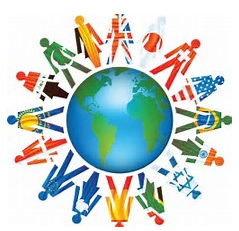


Aims:

  • Support sustainable systems of governance for culture
  • Achieve a balanced flow of cultural goods and services and increase mobility of artists and cultural professional
  • Integrate culture in sustainable development frameworks
  • Promote human rights and fundamental freedoms


The United Nations General Assembly first declared this World Day in 2002, following UNESCO’s adoption of the 2001 Universal Declaration onCultural Diversity, recognizing the need to “enhance the potential of culture as a means of achieving prosperity, sustainable development and global peaceful coexistence.”


On the occasion of the thirtieth anniversary of the adoption of the World Heritage Convention, the United Nations proclaimed 2002 Year for Cultural Heritage in order to focus international commitment to the cultural heritage cause and attract public awareness, in particular young people.


 The UN Year for Cultural Heritage 2002


History:


The year 2002 was the United Nations Year for Cultural Heritage. At the end of that year, on December 20, 2002, the General Assembly of the United Nations declared May 21 to be the World Day for Cultural Diversity for Dialogue and Development. The General Assembly emphasized links between the protection of cultural diversity and the importance of dialogue between civilizations in the modern world. The World Day for Cultural Diversity for Dialogue and Development was first observed in 2003.

With the adoption in September 2015 of the 2030 Agenda for Sustainable Development by the United Nations, and the Resolution A/C.2/70/L.59 on Culture and Sustainable Development adopted by the UN General Assembly in December 2015 , the message of the World Day for Cultural Diversity for Dialogue and Development is more important than ever. 


credits: Elyx Yak/ UN
Virtual Ambassador UN


The 17Sustainable Development Goals can best be achieved by drawing upon the creative potential of the world’s diverse cultures, and engaging in continuous dialogue to ensure that all members of society benefit from sustainable development. 

The World Day for Cultural Diversity for Dialogue and Development is an occasion to promote culture and highlight the significance of its diversity as an agent of inclusion and positive change. 

It represents an opportunity to celebrate culture’s manifold forms, from the tangible and intangible, to creative industries, to the diversity of cultural expressions, and to reflect on how these contribute to dialogue, mutual understanding, and the social, environmental and economic vectors of sustainable development.


All are invited to join in, and promote the values of cultural diversity, dialogue and development across our globe. 


Education:

"A culturally diverse classroom is not only more inclusive, it boosts student learning and achievement. A culturally diverse workplace is not only more innovative, it is also more productive and economically profitable."

Irina Bokova, Director-general Unesco, message 2017

The World Day for Cultural Diversity for Dialogue and Development tends to be marked in countries that embraced their varied cultural history and acknowledged the importance of embracing it.


Remember similar celebrations as The International Day of the World's Indigenous People or World Science Day for Peace & Development shared on this blog as resources to school teachers.


Values:

Human rights, cultural and linguistic diversity, local traditions are important values to include and discuss into school curricula (in and around) by using IT and social media in the classroom.

Students were very excited about these themes and participated with enthusiam in different activities.

Learners are curious about other cultures and traditions. Let students participate in different activities by doing ONE thing for diversity:

The students are very curious about other cultures and traditions and love to learn about it. They are also so creative that we can not forget to push this creativity for cultural dialogue and development.


Activities

  • Learn another language with a native speaker and practice it with him/her regularly! Becoming pen-pals (hand writing or virtual) with students from different geographic and religious backgrounds through social media to discuss their experiences, differences and things they have in common (Twitter, Facebook, Instagram, WhatsApp, other);
  • Visit an art exhibition or a museum dedicated to other cultures;
  • Listen a musical tradition from a different culture;
  • Learn about traditional celebrations from other cultures; 
  • Plan a school exhibition to help the students and other teachers understand the history of different cultural groups and the influence on their own identities;
  • Invite foreign artists who live in your country, city, to give a live interview (via Skype, Facebook, WhatsApp), explaining the positive influence their “hosting” culture has had on their work and artistic evolution;
  • Play a sport related to a different culture (Karate, Cricket, Pétanque, Jogo do pau, Capoeira, other)
  • If you and your school are going on educational field trips, during the visit to a new country, go off the beaten track, mingle with the locals and discover things about their culture that the tour-guide is ignorant of!
  • Dedicate a class on how cultures have influenced one another: a Chinese proverb can also be found in the Arabic tradition; backgammon is also played in Iran and Greece and tattoos are used in South America and Africa.

"Martin Luther King Jr. once said: “Injustice anywhere is a threat to justice everywhere. We are caught in an inescapable network of mutuality, tied in a single garment of destiny.” In this spirit, I believe that we need a new humanism for the 21st century, to renew the fundamental aspirations to justice, mutual understanding and dignity that guide all women and men."

Irina Bokova, Director-general Unesco, message 2017

G-Souto

21.05.2017
updated 21.05.2021
Copyright © 2021-Souto'sBlog, gsouto-digitalteacher.blogspot.com®

Creative Commons License
Schools : Let's talk about Culture Diversity, for Dialogue and Development by G-Souto is licensed under a Creative Commons Attribution-NonCommercial-NoDerivatives 4.0 International License.


Wednesday, May 21, 2014

World Day for Culture Diversity, for Dialogue and Development


"Our cultural diversity is the common heritage of humanity. It is a source of renewal of ideas and societies, through which we open up to others and craft new ways of thinking. This diversity provides opportunities for peace and sustainable development."

Irina Bokova, Director-General of UNESCO


The year 2002 was the United Nations Year for Cultural Heritage. At the end of that year, on December 20, 2002, the General Assembly of the United Nations declared May 21 to be the World Day for Cultural Diversity for Dialogue and Development. The General Assembly emphasized links between the protection of cultural diversity and the importance of dialogue between civilizations in the modern world. The World Day for Cultural Diversity for Dialogue and Development was first observed in 2003.

The day provides us with an opportunity to deepen our understanding of the values of cultural diversity and to learn to live together better.
On 5 May 2014, the UN General Assembly held a day-long debate on “Culture and sustainable development in the post 2015 development agenda.” 
Speakers underscored through country level testimonies and global data how culture, in its manifold expressions ranging from cultural heritage to creative industries, from sustainable tourism to cultural infrastructure, drives and enables the social, environmental and economic pillars of sustainable development.
"In the final push to achieve the Millennium Development Goals, UNESCO is continuing to strengthen its advocacy and action in favour of the link between culture and sustainable development."

Celebrations to create greater awareness of cultural values and the need to preserve them are welcome on these special days.

It's important to organize educational programs for children an young adults. After all, schools have the most important role on this matter.


via Google Images

Education:

The World Day for Cultural Diversity for Dialogue and Development tends to be marked in countries that embraced their varied cultural history and acknowledged the importance of embracing it.

The students are curious about other cultures and traditions and love to learn about it. They are also so creative that we can not forget to push this creativity for dialogue and development.

Activities
  • Learn another language with a native speaker and practice it with him/her regularly! Becoming pen-pals with students from different geographic and religious backgrounds through social media to discuss their experiences, differences and things they have in common (email, Twitter, Facebook, other);
  • Visit an art exhibition or a museum dedicated to other cultures;
  • Listen to a musical tradition from a different culture;
  • Learn about traditional celebrations from other cultures; 
  • Plan a school exhibition to help the students and other teachers understand the history of various cultural groups and the influence on their own identities;
  • Invite foreign artists who lived in your country, city, to give a live interview (via Skype, Facebook, Google + hangout), explaining the positive influence their “hosting” culture has had on their work and artistic evolution;
  • Play a sport related to a different culture (Karate, Cricket, Pétanque, Jogo do pau, Capoeira, other)
  • If you and your school are going on educational field trips, during the visit to a new country, go off the beaten track, mingle with the locals and discover things about their culture that the tour-guide is ignorant of!
  • Dedicate a class on how cultures have influenced one another: a Chinese proverb can also be found in the Arabic tradition; backgammon is also played in Iran and Greece and tattoos are used in South America and Africa.

Parents :

Parents, showcase the traditional stories from your culture and use them as bed-time stories to enchant your children.


The film illustrates through motion graphics and photographs how the International Fund for Cultural Diversity (IFCD) invests in creativity to transform societies. 

Established under the 2005 UNESCO Convention on the Protection and Promotion of the Diversity of Cultural Expressions, the IFCD is the international cultural cooperation platform that supports over 70 projects on entrepreneurship and business development, new technologies and innovation, empowering individuals and social groups.


Creativity & Young Creative Adults:


The film encourages creative young adults to make contribution to the IFCD in order to invest in creativity in developing countries and transform societies towards achieving sustainable development.  

UNESCO will support your creative projects. Go ahead !

"Our cultural diversity is a stimulator of creativity. Investing in this creativity can transform societies. It is our responsibility to develop education and intercultural skills in young people to sustain the diversity of our world and to learn to live together in the diversity of our languages, cultures and religions, to bring about change."
Irina Bokova, 2014 message

"People of different religions and cultures live side by side in almost every part of the world, and most of us have overlapping identities which unite us with very different groups. We can love what we are, without hating what – and who – we are not. We can thrive in our own tradition, even as we learn from others, and come to respect their teachings."

Kofi Annan, Former Secretary-General of the United Nations

G-Souto

21.05.2014

Copyright © 2014-Souto'sBlog, gsouto-digitalteacher.blogspot.com®

Creative Commons License
Education : World Day for Culture Diversity, for Dialogue and Development  by G-Souto is licensed under a Creative Commons Attribution-NonCommercial-NoDerivatives 4.0 International License.

Tuesday, May 21, 2013

The World Day for Culture Diversity at school


Logo of the Day ©Unesco

Today May 21 is the World Day for Cultural Diversity for Dialogue and Development which encourages everyone to Do One Thing For Diversity and Inclusion today and every day all year long.


"Less than one thousand days from the 2015 deadline of the Millennium Development Goals, we must do everything to accelerate progress. Culture and cultural diversity are not part of the internationally-recognized development goals – but they are key accelerators for meeting them."

Irina Bokova, Message


The United Nations Alliance of Civilizations (UNAOC) in partnership with UNESCO and a wide coalition of partners from corporations to civil society is launching the world campaign: 
“Do One Thing for Diversity and Inclusion”
It aimed at engaging people around the world to Do One Thing to support Cultural Diversity and Inclusion."
Following the adoption in 2001 of the Universal Declaration on Cultural Diversity the UN General Assembly declared May 21 as the World Day for Cultural Diversity for Dialogue and Development.


Why does diversity matters?

Three-quarters of the world’s major conflicts have a cultural dimension.
Bridging the gap between cultures is urgent and necessary for peace, stability and development.
The 2013 campaign, by encouraging people and organizations from around the world to take concrete action to support diversity, aims:
  • To raise awareness worldwide about the importance of intercultural dialogue, diversity and inclusion.
  • To build a world community of individuals committed to support diversity with real and every day-life gestures.
  • To combat polarization and stereotypes to improve understanding and cooperation among people from different cultures.


Education:


Remember similar events as The International Day of the World's Indigenous People or Pathways to a Culture of Peace published on this blog.


Human rights, cultural and linguistic diversity, local traditions are good subjects to include and discuss in school curricula (in and around) by using ICT and social participatory media in the classroom.


Students were very excited about these themes and participated with enthusiam in different activities.

Learners are curious about other cultures and traditions. Let students participate in different activities by doing ONE thing for diversity:


Activities
  • Learn another language by becoming pen-pals with students from different geographic and religious backgrounds  or through social media to discuss their experiences, differences and things they have in common (email, Twitter, Facebook, other) with a school from another country;
  • Listen to a musical tradition from a different culture;
  • Learn about traditional celebrations from other cultures by using Google Art Project page;
  • Play a sport related to a different culture (Karate, Criquet, Pétanque,…);
  • Invite a student of your school from another culture to cook traditional food at the school buffet;
  • Visit an art exhibit or a museum dedicated to other cultures with your students;
  • Plan an international dance festival one night at school with the participation of parents or invite a music school  to give a concert with multicultural music;


Associación Mario Testino on Peruvian culture

Google Art Project


Let us use ICT and social media in the classroom to tackle the world's toughest problems creating bridges and establish a truly intercultural world, where diversity can be celebrated, a world where different cultures not only coexist but value each other for their contributions and potential.

Students and educators are an important part of society to built bridges on a friendly dialogue. Students are spontaneous, curious, they like to learn about different cultures.

Bridging the gap between cultures is urgent and necessary for peace, stability and development.


"Recognizing and supporting cultural diversity can help to address both the economic and human rights dimensions of poverty and provide creative, cross-cutting solutions to complex issues - from health and the environment to advancing gender equality and education for all."


Irina Bokova, Director General of UNESCO


G-Souto

21.05.2013
copyright © 2013G-Souto'sBlog, gsouto-digitalteacher.blogspot.com

Licença Creative Commons
The World Day for Culture Diversity at school by G-Souto is licensed under a Creative Commons Attribution-NonCommercial-ShareAlike 3.0 Unported License.