
Marshall McLuhan
credits: Yousuf Karsh
"Long before we started looking to our screens for all the answers, Marshall McLuhan saw the internet coming - and predicted just how much impact it would have."
Google Doodle:
Today 21st July, Google celebrates the 106th brithday of Marshall McLuhan with a eye-catched animated Doodle. The Doodle illustrates this theory by showing how McLuhan viewed human history.

He saw it through the lens of 4 distinct eras: the acoustic age, the literary age, the print age, and the electronic age.

His first major book, The Gutenberg Galaxy (1962), I read it and study his ideas in my days of College as a student, popularized the term “global village”: the idea that technology brings people together and allows everyone the same access to information. He 'predicted the internet' 30 years before.
Decades later, Google honores the man whose prophetic vision of the “computer as a research and communication instrument” has undeniably become a reality.

Who was Marshall McLuhan?

Google Doodle:
Today 21st July, Google celebrates the 106th brithday of Marshall McLuhan with a eye-catched animated Doodle. The Doodle illustrates this theory by showing how McLuhan viewed human history.
Google Doodle Marshall McLuhan’s 106th Birthday
He saw it through the lens of 4 distinct eras: the acoustic age, the literary age, the print age, and the electronic age.
Marshall McLuhan
The Gutenberg Galaxy
His first major book, The Gutenberg Galaxy (1962), I read it and study his ideas in my days of College as a student, popularized the term “global village”: the idea that technology brings people together and allows everyone the same access to information. He 'predicted the internet' 30 years before.
Decades later, Google honores the man whose prophetic vision of the “computer as a research and communication instrument” has undeniably become a reality.

Marshall McLuhan
Who was Marshall McLuhan?
The Canadian philosopher and professor born in 1911 specialised in media theory, McLuhan came to prominence in the 1960s, just as TV was becoming part of everyday life.
At the center of his thinking was the idea that society is shaped by technology and the way information is shared.
His first major book, The Gutenberg Galaxy (1962), I read it and study his ideas in my days of College as a student, popularized the term “global village”: the idea that technology brings people together and allows everyone the same access to information.
He wrote: “The next medium, whatever it is - it may be the extension of consciousness—will include television as its content, not as its environment, and will transform television into an art form."

In Understanding Media (1964), McLuhan further examined the transformative effects of technology and coined his famous phrase:
“The medium is the message.”
He believed that the way in which someone receives information is more influential than the information itself.


Understanding Media (1964)
Marshall McLuhan
"In his book, McLuhan analyzes traditional forms of media, such as film, radio, print books, and television, but also analyzes platforms that might be considered less orthodox forms of media, such as games, houses, money, clocks, and automobiles, arguing that nearly any object with which man interacts (especially various forms of technology) shapes how he perceives the world, and, in turn how he communicates with others."

Throughout the '60s and '70s, McLuhan made frequent TV appearances to share his theories with both followers and skeptics.
McLuhan, who died in 1980, is also credited with predicting the world wide web 30 years before it was invented.
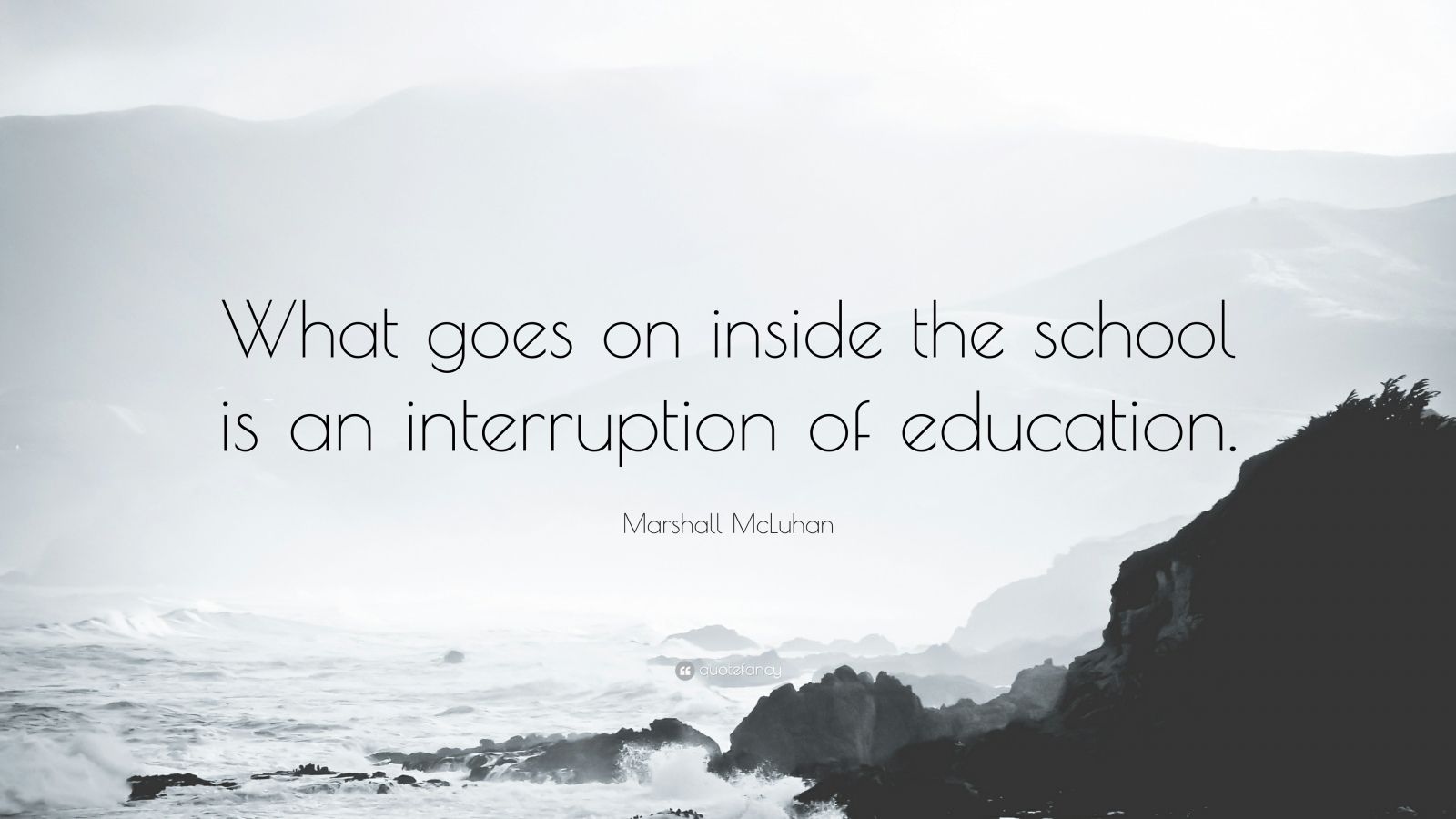
Education:
McLuhan has been one of the biggest influences on my thinking about the use of broadcasing and new technology for teaching.
Teaching languages on TV School (80's for a decade) it became clear as I started to collect data on students’ responses to the TV School programs that something odd was going on.
“Any moment of television provides more data than could be recorded in a dozen pages of prose”
McLuhan, 1964, p. 52

Students responded much more emotionally to the TV School lessons than to the printed course activities. It was clear that the TV School students (most were young adults) responded quite differentially to concrete or abstract representations of knowledge, to print and to television for study purposes. So when television started to be used for secondary teaching(high junior schools).
"Print culture, ushered in by the Gutenberg press in the middle of the fifteenth century, brought about the cultural predominance of the visual over the aural/oral. [This has resulted in] the ingraining of lineal, sequential habits, but, even more important, … the visual homogenizing of experience of print culture, and the relegation of auditory and other sensuous complexity to the background." […]
McLuhan, in Tthe Gutenberg Galaxy
The medium was used quite differently from print (and in my view very appropriately), and for many of our students this was what they would like in education to be. So we as teachers were excited by the teaching possibilities of television and contributed greatly to the design and new ideas of the lschool programs.
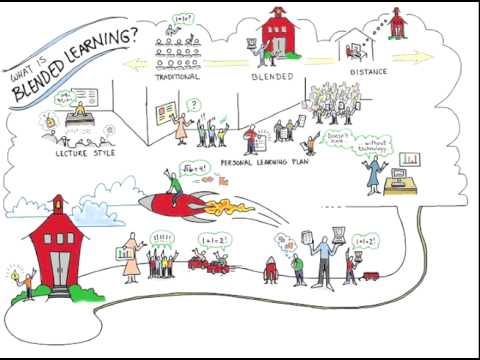
And I turned out those data and experience to the Internet education when I left TV school and I went back to face-to-face teaching including blended learning into curriculum.
So, I could write these words:
“Today, the ordinary child lives in an electronic environment; he lives in a world of information overload”
McLuhan, 1964b, p. 52
Here my tribute to the author who open my talent and skills to the new world of TV School - I have been a teacher on TV School on the 80s - and later to the Internet.
I realized how successful was their role in education. I explored new technologies in 2001, e-learning platform, blogs, videos, games, social networking. So I'm convinced that different educational 'media' must be explored and include into school curricula.
"It’s a long time since I last read McLuhan. He’s one of those authors often quoted but rarely read in the original these days. As a result, I’ll probably go to the library and try to re-read him again."
Tony Bates, 2011
 Marshall McLuhan : a reference in information and technology in schools by G-Souto is licensed under a Creative Commons Attribution-NonCommercial-NoDerivatives 4.0 International License.
Education:
McLuhan has been one of the biggest influences on my thinking about the use of broadcasing and new technology for teaching.
Teaching languages on TV School (80's for a decade) it became clear as I started to collect data on students’ responses to the TV School programs that something odd was going on.
“Any moment of television provides more data than could be recorded in a dozen pages of prose”
McLuhan, 1964, p. 52
TV education
credits: NASA
Students responded much more emotionally to the TV School lessons than to the printed course activities. It was clear that the TV School students (most were young adults) responded quite differentially to concrete or abstract representations of knowledge, to print and to television for study purposes. So when television started to be used for secondary teaching(high junior schools).
"Print culture, ushered in by the Gutenberg press in the middle of the fifteenth century, brought about the cultural predominance of the visual over the aural/oral. [This has resulted in] the ingraining of lineal, sequential habits, but, even more important, … the visual homogenizing of experience of print culture, and the relegation of auditory and other sensuous complexity to the background." […]
McLuhan, in Tthe Gutenberg Galaxy
The medium was used quite differently from print (and in my view very appropriately), and for many of our students this was what they would like in education to be. So we as teachers were excited by the teaching possibilities of television and contributed greatly to the design and new ideas of the lschool programs.
Education Elements
So, I could write these words:
“Today, the ordinary child lives in an electronic environment; he lives in a world of information overload”
McLuhan, 1964b, p. 52
Here my tribute to the author who open my talent and skills to the new world of TV School - I have been a teacher on TV School on the 80s - and later to the Internet.
I realized how successful was their role in education. I explored new technologies in 2001, e-learning platform, blogs, videos, games, social networking. So I'm convinced that different educational 'media' must be explored and include into school curricula.
"It’s a long time since I last read McLuhan. He’s one of those authors often quoted but rarely read in the original these days. As a result, I’ll probably go to the library and try to re-read him again."
Tony Bates, 2011
G-Souto
21.07.2017
Copyright © 2017G-Souto'sBlog, gsouto-digitalteacher.blogspot.com®


