Showing posts with label 1st Thursday November. Show all posts

Saturday, November 8, 2025

International Day Against Violence & Bullying at School including Cyberbullying : Screen smart !


https://www.facebook.com/unesco


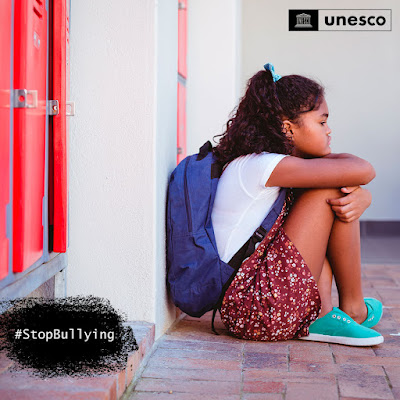
On 6 November, the world marked the International Day against Violence and Bullying at School, including Cyberbullying. This day is celebrated on the first Thursday of November every year.


UNESCO Member States declared the first Thursday of November as the International Day against Violence and Bullying at School, Including Cyberbullying, recognizing that school-related violence in all its forms is an infringement of children’s and adolescents’ rights to education and their health and well-being.


  • Theme 2025 :

“Screen smart: Learning to be safe in the digital era.”


Every month, 1 in 3 learners experiences bullying and at least 1 in 10 faces cyberbullying. Children who are bullied are twice as likely to feel lonely or have trouble sleeping. Some even have thoughts of suicide. 


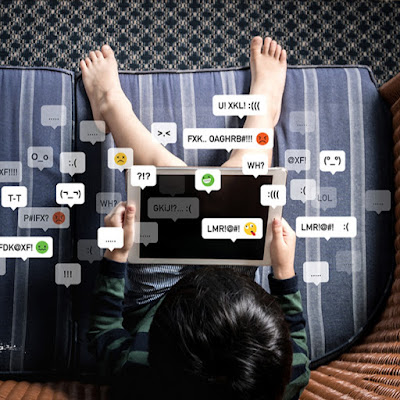
Online abuse creates a 24/7 loop of fear that follows learners from screens into classrooms. The risks are even greater for some learners: 58 % of girls and young women have faced online harassment, about 50 % more likely to be cyberbullied than their peers.


Across Europe, more than 20% of 15-year-old students reported being frequently bullied, affecting students and schools irrespective of their socio-economic profile.


A joint effort is crucial when it comes to addressing violence at school emphasising prevention, support, and community. Building educators’ capacity to prevent it, and implementing a whole-school approach are essential.

Bullying in schools has negative impacts on the wellbeing and mental health of learners, their school’s climate and their educational outcomes. It increases the risk of early school drop-out, with long lasting effects on the quality of life.


Online violence is not just a digital safety issue, it strikes at the very heart of education, undermining learners' health, well-being and participation, threatening their future and that of societies.


credits : UNESCO


Education must be our frontline defence. UNESCO works with governments, schools and teachers to foster safe learning environments free from violence, train educators to recognize and respond to online violence, and strengthen policies so that learning spaces — physical and digital — are safe and healthy for all. 


credits . UNESCO IITE


Yet according to 2024 Global Education Monitoring Youth Report, only 16% of countries have adopted legislation to prevent cyberbullying through education.


credits: UNESCO

https://www.unesco.org/


Education


On this International Day against violence and bullying at school, including cyberbullying, the schools are encouraged to conduct activities to enhance awareness on prevention of violence and bullying in Schools, and work together to make our schools and educational institutions more safe and vibrant for all learners. 


  • Here are five ways we teach the young child the power of inclusivity.


Explain to your young learner what bullying is. Use actual examples from their life. Point out when people say and do things that are mean, and give them practical examples of what they can do to stand up for their peers who are left out or bullied.


Everyone has feelings and needs, just like you. Colour blindness has never solved discrimination. Acknowledge the differences of appearance, nationality and skin colour that your child notices in others. And at the same time talk to them about our shared humanity and that everyone wants to be loved and happy, just like them.


Encourage collaborative learning. As young children develop a sense of agency, they discover that they have the power to invite others into their circle and experience the joy of collaboration. Inclusivity requires an opening of the heart and an act of generosity but the returns are enormous: an exchange of ideas, fresh perspectives and shared energy as young children work together to find a creative solution for a problem or project. Collaborative learning – when facilitated skillfully – enhances academic progress. Inclusivity helps the young child to develop flexibility and openness to new experiences and this in turn promotes their creativity.


You Can’t Say You Can’t Play
Vivian Gussin Paley


Teach “you can’t say you can’t play” One of the most heart-felt descriptions of the young child’s journey into a shared world is found in Vivien Paley’s award-winning monograph You Can’t Say You Can’t Play


Published in 1993, the book is a reflection upon the forces of social inclusion and exclusion that operate throughout preschool and in the early years of primary education. It was in an attempt to create a classroom grounded in inclusivity that Vivian Paley introduced her kindergarteners to a new rule: 

“You can’t say you can’t play.” Hers was a bold attempt to foster a habit of inclusivity in her young students.


Kindness is even more important online. The Internet is another shared world, infinitely vaster than the classroom, and it exposes the young child to people and diversity that they would never encounter IRL. Of everything we teach young children, kindness and inclusivity have the greatest potential to head off the growth of online bullying and hate in the tween and teen years.


"Education is a frontline defense – safe classrooms must extend to safe screens. And learning to be safe online or ‘screen smart’ is essential to safeguarding the quality education children and young people deserve."


Our role into our school curricula since the first lessons including media is to teach curricula but at the same time teach students always to be safe at school life and to be smart on screen.


Resources: Young teachers :

European Education Area : Preventing and addressing bullying in schools

https://education.ec.europa.eu/education-levels/school-education/preventing-and-addressing-bullying-in-schools


We have in our hands an entire 'wired' generation. Children and young people who are all day connected on their cellphones and tablets. At school, at home, in a bus or just walking, even between friends or just strangers. 


"You Can’t Say You Can’t Play !"

Vivian Gussy Paley


G-Souto 


08.11.2025
Copyright © 2025G-Souto'sBlog, gsouto-digitalteacher.blog


International Day Against Violence & Bullying at School including Cyberbullying : Screen smart ! by GinaSouto is licensed under a Creative Commons Attribution-NonCommercial-NoDerivatives 4.0 International License.


Sources : UNESCO / European Commission - European Education Area

Thursday, November 4, 2021

International Day Against Violence & Bullying at School including Cyberbullying : Resources


credits: UNESCO

School violence and bullying including cyberbullying is widespread and affects a significant number of children and adolescents.

Bullying, including cyberbullying, can have serious impacts on children’s mental health & well-being.

5 November 2020 marked the first-ever celebration of the new International Day against Violence and Bullying at School including Cyberbullying, under the theme “Together against Bullying in school”.


credits: UNESCO

UNESCO Member States declared the first Thursday Novemberthe International Day against Violence and Bullying at School Including Cyberbullying, recognizing that school-related violence in all its forms is an infringement of children and adolescents’ rights to education and to health and well-being. 

Every year, the 1st Thursday of November. This year we will mark the International Day on Thursday 4 November 2021.


credits: UNESCO


"Although this violence is not limited to school premises, the education system has an important role to play in teaching students how to navigate safely in the digital sphere. 

Formal education should provide children and young people with certain knowledge and skills: how to behave with civility online, to develop coping mechanisms, to identify and report  online  violence  and,  most  importantly,  to  protect  themselves  and  others  from  different forms of cyberbullying, whether perpetrated by peers or adults."


Audrey Azoulay, UNESCO Director General


Bullying at school is a serious issue, affecting one in three students worldwide. This animation follows the stories of three young victims of bullying across the world, revealing the negative consequences of bullying on educational outcomes, health and well-being.


Theme 2021.

This year, the International Day on Thursday 4 November 2021 will be under the theme:


Tackling cyberbullying and other forms of online violence involving children and young people”. 


As countries are responding to COVID-19 at varying stages, the lives and education of children and young people across the world have increasingly moved online. For example, compared to the prior year, children’s screen time had doubled in the USA by May 2020, and while online access presents opportunities for connection and learning, it is also increasingly putting children and young people at the risk of online violence.


Did cyberbullying increase during COVID-19? Sadly...Yes. Almost 50% of surveyed children in 11 European countries who were cyberbullied before lockdown said it had only increased during 2020. Here's what you need know:


Although global data is limited, evidence shows that cyberbullying has been on the rise in various regions during the pandemic. In Europe, 44% of children(link is external) who were cyberbullied prior to COVID-19 reported that it had increased during lockdown. Data from several countries also reveals that children, in particular girls at the age of 11 to 13 years, are increasingly at risk of being targeted by criminal sex predators. In the USA, 98% of online predators have never met their targets in real life.


"The lockdown affecting most European countries in spring 2020 saw the sudden shift of most children's activities into the digital world. Since then, children's schooling, leisure time, social contacts, home life have mostly been conducted at home via digital media. Embracing new tools and services and spending several hours per day online changed dramatically daily schedules. The online world offers opportunities and new possibilities, substituting face-to-face interactions. However, it opens the door to well-known online risks (inappropriate content, overuse, cyberbullying, cyberhate, disinformation, misuse of personal data, cyber-risks, etc.)"


in "How children (10-18) experienced online risks during the Covid-19 lockdown - Spring 2020", JRC Publications Repository


Behinf the numbers. Ending school violence and bullying
Education 2030
crédits: UN/ UNESCO


Disorders & consequences.


The consequences of violence and bullying at school including cyberbullying are far-reaching. This includes children and youth finding it difficult to concentrate in class, missing classes, avoiding school activities, playing truant or dropping out of school altogether. This has an adverse impact on academic achievement and future education and employment prospects. An atmosphere of anxiety, fear and insecurity is incompatible with learning and unsafe learning environments can undermine the quality of education for all learners.


"Too many people think bullying at school including cyberbullying is an inevitable rite of passage to adulthood and that is relatively harmless and one can do little to stop it. Instead, there is strong evidence that violence and bullying at school including cyberbullying can be prevented, and effectively addressed if it happens."


UNESCO


What's the main reason for cyberbullying? According to a survey conducted in 13 states in USA, 61% of children said they were cyberbullied because of their appearance. We must stand up for each other & #StopBullying.

Is the Internet a safe place for children? Hit like for 'yes', angry for 'no', love for 'not sure'. Interventions on how to navigate safely online can start with very young children since they are online from an early age. 

Bullying prevention, however, should be tailored to specific age groups because of the differences in bullying and cyberbullying behaviors.

All states have laws requiring schools to respond to bullying. as cyberbullying has become more prevalent with the use of technology, many states now include cyberbullying, or mention cyberbullying offenses, under these laws. schools may take action either as required by law, or with local or school policies that allow them to discipline or take other action. some states also have provisions to address bullying if it affects school performance.


"This Day calls on global awareness of the problem of online violence and cyberbullying, its consequences and the need to put an end to it. It calls on the attention of students, parents, members of the educational community, education authorities and a range of sectors and partners, including the tech industry, to encourage everyone to take a part in preventing online violence for the safety and wellbeing of children and youth."


Some thoughts:

  • Parents:

Have you ever said to your children or to a younger sibling "Don't talk to strangers"? 

Countless children are not aware of the risks they are taking when exchanging with someone online. A frightening figure even shows that 60% of children and young people in the US have actually considered meeting up with someone they have spoken to online.


  • Teachers:

Since the first lessons including technology and later social media, I thought my students to stay safe online.

Teachers and parents know how important is e-safety for kids and teens.

We have an entire 'wired' generation. Children and young people are all day connected on their cellphones or tablets. At school, at home, in a bus or just walking, even between friends. 


credits: unknown


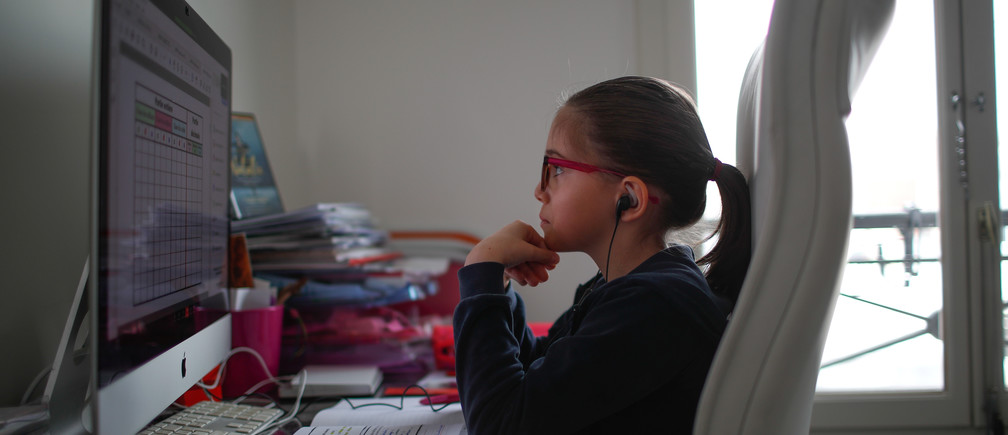
During Covid-19 the lives and education of children and young people across the world have increasingly moved online. Spring 2020 saw the sudden shift of most children's schools activities into the digital world.

Children's schooling, leisure time, social contacts, home life have mostly been conducted at home via digital media. Embracing new tools and services and spending several hours per day online changed dramatically daily schedules.


-


  • My thoughts:

Since the first lessons including technology and later social media, I thought my students kids and teens to stay alert about their privacy online.

Through teaching students and training educators, I’ve learned a lot about how to effectively create and implement digital instruction and self-paced learning.

The first step you should teach is to customize the privacy settings of your students to control who sees what information about them. They must learn to configure their settings so that they have approval over who is viewing their posts or chatting and limit what comes up in search results, so only specific groups can see their photos, posts, likes or conversations.


credits: REUTERS/Gonzalo Fuentes


We will teach our students about online dangers if they are not prepared So we will help them to develop the skills to keep safe when they are online.

Don't forget to talk about the new dangerous games on some social media as TikTok or Instagram. Parents must be aware as 'parents' at home.

We also need to understand that the internet is not simply a place.  Somewhere your kids go to hang out. And if they were doing that physically, you would want to know where they were going and who they were going with.  Even they love to be alone in their own room listening some music or chatting or texting with friends. Be active near your kids and teens. 
Parents need to start asking the same kind of questions, when their teenagers are online, ignoring the one word 'nowhere' or 'no-one answers'.
Because just as when they head out the door, every time they go onto an online space, there are potential risks.  And while you can't be there with them, you should at least attempt to satisfy yourself you know what they are doing in their own room. 
Don't forget! Parents have new tools to follow their kids online. Use them!


Safe signs

Some important messages for kids, parents and teachers:

Parents, wake up! If your teenager spends hours glued to his phone or buried in his room on a laptop, this movie Disconnect shows you just how at risk he or she really is.

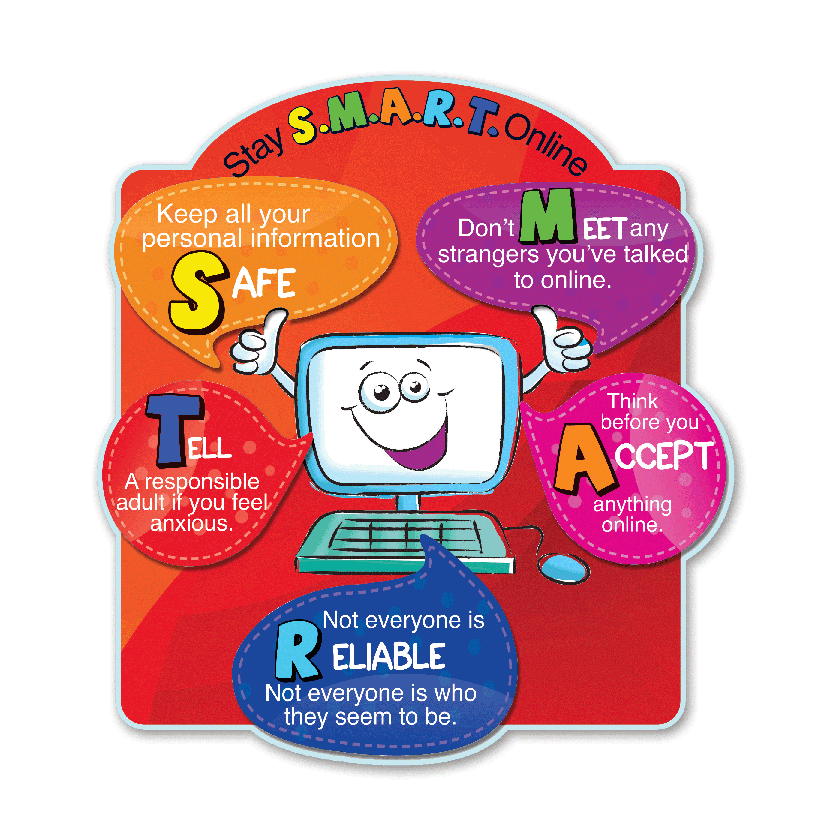
Kids and young adolescents do need to be reminded that not everyone they meet in school or online is who they say they are. As parents, you might wonder whether what they are doing is safe or not.

Parents need to understand that it's important to stay in close touch with their kids' online use. Dialogue is very important, but it is not enough. 

G-Souto

04.11.2021
Copyright © 2021G-Souto'sBlog, gsouto-digitalteacher.blog


International Day Against Violence & Bullying at School including Cyberbullying : Resources by GinaSouto is licensed under a Creative Commons Attribution-NonCommercial-NoDerivatives 4.0 International License.


References: 

UNESCO / my personal posts about e-safety kids, bullying and cyberbullying ( English and French languages) on this blog.