World Philosophy Day
Celebrated on every third Thursday of November since 2005, World Philosophy Day aims to foster philosophical analysis of major contemporary issues, so as to respond more effectively to the challenges confronting humanity today.
"Philosophy is the study of the nature of reality and existence, of what is possible to know, and of right and wrong behavior. It comes from the Greek word phílosophía, meaning 'the love of wisdom.' It is one of the most important fields of human thought as it aspires to get at the very meaning of life."
"Philosophy is the study of the nature of reality and existence, of what is possible to know, and of right and wrong behavior. It comes from the Greek word phílosophía, meaning 'the love of wisdom.' It is one of the most important fields of human thought as it aspires to get at the very meaning of life."
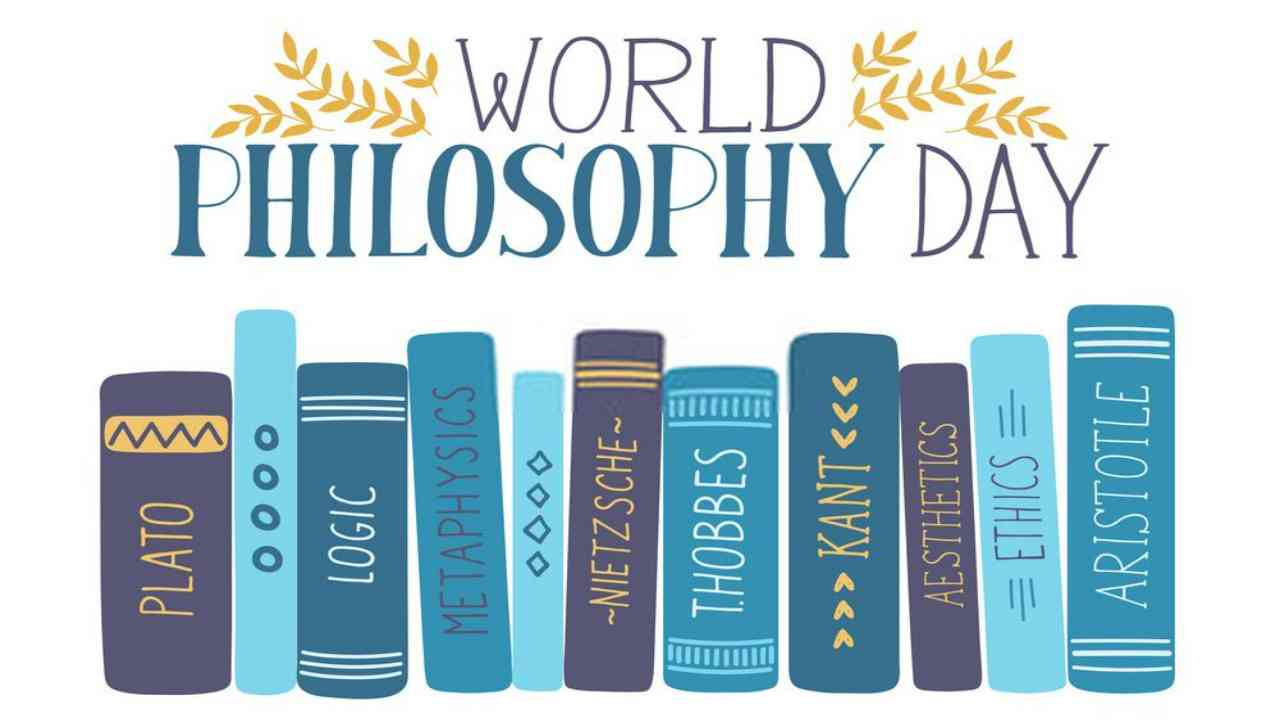
World Philosophy Day was introduced in 2002 by UNESCO (the UN Educational, Scientific and Cultural Organization) with the following objectives:
- to renew the national, subregional, regional and international commitment to philosophy;
- to foster philosophical analysis, research and studies on major contemporary issues, so as to respond more effectively to the challenges that are confronting humanity today;
- to raise public awareness of the importance of philosophy and its critical use in the choices arising for many societies from the effects of globalization or entry into modernity;
- to appraise the state of philosophy teaching throughout the world, with special emphasis on unequal access;
- to underline the importance of the universalization of philosophy teaching for future generations.

World Philosophy Day
credits: UNESCO
The 2019 edition aims to highlight the importance of philosophy in different regional contexts.
- Goal:
The goal is to obtain regional contributions to global debates on contemporary challenges that support social transformations and to stimulate collaboration to address global issues, such as migration, radicalization, environmental change, or artificial intelligence.

A detail of the stained glass panel by Marc Chagall, installed in the UN General Assembly buildingcredits: photo: UN Photos/ Lois Connerhttps://www.un.org/en/



Philosophy is an inspiring discipline as well as an everyday practice that can transform societies. By enabling to discover the diversity of the intellectual currents in the world, philosophy stimulates intercultural dialogue.
By awakening minds to the exercise of thinking and the reasoned confrontation of opinions, philosophy helps to build a more tolerant, more respectful society.
It thus helps to understand and respond to major contemporary challenges by creating the intellectual conditions for change.
The participation of philosophers and scientists from all branches of natural and social sciences, educators, teachers, students, press journalists and other mass media representatives, and the general public is crucial for the open debate and the diversity of intellectual currents.

World Philosophy Day
credits: UNESCO
Education:
On this Day, schools and colleges, in a collective exercise in free, reasoned and informed thinking on the major challenges, are encouraged to organize various types of activities.
Activities:
- Philosophical dialogues,
- Debates,
- Conferences,
- Workshops,
- Cultural events,
- Presentations around the general theme of the Day.
Schools:
The importance of Philosophy, especially for young people, underlining that philosophy is a discipline that encourages critical and independent thinking and is capable of working towards a better understanding of the world and promoting tolerance and peace.
It'is a day, or a week when schools and students can share thoughts openly, explore and discuss new ideas and inspire others.
As teachers, we know that young people are now well informed through social media they use. They have an opinion about the problems that concern the planet, peace, war. They only have to organize all the information by develop their critical thinking.
Secondary education
In secondary schools, cultural events, and presentations are welcome.
In secondary schools, cultural events, and presentations are welcome.
Workshops by inviting Philosophy teacher (school, or university education), one or two national philosophers would be interesting to awake students minds to the exercise of thinking and the reasoned confrontation of opinions.
Students will understand better why they are studying Philosophy as a discipline. They are too young, and sometimes they feel a little confused on the different ancient philosophers currents they are studying.
Elementary education:
I would like to share with my usual readers an interesting experience with elementary school students! The “P4C” educational program.
Students will understand better why they are studying Philosophy as a discipline. They are too young, and sometimes they feel a little confused on the different ancient philosophers currents they are studying.
Elementary education:
I would like to share with my usual readers an interesting experience with elementary school students! The “P4C” educational program.
P4C stands for “philosophy for children” and consists of a series of lesson plans that can be used to introduce grade-school students to rudimentary philosophical concepts.
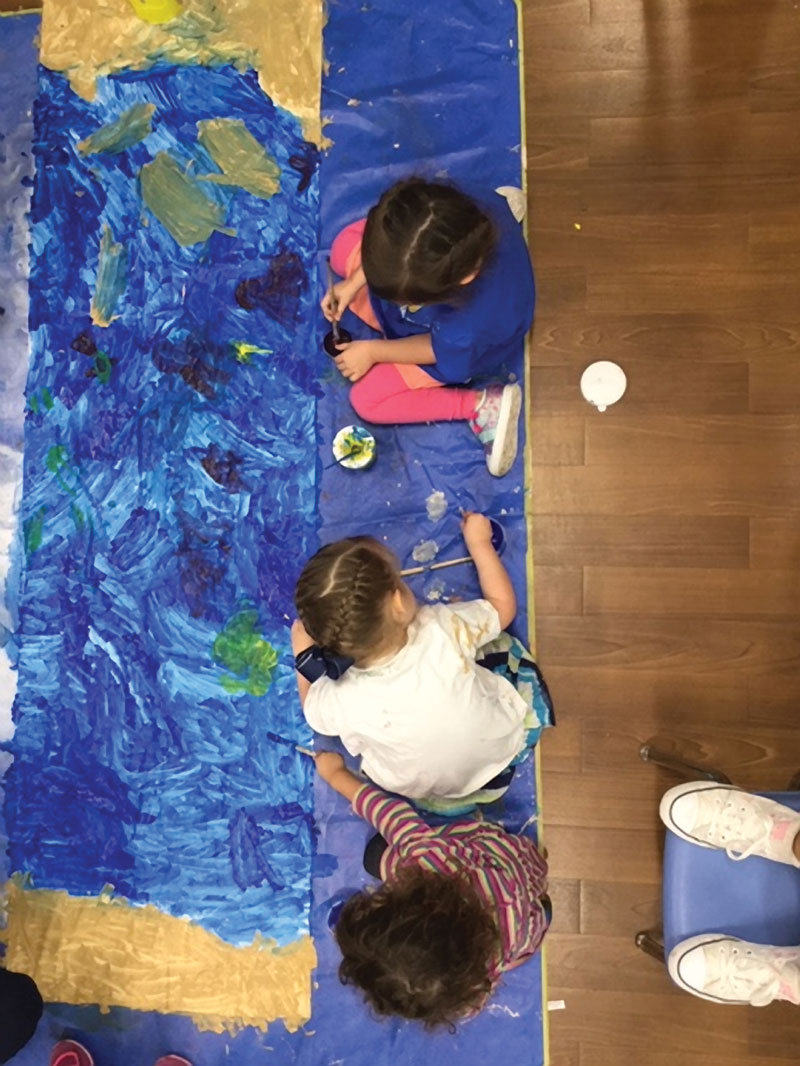
credits: Winter Park Magazine
On the image above, "Junior philosophers paint a river to be used as an intellectual exercise. They make a choice, then line up on either side of the river and explain how and why they made that choice. They take a position, literally and figuratively, which is, of course, what philosophers do."
In 2015, professor Erik Kenyon began incorporating P4C ideas into classes that called for his students to develop child-oriented philosophy lessons as part of their studies - then take them on the road. Things went smoothly when they worked with students at nearby elementary schools. Read more here

Ethics For the very Young
Erik Kenyon/Diane Terorde-Doyle & Sharon Carnahan
The three researchers published a book about their efforts, Ethics for the Very Young.
The book includes outlines of lesson plans meant to encourage children to “listen, think, and respond” in order to navigate their way through questions such as: What is bravery? What is a friend? What makes something fair or unfair? How do I agree, or disagree, with dignity.
G-Souto
21.11.2019
Copyright © 2019G-Souto'sBlog, gsouto-digitalteacher.blogspot.com®
Copyright © 2019G-Souto'sBlog, gsouto-digitalteacher.blogspot.com®
Schools : World Philosophy Day : resources by G-Souto is licensed under a Creative Commons Attribution-NonCommercial-NoDerivatives 4.0 International License.