Wednesday, March 21, 2012

And what about World Water Day at school?


r Day. 
"World Water Day" is observed on March 22 every year. A day to recognize the importance of earth's most precious natural resource was proposed 20 years ago (1992) at the United Nations Conference on Environment and Development (UNCED). 
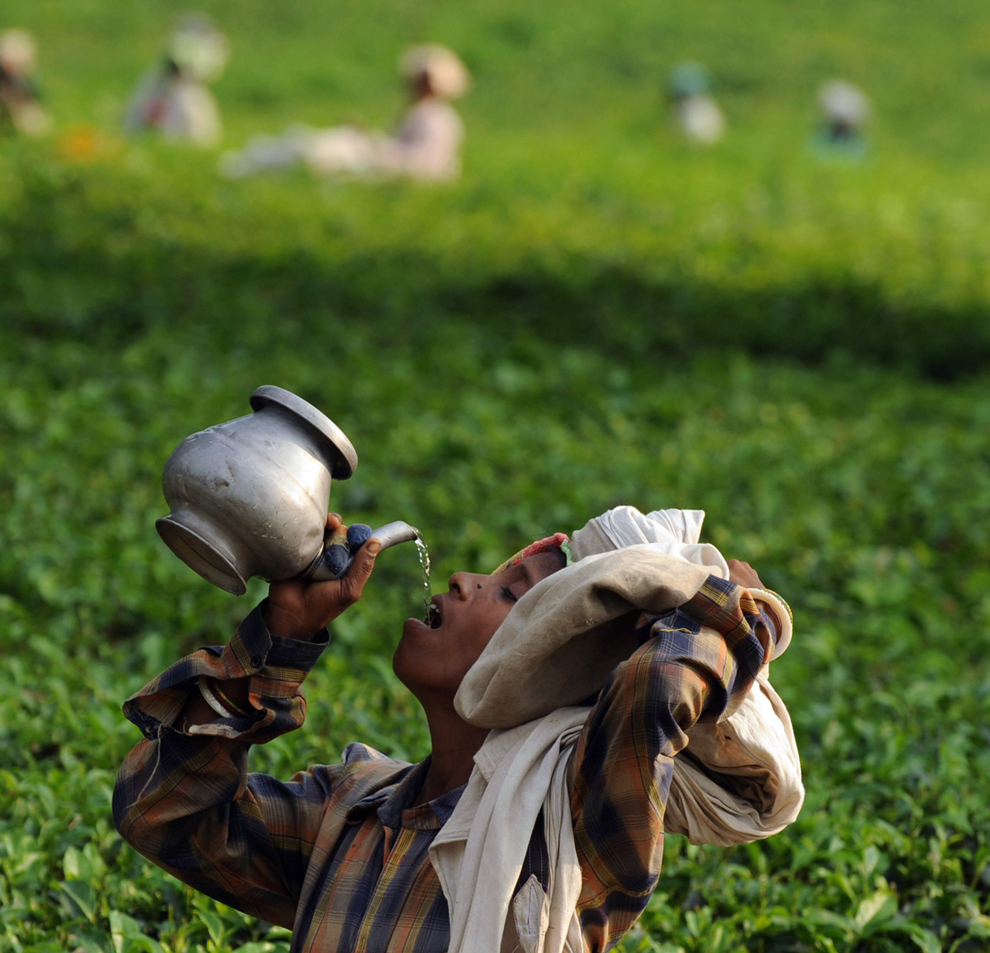

Diptendu Dutta/AFP/Getty Images (2011)

While we often take water for granted, many people cannot have it. Water plays a role in almost everything we do. We drink it, wash in it, play in it, generate power with it, irrigate crops with it, travel and transport goods on it, fight fires with it, and worship with it. 

World Water Day official ceremony Live from 9:30 GMT. 

"UNICEF's World Water Week, to be held from March 19 to March 25, is expected to create awareness and find donors and volunteers to identify and support the cause of providing water to the 780 million people who don't have safe drinking water."


Education:

Each year the UN focuses on an aspect of water and the forthcoming event clearly links in with agriculture and nutrition. 

"When a billion people in the world already live in chronic hunger and water resources are under pressure we cannot pretend the problem is ‘elsewhere’."

Coping with population growth and ensuring access to nutritious food to everyone call for a series of actions we can all help with:
  • follow a healthier, sustainable diet;
  • consume less water-intensive products;
  • reduce the scandalous food wastage: 30% of the food produced worldwide is never eaten and the water used to produce it is definitively lost!
  • produce more food, of better quality, with less water
So, we can discuss all these items at school. And bring some new habits to our students.

Levels: Primary to Secondary education;

Curriculum: Civics; Sciences; Languages; Arts.


Some resources:

  • Today, 9:30 GMT tune in to the Live Webcast of the Official UN-Water World Water Day 2012 ceremony from FAO Headquarters in Rome. Watch the webcast with your students (secondary education).

  • UNESCO has a DVD for Natural Sciences (a package of four CD-Rom produced for the International Decade for Action 'Water for Life', published in 2003).

  • UNICEF has also a video "Safe water safe lives" : in Pakistan access ro safe drinking water and sanitation is protecting children for deadly diarrhoea and malnutrion.

  • Watch "Water, The Drop of Life" here or "Safe Water Safe Lives" here.
Let your students use their smartphones and meanwhile ask them to take some notes or to search for countries where the water is a great gift.

It can be a good start to an open discussion in the classroom, after watching the ceremony or the videos by UNESCO or UNICEF. 

It will depend from the resource you chose for the level that you teach.

Or you can simply start your lesson with the video below:


After that, ask your students if they know how much water they consume every day and how can we change our diet and reduce our water footprint.

Some UN Water campaign materials can be download from here
  • brochures, 
  • logos, 
  • videos and animations
  • games

Download and print out these materials for your "World Water Day" event or lesson learning more about this year's topics of 'Water and Food Security'!

For example this game teaches the students how much water is needed to create one meal, while ensuring that we get the nutrition we need. 

The game can be played on students' computer or mobile device and is available in English, French and Spanish. 

Some extra activities: 

You come up with different suggestions that students can develop for a week:
  • Discussing (at home and in the classroom);
  • Writing (news, storytelling, drama, poetry);
  • Drawing;
  • Dramatizing;
  • Creating videos;
  • Sharing experiences with different schools in the world using Twitter or Facebook (school account) or just by emailing if some schools in  disadvantage countries have no access to social networks.

I am sure that World Water Day 2012 event in your school will be an interesting project.

The success of "World Water Day" depends on you!

G-Souto

22.03.2012
Copyright © 2012G-Souto'sBlog, gsouto-digitalteacher.blogspot.com®
Licença Creative Commons
And what about World Water Day at school? bG-Souto is licensed under a Creative Commons Attribution-NonCommercial-ShareAlike 3.0 Unported License.

References for Teachers:

UN Water

Monday, March 19, 2012

Let's talk about Music at school, again!


Credits : © Mathias Bothor / DG

...perhaps the most 'complete' pianist of his age...

BBC Music Magazine

Let's talk about Music in public education, once more. Music curriculum is not yet a major value in public schools. Oh! It's so wrong! Watch again the video Sir George Martin talking about Music in public schools Teaching Music.

"Music should be a very solid part of the education of young children."

Sir George Martin


I deeply agree with him. I was very lucky, because I could study both Music, and Literature and Sciences at school. Not at the same school, that's true. It was difficult to go from a public school to another public school (Arts) but I did it.

Later, I got my master in Piano at High School of Arts (Portugal) and my master in Linguistics and Literature at the University of Porto. 

And today, I have a different sensibility looking to the world, no doubt.

I could teach my students to love Literature and to love Music in the same curriculum, Humanities.

All along my teaching career, for thirty years, my students learned Languages and Literature and a bit of Music. In the classroom, we could hear classical music, jazz or pop, and understand how music can be integrated in school curriculum.

Of course, they were lucky, because to me it was easy to share my expertise in musical domain.

I had the joy to discover good musicians among my students. Today there are some good young musicians who were my students at the school.


Music, as you could read on some of my posts,  is a fundamental part of young people's education. 

When we are lucky and can study both, we can understand better  the importance of music in our life. Better it will be in some kids' life.  

Music can be a strong way for inclusion: Music as a social inclusion for kids.

I love all kinds of music, but today, and following Sir Georges Martin's talk, I would like to write about Classical Music in Education.

Visiting  Discovering this young pianist at Deutsch Grammophon website,  as i often do, I discovered the young pianist Jan Lisiecki.

How interesting could in the digital era to talk to my digital students about Jan Lisiecki. It could be a nice and fresh example to kids at Elementary and Secondary schools that love classical music and  love to play an instrument and can't.


Did you felt the enthusiasm of young students when we are talking about music in the classroom? Any kind of music. Pop or classical. No matter the curriculum. It depends from the learners we are teaching. 

Of course, it depends of us as teachers. Music goes in every curriculum. Some feel free to include music and some are not. They don't know nothing about music. It's rare a school teacher talking and teaching about humanities and music in the same curriculum.

We can discover some gifted students, then we talk with parents and if they can afford a musical education to their kids, there you have the chance to guide a little bit the the next generation of musicians.


Jan Lisiecki sitting near Glenn Gold's statue

Having graduated from high school at age 15 in January 2011, Jan Lisiecki is studying for a Bachelor of Music at the Glenn Gould School of Music in Toronto on a full scholarship. 

Wow! Glenn Gould School! What an honour!

"The Glenn Gould School represents the highest standards in music education and is dedicated to nurturing its students so they reach the highest level possible."

Jan Lisiecki is now recording for Deutch Grammophon. Yuou can read his biography here

Awesome, isn't it? And let's hear this 16-year-old young man talking about himself and Music:


Wow! Love when he says "I am a normal kid"! Indeed he is! But a gifted young man who loves classical music.

Diapason describes Jan as "an unmannered virtuoso already with virile and, above all, irresistibly natural playing."

The BBC Music Magazine commended "Lisiecki’s mature musicality," and his "sensitively distilled" interpretation of the contrasting concerti, played "with sparkling technique as well as idiomatic pathos," noting that "even in a crowded CD catalogue, this refreshingly unhyped debut release is one to celebrate."

Can you believe it! All this about a young 16-year-old man!

Education:

Music has the potential to achieve social and psychological transformation of children and young people. Their sensibility will be accurate. 

We must never waste such an opportunity as teachers! Captivating the major interests of our students to Music.

Many teachers love Music and feel comfortable to speak about Music in the school curriculum.

Resources: 

The love of Music and those videos about Jan Lisiecki. And some CD as well.

Displaying the video below could be a good approach to understand the feelings of some of your students about classical music. 

I'm sure you will discover some gifted kids. You can guide them to continue to study Music in Higher Education. 

16-year-old pianist Jan Lisiecki in this interview, speaks about the uniqueness of the piano and explains why he likes to practice early in the morning watching the sunrise outside his window. What a better example? 


Some thoughts: 

All of your programs must be customized to meet specific classroom and curricular requirements, but also enrich students experience. 

For example, start by choosing the subject areas such as Core Curriculum (Language, Science, Music, Media Literacy) and of course a Media Art | Music project.

Music Art| Project in Vocational education: Based on the curricular strand to be focused on in conjunction with students needs and any other specific classroom requirements, the art form and a specially trained LTTA (Learning Trough the Arts) are selected. LTTA artits must work in partnership with you the teachers to develop customized arts-infused lesson plans.

Sequence of LTTA Activities 1)
  • Teachers select a subject focus;
  • Teachers and artists create units linking an arts activity to 8-10 facts or concepts from the regulated curriculum;
  • Teachers attend artist-led workshops to develop artistic tools;
  • Each artist educator visits the classroom at least four times over a six-week periode;
  • While the artist leads a classroom activity, teachers observe how individual students respond, and internalize new skills through active participation;
  • Teachers and artists then complete learning profiles of each student;
  • Teachers carry on activities between artist visit;
  • Teachers and artists evaluate each other's performance, and comment on the effectiveness of the lesson plan in fostering student engagement and learning
Of course, this would be the perfect Vocational curriculum

But, if it is not possible, you can contact the 
Conservatory of Music in your town or a Music School and ask for an artist or musician, a Music teacher or a music student to increase cultural education of your students. 

Who knows if you will discover a gifted kid, a new musician among your students? A new young pianist, perhaps?

This would be the perfect (idealistic, I know) school education! Artists and teachers working together for the complete education of children.

By the way, Jan Lisiecki debut album with Mozart's Piano Concertos Nºs 20 & 21 will be available this spring. 

Your students can follow him on Facebook. He is very active, love to share his concerts, and much more.


I am completely fascinated by this young pianist! Why following Justin Bieber if they have Jan Lisiecki to follow? A good question for your students ?


"Young people can learn from my example that something can come for nothing. What I have become is the result of my  hard efforts."

Franz Joseph Haydn


G-Souto

19.03.2012

Copyright © 2012G-Souto'sBlog, gsouto-digitalteacher.blogspot.com®
Licença Creative Commons
Let's talk about Music at school, again! bG-Souto is licensed under a Creative Commons Attribution-NonCommercial-ShareAlike 3.0 Unported License.


References:

Jan Lisiecki site
http://www.janlisiecki.com/Jan_Lisiecki.html

Learning Trought the Arts | Canada1)


Friday, March 16, 2012

Hommage : Classes de neige école Sint-Lambertus d'Heverlee


Photo: Yorick Jansens | AFP


Photo: Adrian Streun | Reuters

"Il n'y a pas de mot pour exprimer la douleur que l'on ressent lorsqu'on perd un enfant"

Elio di Rupo, Premier ministre belge 

Enseignante, je ne peux pas m'arrĂªter de penser Ă  ces vingt-deux jeunes Ă©coliers et leurs six professeurs et accompagnants. 

Cet accident en vacances de neige de jeunes étudiants belges me touche de si près!

Je suis souvent partie avec des Ă©lèves portugais en Ă©changes scolaires! Et je sens dans la peau ce que c'est la responsabilitĂ© de sortir avec des  jeunes Ă©tudiants.

À chaque fois, je partais le coeur serré, de peur que quelque chose puisse arriver à des enfants qui nous sont confiés par des parents qui déposent en nous tout leur espoir: leurs enfants.

Mais la joie des Ă©lèves, leur sens de responsabilitĂ© en comprenant la grande responsabilitĂ© qui pesait sur nous les professeurs, les faisaient plus responsables et coopĂ©ratifs. 

Et c'est vrai que leur joie, quand on partait à l'étranger, était tellement grande qu'on oubliait un peu les risques qui pesaient sur nous. Et on les accompagnaient le coeur gai de voir leur bonheur.


crédits: dr

Il y avait un journal en ligne des enfants de la classe de  l'Ă©cole Sint-Lambertus Ă 
Heverlee qui proposait de nombreuses photos des écoliers, comme celle-ci, et des courts résumés de leurs journées du 5 au 12 mars. Sur les clichés, on voit les jeunes Belges prendre du bon temps en Suisse. Ils s'amusaient à effectuer des glissades dans la neige, apprennent à faire du ski, se baladant en divers lieux du val d'Anniviers. Et ils étaient heureux.

La Belgique est en deuil! Mais pas seulement la Belgique. Je crois que tous les étudiants et tous les professeurs dans beaucoup de pays sont unis dans cette tragédie.

Mes pensĂ©es sont avec les vingt-deux jeunes Ă©tudiants qui ont perdu la vie, leur professeurs aussi et qui ont tout fait pour que ces vacances de ski  puissent se passer de la meilleure façon. Les blogs des Ă©tudiants en sont la preuve.


Photo: Sébastien Bozon | AFP

Je suis de tout coeur  avec les parents qui ont perdu leurs enfants, les Ă©coliers qui ont perdu leurs amis, les professeurs qui ont perdu leurs collègues, les familles des professeurs et du chauffeur du bus scolaire.

Je pense aux victimes, enfants et enseignants, ainsi qu'à tous ceux qui restent là et qui doivent surmonter une telle tragédie.

J'ai beaucoup hĂ©sitĂ© de publier une photo de groupe des enfants. Mais les visages des enfants sont protĂ©gĂ©s. Et je crois qu'ils ont le droit d'Ăªtre montrĂ©s dans cette photo.Elle tĂ©moigne leur joie. Il faut penser Ă  eux comme ils Ă©taient! De beaux enfants. Des enfants heureux. Joyeux.

Une bonne nouvelle: une des trois jeunes Ă©tudiantes grièvement blessĂ©e dans le terrible accident "s’est rĂ©veillĂ©e du coma artificiel", selon un communiquĂ© de l’hĂ´pital de Lausanne oĂ¹ les enfants sont hospitalisĂ©s. Depuis hier, elle est pleinement consciente et peut Ă©changer avec son entourage.  Les deux autres   doivent encore Ăªtre maintenues dans un coma artificiel en raison d'une atteinte neurologique. Mais, quand mĂªme, c'est dĂ©jĂ  un signe d'espoir.

Mes pensĂ©es les plus tendres vont vers les trois jeunes Ă©lèves et leurs parents. 


Quand l'oiseau arrive 
s'il arrive 
observer le plus profond silence 
attendre que l'oiseau entre dans la cage 
et quand il est entrĂ© 
fermer doucement la porte avec le pinceau 
puis 
effacer un Ă  un tous les barreaux 
en ayant soin de ne toucher aucune des plumes de l'oiseau  


Faire ensuite le portrait de l'arbre 
en choisissant la plus belle de ses branches 
pour l'oiseau 
peindre aussi le vert feuillage et la fraĂ®cheur du vent 
la poussière du soleil 
et le bruit des bĂªtes de l'herbe dans la chaleur de l'Ă©tĂ© 
et puis attendre que l'oiseau se décide à chanter.


Jacques PrĂ©vert, Pour faire le portrait d'un oiseau 
(extrait)


G-Souto

16.03.2012
copyright © 2012G-Souto'sBlog, gsouto-digitalteacher.blogspot.com®


Licença Creative Commons

Hommage : Classes de neige Ă©cole Sint-Lambertus d'Heverlee bG-Souto is licensed under a Creative Commons Attribution-NonCommercial-NoDerivatives 4.0 International License.