Showing posts with label schools of Arts. Show all posts

Monday, January 20, 2020

Art & Education : Paris Musées : 150,000 digital reproductions of art works in open content & other resources


Oh! La ! Quatorze musées de Paris donnent accès numérique gratuit à 150 000 de leurs œuvres.

Du Petit Palais à Carnavalet, du musée Cognacq-Jay au musée d’Art Moderne de la Ville de Paris, cette opération d’Open Content vise à  favoriser l’augmentation de la visibilité des œuvres et la connaissance des collections en France et à l’étranger, selon un communiqué de Paris Musées.

Ces musées, contenant de nombreux trésors, souffrent de la notoriété des géants parisiens comme le Louvre, Orsay, le Grand Palais ou le Centre Pompidou.

Paris Musées propose en Open Content (mises à disposition gratuite et sans restriction) plus de 150 mille reproductions numériques des oeuvres des collections dela Ville de Paris!

Open content : plus de 150 000 œuvres des oeuvres des collections des musées de la Ville de Paris en libre accès (sous licence CCØ ).


Nouvelle étape dans le développement de la politique numérique de Paris Musées, le lancement de l’Open Content contribue "à l’accroissement et à l’amélioration de la diffusion des collections et vient renforcer les actions en faveur d’un meilleur accès à l’art et à la culture". 


Oeuvres de Édouard Vuillard & Robert Delauney CCØ 

Il favorise également l’augmentation de la visibilité des œuvres et la connaissance des collections municipales en France et à l’étranger.

"Cette ouverture des données garantit le libre accès et la réutilisation par tous de fichiers numériques, sans restriction technique, juridique ou financière, pour un usage commercial ou non."

Des images représentant des œuvres appartenant au domaine public sous licence CCØ (Creative Commons Zero) sont mises à disposition de tous les internautes, enseignants, étudiants, chercheurs, via le Portail des collections de Paris Musées

Dans un premier temps, les reproductions d’oeuvres en 2D qui ne sont pas soumises à droits sont disponibles en Open Content, les images soumises à droits restent en basse définition afin d’illustrer les fiches du site internet des collections. 

Les étudiants et tous les amateurs d’art pourront, par exemple, télécharger les œuvres des grands noms de la photographie (Atget, Blancard, Marville, Carjat...) ou de la peinture (Courbet, Delacroix, Rembrandt, Van Dyck...).

Chaque utilisateur/ étudiant récupère un dossier: 

  •   l'image en haute définition (300 dpi – 3 000 pixels), 
  •  un fichier avec la notice de l’œuvre,
  •  charte des bonnes pratiques liées aux images sous licence CCØ afin d’inviter chacun à citer la source et les informations sur l’œuvre.

Si cette licence est déjà utilisée par des musées internationaux à l’instar du Rijksmuseum à Amsterdam ou du Metropolitan Museum à New York, Paris Musées est à la première institution française parisienne à s’en emparer en proposant un nombre considérable de reproductions en haute définition


crédits: Musées de Paris

  • Comment accéder aux reproductions libres de droits ?

Via le Portail des collections: 
Sur parismuseescollections.paris.fr, les images des œuvres sous licence CCØ seront téléchargeables soit directement depuis la fiche de l’œuvre en question, soit depuis une page dédiée aux images libres de droits accessible via la page d’accueil.
  • À qui sont destinées ces reproductions?
Paris Musées permettra à tous les publics d’obtenir en un clic une reproduction d’œuvre issue de ses collections pour l’imprimer, s’en inspirer ou même en faire un fond d’écran !

Les chercheurs, étudiants et enseignants pourront ainsi utiliser des images en haute définition pour leurs recherches, supports de cours ou publications et améliorer leurs outils de médiation physiques et numériques.

Pour une mise en avant claire des reproductions des œuvres concernées, Paris Musées créera des expositions virtuelles spécifiques qui apporteront aux utilisateurs/ étudiants un maximum d’informations tout en les encourageant à télécharger et réutiliser les images.


crédits: Musées de Paris

Education:

In January 2020, 14 Paris Museums announced that it is now possible to freely download (under CCØ licensemore than 100,000 digital reproductions of art works from their collections on the Paris Musées site.

Teachers and students can discover all the beautiful artworks from the Paris Museums and  download for free (Open Content). 
Art is a cultural legacy for humanity. A fundamental part of our history that should be kept safe for future generations.

Teachers and students can discover all the beautiful artworks, more than 150 000 of the world’s famous masterpieces.


credits : Paris Musées

From coins dating to before Jesus Christ and artworks by François Boucher, Gustave Courbet and Eugène Delacroix to Rembrandt drawings, the earliest photographic work of Etienne Carjat and Charles Marville, and abstract art with Robert Delaunay, an entire heritage is now being offered to web users with joyful ease. 

The images can be viewed and downloaded for free from the website, and are notably accompanied by detailed explanatory notes for those interested in discovering the works further.

On the website, students and teachers, works can be searched by category, technique, period or colour, giving virtual visitors the chance to navigate between photographs, prints, furniture and porcelains with ease.
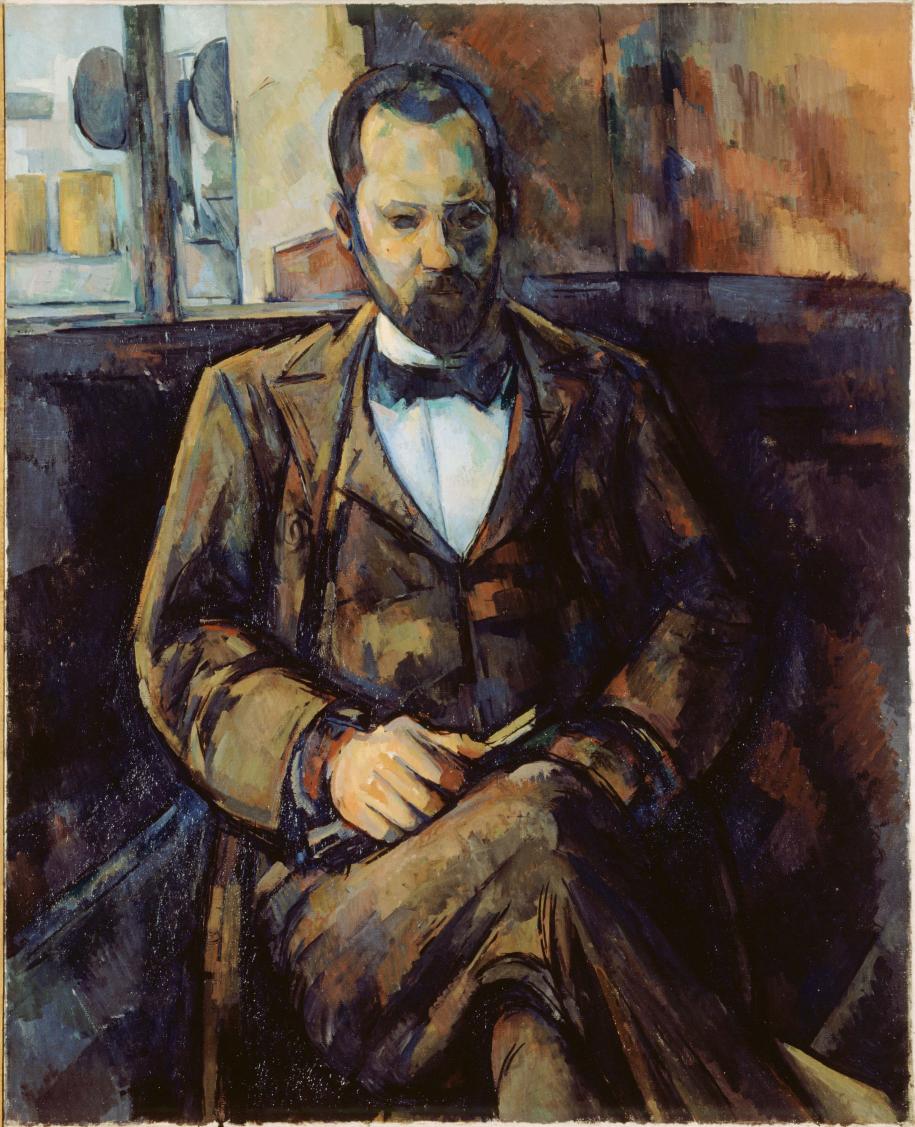


Paul Cézanne, 
Portrait of Ambroise Vollard (1899)
credits: Maison de Victor Hugo
Oil on canvas, from the collection of Petit Palais, Paris (CC0 Paris Musées 
/ Musée des Beaux-Arts de la Ville de Paris, Petit Palais)

Paris Musées will stage digital exhibitions on its website to help users discover the open access works. The first highlights grisaille paintings - rendered in shades of grey and often modeled to create the illusion of a relief - held by the Maison de Victor Hugo. The technique was popular during the 1880s, and grisaille paintings were often featured in illustrated editions of the Les Misérables author’s works.

In the future, Paris Musées may make its open access artworks available on platforms such as Wikimedia Commons.
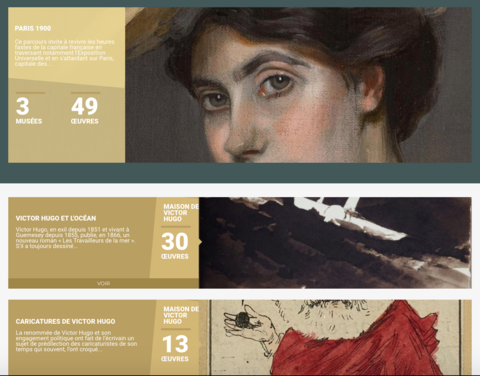


Other online resources:

Now, January 2021 Paris Musées offer the fantastic access to 335 773 artworks online! Wow! And 14 thematic 'parcours' .
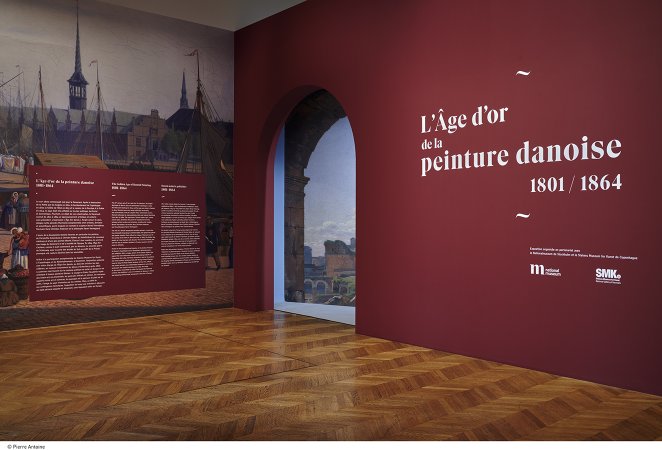


L'âge d'or de la peinture danoise 1801-1864

An online visit in 30 minutes of Danish Painting until the 17 January 2021.

All this is perfect for Art students and teachers, but also for anyone who wishes to explore the artworks inside Paris Museums.
  • Target: 
Arts: High junior schools; Schools of Arts and University
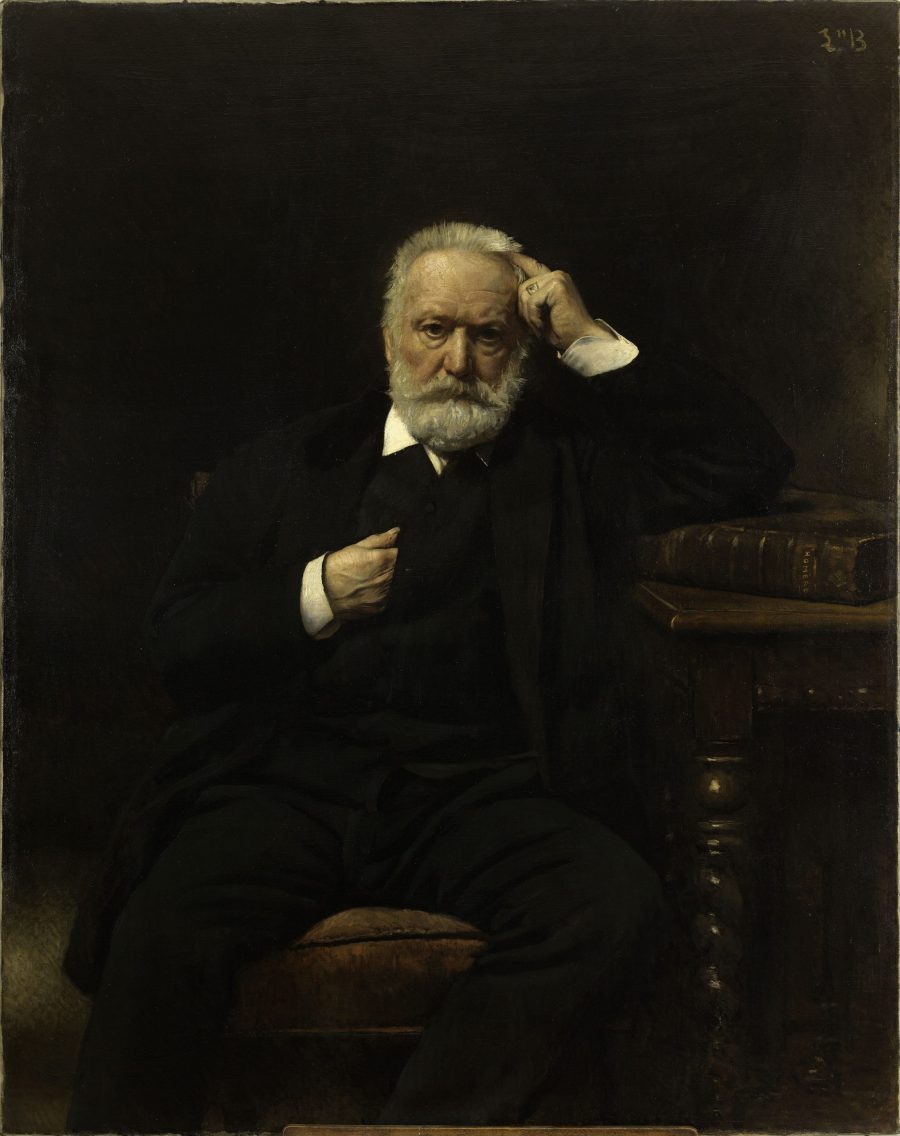


 Portrait de M. Victor Hugo
Léon Bonnat
credits: Maison de Victor Hugo

Some thoughts :

“Museums are an important means of cultural exchange, enrichment of cultures and development of mutual understanding, cooperation and peace among peoples”.

Unesco


The world is changing faster than ever. New technology delivers new ideas, gigabytes of information, news of art and museums shared by social media. 

By making its heritage just one click away, outside the walls of these institutions, Paris Musées demonstrates its will to promote access to culture and to increase visibility of the works. 

Offering free download images, museums are exploring the potential of digital technology to offer virtual learning experiences with a focus on collaboration an participation.

Modern museums must compete for an audible voice against the furious pace of this background.

Museums in a changing world in recognition that arts must go out from their walls.

Museums  have an attractive impact in the curriculum. And if we can't visit some museums, we can admire their artworks.


G-Souto

20.01.2020 

update 02.01.2021
Copyright © 2021G-Souto'sBlog, gsouto-digitalteacher.blogspot.com®

Creative Commons License
Art & Education : Paris Musées 150,000 digital reproductions of art works in open content and other online resources bG-Souto is licensed under a Creative Commons Attribution-NonCommercial-NoDerivatives 4.0 International License.

sources: Paris Musées

Friday, October 23, 2015

Teaching Arts : Lygia Clark, the presage of modern digital information era !


Lygia Clark, MoMA exhibition, 2014


"This sensation of precariousness, of being absorbed in the immanence of the act of discovering the sense of existing."
Lygia Clark,Capturar um Fragmento de Tempo Suspenso
(To capture a fragment of suspended time), 1973
Aspiring to break down the barriers between art and everyday life, Lygia Clark radically re-imagined what art could be. By facilitating an engaged and embodied relationship between the art object and its audience, 
Clark's work anticipated the development of participatory art, and has influenced generations of artists pushing the boundaries of sculpture, performance, and art-as-pedagogy.
Lygia Clark is one of the most innovative artists of the 20th century. 
"Rebellion in heart, she was committed to innovation, and she had the privilege to be known as a pioneer in her field of interest."
Nadia Herzog


Google Doodle : Lygia Clark' 95th birthday


  • Google Doodle:

Today's Doodle celebrates the 95th birthday of artist Lygia Clark, famed Brazilian painter, sculptor and teacher born on 23 October 1920. The Doodle reflects his own distinct Neo-Concrete style.


  • Some biographical notes:


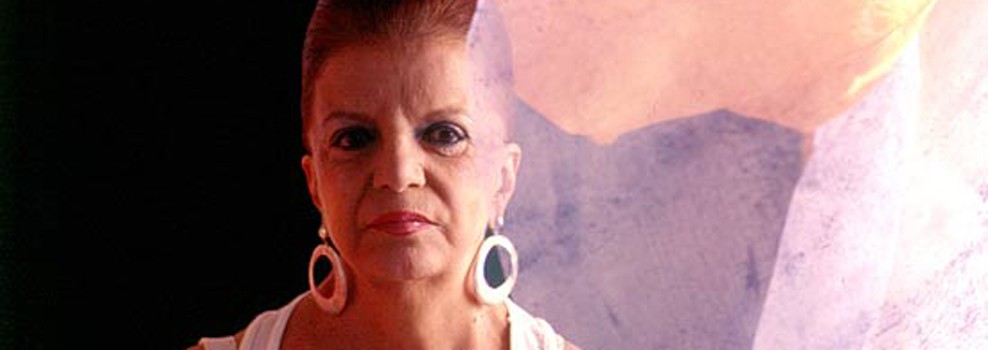
Clark [1920-1988] is a Brazilian artist who trained in France with Fernand Leger. Lygia Clark co-founded the Neo-Concrete movement, which sought to change art from a passive viewing experience to an engaging interaction. 


Lygia Clark [1920-1988]
via Brasil247


"We do everything so automatically that we have forgotten the poignancy of smell, of physical anguish, of tactile sensations of all kinds."

Lygia Clark


Lygia Clark was born in Belo Horizonte on October 23, 1920. A Brazilian artist best known for her painting and installation work. 

Clark became an artist in 1947. In this year, she moved to Rio de Janeiro to study with Brazilian landscape architect Roberto Burle Marx. Between 1950 and 1952, she studied with Isaac DobrinskyFernand Léger and Arpad Szenes in Paris. 


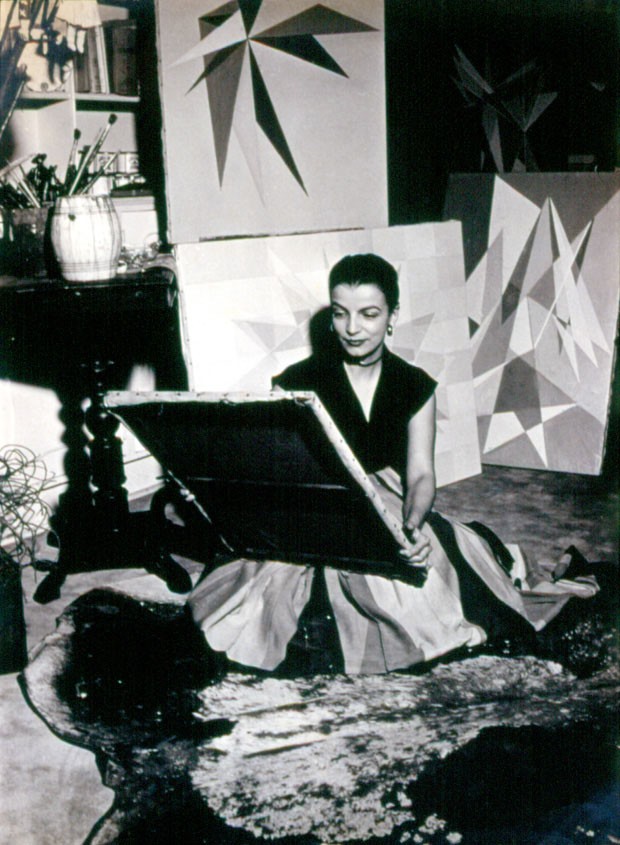
Lygia Clark

In 1953, she became one of the founding members of Rio's Frente group of artists. In 1957, Clark participated in Rio de Janeiro's first National Concrete Art Exhibition. This would be one of Clark's frequent trips to Brazil in order to exhibit her artwork.

She was often associated with the Brazilian Constructivisme movements of the mid-20th century and the Tropicália movement. 

Even with the changes in how she approached her artwork, Lygia did not stray far from her Constructivisme roots. 


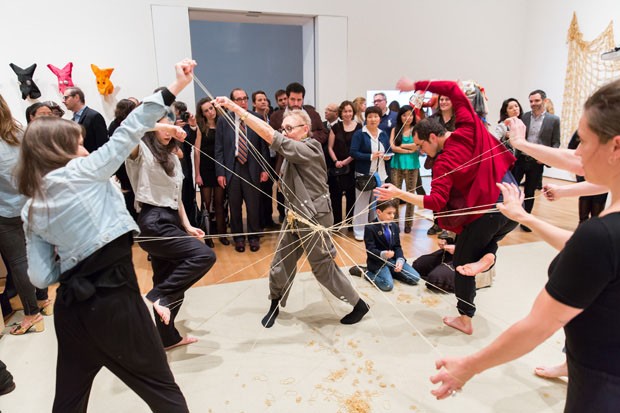
Lygia Clark, exhibition in New York

Along with Brazilian artists, Amilcar de CastroFranz WeissmannLygia Pape and poet Ferreira Gullar, Clark co-founded the Neo-Concrete movement

The Neo-Concretists believed that art ought to be subjective and organic. Throughout her career trajectory, Clark discovered ways for museum goers (who would later be referred to as "participants") to interact with her art works. 

She sought to redefine the relationship between art and society. Clark's works dealt with inner life and feelings.


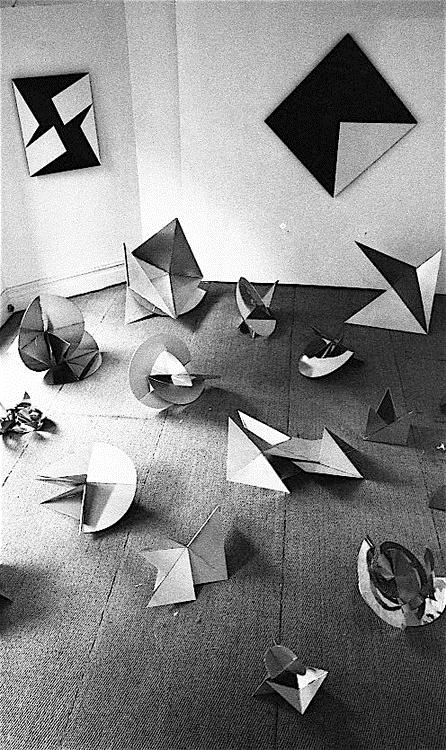
Bicho (critter), 1960, aluminum and hinges
Image Source: Ramirez, Mari Carmen and Hector Olea
 Inverted Utopias: Avant-Garde Art in Latin America. New Haven: Yale University Press, 2004, pl. 127, p. 188.
https://onceandfutureartblog.files.wordpress.com/
Her art pieces,  specifically the bichos, were designed to be modified, re-positioned and folded into new configurations by participants. These "critters" were an early step in Clark's attempts to bridge the gap between artist and viewer.


Lygia Clark

  • Information +
Much of Clark’s work involves the audience manipulating or navigating through the work. 

At times, the objects manipulate the participants through sensory deprivation suits and masks. 

Lygia Clark co-founded the Neo-Concrete movement, which sought to change art from a passive viewing experience to an engaging interaction. Her art pieces,  specifically the bichos, were designed to be modified, re-positioned and folded into new configurations by participants.


Lygia Clark : Bichos

Clark's Bichos (or Critters) are meant to be manipulated by participants into new forms directed only by the Bicho’s construction. These objects are created from flat plates of metal that are hinged together to create something that can move and take on multiple instances of itself. 

These "Critters" were an early step in Clark's attempts to bridge the gap between artist and viewer.

Some critics say "her artwork presaged the modern digital information era."
Later in her career, Clark turned the evocative power of her art toward healing, and became a proponent and practitioner of art therapy. Her work focused on bodily awareness as well as unconscious sensory perception, the inner life, and emotions.

She died in  Rio de Janeiro on April 25, 1988.

"Lygia Clarck was among the young Brazilian artists who, in the late 1950s and 60s, fostered a wider use of colour, greater sensuality, and poetic sentiment in concrete art, drawing inspiration from artists like Piet Mondrian and Kazimir Malevich."


Lygia Clark,  MoMA exhibition

Education:

Art is not bourgeois mystification. What has changed is the form of communicating the proposition. It’s you who now give expression to my thoughts, to draw from them whatever vital experience you want."

Lygia Clark


Doodles! Well, doodles are a awesome digital resource to include into the curriculum to surprise the students as a motivation awaking their curiosity

Students love be surprised in lessons. Something rather new, unexpected info is just the right tip.

Love Google doodles! Doodles combine creativity, curiosity, digital skills, culture and a surprising motivation to a different start of an interesting lesson.
You must think about it.

My usual readers know how I support an entire education in school. STEM are crucial, Literature and Languages are essential, we can't develop digital skills without those curriculum. 

And Arts ! Oh Art is the first, huge step towards a new future to gifted kids.


Lygia Clark


All over the years, you read my thoughts about the importance of Arts in School Education, no matter the art fields: Music ; Dancing ; Painting ; Literature ;
Sculpture, Architecture.

Arts are absolutely necessary to a complete a better education of children and young adolescents. During Secondary education, some students discover their inner path in Arts and later, they will choose Arts education in college or higher schools of Arts to develop their aptitude by a real learning.


Here, a good introduction to Non-Concrete artOf course each teacher must prepare and adapt the activities to the level they are teaching.


Digital Resources: Teachers & students 


Digital culture is well-come into the the classroom as important tools to tackle the world's toughest problems creating bridges and establish a truly intercultural world, where diversity can be celebrated, a world where different cultures not only coexist but value each other for their contributions and potential.

Level: All levels. Focus on Arts (Vocational Education) ; School of Arts (Higher Education.

Curricula: Arts ; Design ; Digital Arts.

Secondary education: Cross-curricular projects (Literature, Arts, Music).

"The instant of the act is not renewable. It exists by itself: to repeat it is to give it another meaning. It doesn’t contain any trace of past perceptions. It’s another moment. At the very moment in which it happens it is already a thing-in-itself. Only the instant of the act is life."
Lygia Clark

G-Souto

23.10.2015
Copyright © 2015-Souto'sBlog, gsouto-digitalteacher.blogspot.com

update 25.10.2024

Creative Commons License
Teaching Arts : Lygia Clark, the presage of modern digital information era bG-Souto is licensed under a Creative Commons Attribution-NonCommercial-NoDerivatives 4.0 International License.