My thoughts about Education Humanities, Technology and Digital Culture. Interested on social media tools in educational contexts and
gamification in education.
It will also remove "overly commercial content" from the children's version of YouTube and change what kind of adverts can be targeted at under-18s.
Several major technology companies have introduced such measures under scrutiny from governments and safety advocates.
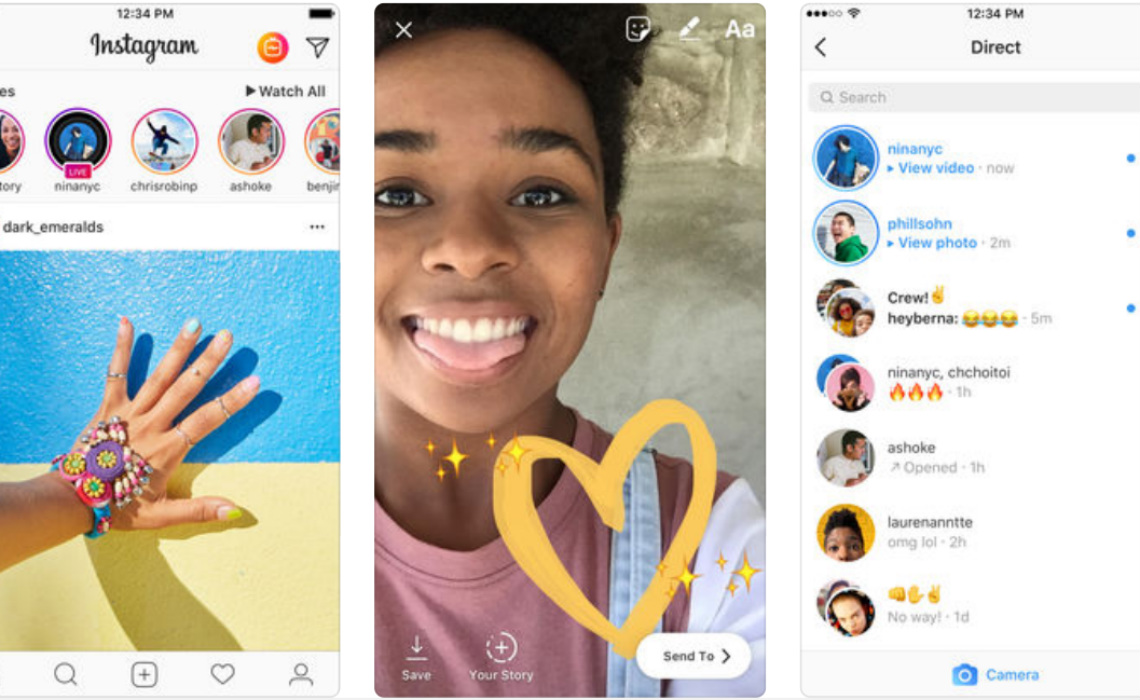
Kids on Instagram
credits: unknown
via tubefilter.com
"We want to strike the right balance of giving young people all the things they love about Instagram while also keeping them safe."
Instagram blog
Instagram has made new under-16s' accounts private by default, so only approved followers can see post and 'Like" or comment as it battles opposition to plans to introduce a children's version of the app.
"Protecting young people on Instagram is so important to us. Some updates on this work: restricting DMs between teens and adults they don't follow, encouraging teens to make their accounts private, and prompting them to be careful in DMs."
"Younger people use YouTube every day to discover new interests, learn about the world, and connect with the world through online video. But it's essential that as they do, they have the options and safeguards to create the experience that's right for them."
YouTube
credits: Chesnot/ Getty Images
via Newsweek
Digital footprint:
YouTube will also turn off "autoplay" as the default setting, for children, in both the Kids and mainstream apps, to prevent unsuitable videos playing automatically.
Allowing users to remove image-search results of children would afford "more control over their digital footprint"
"Of course, removing an image from search doesn't remove it from the web but we believe this change will help give young people more control of their images online,"
Google
Teens on social media
credits: unknown
via Google Images
The other changes include:
stopping ad targeting based on children's age, gender or interests
preventing "age sensitive" types of adverts being shown to younger users
changing the default mode for uploaded videos, for children, to "the most private option"
turning adult-filtering mode Safe Search on for minors
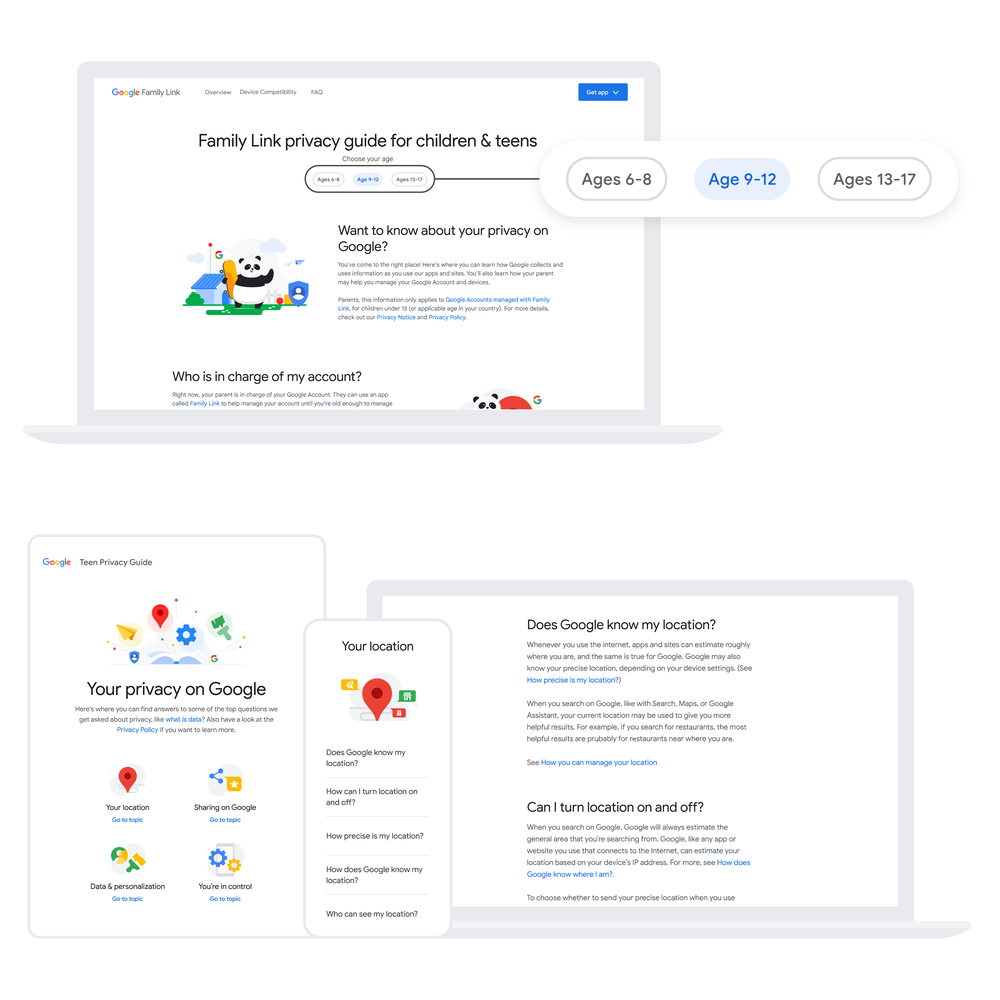
preventing young people from using Location History, the feature that tracks and logs a phone's location constantly
Google will also be rolling out features from Family Link to users under 18, as well. Family Link is a Google service which allows parents of children under 13, who cannot yet have their own Google accounts, to monitor their usage.
Child Focus:
One of the key missions ofChild Focus is prevention. This clip was made as an e-safety awareness campaign for children between 4 and 8 years some years ago.
It's being aired on Belgian kids channels and distributed in other European countries. Note: Script & animation by CC.
credits: unknown
firstcry Parenting
Education:
Protecting young people is very important to them. Parents must educate their kids to restrict messages between teens and adults they don't follow, encouraging teens to make their accounts private, and prompting them to be careful in social media.
Educating to privacy, child safety, wellbeing and digital education must be reinforced by parents and teachers.
We must help kids and teens to be informed. We need to give them the skills to keep themselves safe online.
Knowing how to sniff out trouble, knowing how to avoid it, and knowing how to handle it when it comes knocking are key essential life skills.
Very important! There’s always someone to help young people : teachers, parents, older brothers, grandfathers.
As parents, pay attention to the new tools to educate your children and help them to keep privacy, and safe on the social media and other websites.
The proclamation followed the 1979 disappearance of a six-year-old boy, Etan Patz, on his way to school in New York City. Almost 40 years ago. The case generated widespread indignation, and concern for missing children rose across the nation. Since the United States began remembering missing children in this way, other countries around the world have adopted similar commemorations.
The forget-me-not flower is the symbol of International Missing Children's Day.
In 2001, 25 May was first formally recognized as International Missing Children’s Day (IMCD), thanks to a joint effort on the part of ICMEC,Missing Children Europeand the European Commission.
250,000 children are reported missing every year in the EU, 1 child every 2 minutes. Each year, well over 250 000 children slip through child protection systems in Europe. Runaways, parental abductions and children who go missing in the context of migration make up to 81.5% of missing children cases in the EU, but awareness and child protection responses for these children still require support.
A child is reported missing every 2 minutes in Europe. Our network of missing children hotlines is operated by local grassroots organisations in 32 countries in Europe. Children and families calling the 116 000 European hotline for missing children receive free and immediate emotional, psychological, social, legal and administrative support.
Missing Children Europe in 2016 focused on developing a project to monitor and improve the quality of services provided by 19 hotlines across Europe.
"Achieving this quality criteria will ensure that children and families anywhere in Europe will have access to the same quality of support when faced with the unthinkable."
"Missing Children Europe's Annual Review describes the vision, efforts, our grassroots member organisations and the impact of the organisation for the past year. It provides a good summary of the work, successes and challenges from 2016."
The report features the evolution and trends on missing children cases in Europe handled by hotlines for missing children and the Cross-Border Family Mediators’ network. Hotlines for missing children are available through the same phone number - 116 000 - in 31 countries in Europe.
Since 2015, this network of hotlines has helped an increasing number of children. In 2016, there was a 12% increase in children calling the hotlines compared to the previous year.
While 116 000 hotlines seem to have received fewer calls in 2016, these hotlines saw a doubling of contacts received through channels such as text message, email and chat.
In 2016,children running away or thrown out of home made up 57% of missing children cases reported to hotlines, consistently making the largest group of missing children. Parental abductions made up the second largest group at 23% of cases.
Consistent with reports that up to 50% of migrant children go missing from some reception centres in Europe within 48 hours, cases of missing migrant children saw an increase from 2% in 2015 to 7% in 2016. However, underreporting of these disappearances and a lack of clarity on roles and responsibilities regarding the prevention and response to this very vulnerable group remains a worrying issue. Criminal abductions made up less than 1% of cases reported in 2016 while lost, injured or otherwise missing children cases made up 13% of cases.
1 in 5 missing children cases were cross-border in nature showing the importance of cross-border cooperation between national governments, hotlines, law enforcement and other child protection authorities.
This unveils a vulnerable, often trivialised group of children whose problems at home or reasons for running away have persisted even after the first running away incident. Children running away repeatedly are forced to use increasingly risky strategies to survive, such as sleeping rough or begging and are exposed to huge risks of sexual exploitation.
Hotlines in several countries (Bulgaria, Cyprus, Greece, Romania, Serbia, Slovenia, and Spain) received no funding at all from national governments in 2016. In 2016, 15 hotlines received an action grant from the European Commission which started mid-2016 and will last up to 24 months.
The network of Cross-Border Family Mediators consists of 157 trained mediators from 37 countries, and is coordinated by Missing Children Europe. These trained mediators specialise in preventing and resolving family conflict including parental abductions. Compared to court proceedings, mediation is up to 60% cheaper and takes an average of 43 days to be resolved compared to 18 months when taken to court. However, too few cases seek mediation as a solution.
More and more kids have smartphones. So this generation doesn’t remember phone numbers by heart anymore.
But what if they lose their phone, or their battery dies? What if there’s a situation where your kid needs to contact you but doesn’t know your phone number?
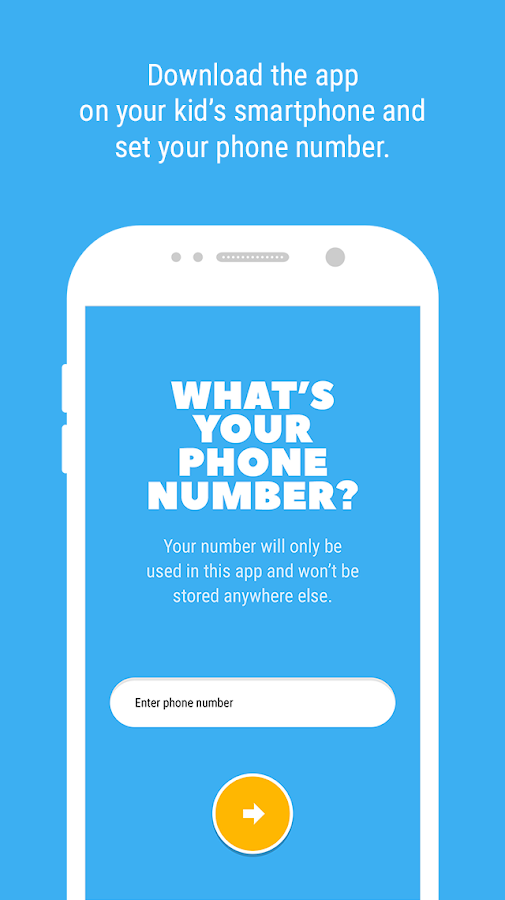
Remumber is an app aimed at young children with smartphones. It helps children remember the phone number of their parents by changing their device security codes to a phone number. That way each time your child unlocks his/her smartphone, they practice dialing your phone number.
Remumber changes the unlocking code of a mobile or tablet device into a phone number.
So every time your child unlocks the device, he or she practises your phone number until they know it by heart.
The app uses the phone number that your kids need to remember as a code to unlock the mobile phone or tablet, and they memorize the number gradually: the child must learn by heart the first 4 digits, and then if he/she is stuck and needs a hint for the next numbers, then the rest of the digits are illuminated.
When the child has memorized the entire code, his/her parents are informed via e-mail and can then enter a new number to remember, leave the initial number for further training or uninstall the application.
Missing Children Europe received great feedback from users and was proposed different free media opportunities to communicate about the campaign during summer. But most of all, with hundreds of downloads in the first week, we helped a lot of children to remember their parents’ phone numbers in a couple of days.
"He could tell it was going to be a terrible, horrible, no good, very bad day. He went to sleep with gum in his mouth and woke up with gum in his hair. When he got out of bed, he tripped over his skateboard and by mistake dropped his sweater in the sink while the water was running. He could tell it was going to be a terrible, horrible, no good, very bad day." (...) Available : book /ebook
And like Maurice Sendak’s Where the Wild Things Are, it’s also a journey inside a creative kid’s imagination: that special place where parents aren’t allowed without permission. Film:
Alexander and the Terrible,Horrible No Good, Very Bad Day
The film is based on the book Alexander and the Terrible,Horrible No Good, Very Bad Day by Judith Viorst (book & ebook). "Alexander's day begins with gum stuck in his hair, followed by more calamities. However, he finds little sympathy from his family and begins to wonder if bad things only happen to him, his mom, dad, brother and sister - who all find themselves living through their own terrible, horrible, no good, very bad day."
Myosotis is commonly called "Forget-me-not". And we can not forget every missing child.
As an educator, I can't ! I talk about it with my students helping them to understand the danger they face every day.
In the classroom, we discuss the theme around some exemples of missing children and young people. They understand the difficulties they can face on the street on their way to school, or to home. And on the bad use of theInternet or social networks.
I invite them to talk with their parents, grandparents or to help their younger brothers or sisters.
I can't forget missing children in Europe and all over the world. Children are our future and they believe in us and a better world.









_cover.jpg)


