Showing posts with label digital literacy. Show all posts

Thursday, September 7, 2017

Schools : International Literacy Day in a Digital World


credits: UNESCO


Tomorrow, 8 September is the International Literacy Day. The International Literacy Day is celebrated annually on 8 September.


The theme of this year’s International Literacy Day on this 8 September:

 ‘Literacy in a Digital World’ 


credits: UNESCO


The day aims to highlight the kind of literacy skills people need to navigate this world and the literacy policies and programmes that can leverage the opportunities such a world provides.

Digital technologies, including the Internet, mobile phones, and all the other tools to manage information digitally, are fundamentally changing the way we live, learn and socialize. For many, digital technologies provide better access to information and knowledge, previously out of reach or costly, while facilitating the use of obtained information and knowledge.

“Digital technologies permeate all spheres of our lives, fundamentally shaping how we live, work, learn and socialize,” 

Irina Bokova, UNESCO Director-General, message 


credits: Unesco Photography contest 2017

Bokova emphasizes the importance of rethinking and improving skills required to take part in the digital world: 

“These new technologies are opening vast new opportunities to improve our lives and connect globally—but they can also marginalize those who lack the essential skills, like literacy, needed to navigate them.”


Gender disparities in literacy rates
credits: Unesco e-Atlas of Literacy

Literacy rates continue to rise from one generation to the next. Yet according to new data from the UNESCO Institute for Statistics, there are still 750 million illiterate adults, two-thirds of whom are women

These numbers are a stark reminder of the work ahead to meet Sustainable Development Goals (SDGs) 4 -Quality Educationand 5 - Gender Equality - the Education 2030 targets.


credits: UN


On 8 September, 2017 a global event will be organized at UNESCO’s Headquarters in Paris, with the overall aim "to look at what kind of literacy skills people need to navigate increasingly digitally-mediated societies, and to explore effective literacy policies and programmes that can leverage the opportunities that the digital world provides."


credits: © UNESCO/Taweepon Kingkaew


The 2017 UNESCO International Literacy Prizes awards ceremony will also take place to recognize and reward excellent literacy practices from around the world in connection with this year’s theme.

In addition to greater data on basic literacy and numeracy, we also need data on digital literacy, including data on the digital divide, with some people having less access than others to ICTs, less opportunity to use ICTs and lacking the empowerment to incorporate ICTs in their work and everyday life.


  • Education: 

Literacy is a human right, a tool of personal empowerment and a means for social and human development. Educational opportunities depend on literacy.

With the evolution of knowledge and skills in the digital world, the meaning of literate also changes. In an effort to close the gap in literacy skills and decrease the inequalities, the 2017 International Literacy Day will focus on the challenges and prospects in endorsing literacy in the digital world


Literacy among Youth
credits: Unesco e-Atlas of Literacy

How possible is that if there are roughly 750 million adults and 264 million school-aged children (not in school) that do not have the basic literacy skills.

In addition we need data on digital literacy, including data on the digital divide, with some people having less access than others to ICTs, less opportunity to use ICTs and lacking the empowerment to incorporate ICTs in their work and everyday life.


A good quality basic education equips pupils with literacy skills for life and further learning; literate parents are more likely to send their children to school; literate people are better able to access continuing educational opportunities; and literate societies are better geared to meet pressing development.


"Information and communication technology (ICT) is fundamentally changing the way people live and work, learn and socialise." But 758 million adults in the world, including 115 million youth, still lack the basic literacy skills needed to enjoy the benefits of increasingly digitised economies and to participate fully in modern society.


credits: Elyx Yak, virtual Ambassador

A joint project by UNESCO and Pearson, an international education company, will explore new ways to enable low-skilled and low-literate youth and adults to profit from inclusive digital technologies, which in turn will strengthen their literacy and basic skills.

However, we live in digital world so the focus on IT in the SDGs reflects the importance of such skills for workforce development. Their measurement, however, is a complex task for three reasons. 


Some ideas:

  • Use any increased flexibility offered in the curriculum to respond to issues as they arise including IT skills;
  • Provide space for teachers and students to discuss and reflect on these issues;
  • Pupils get a lot of their information about global issues from the media so help them to interrogate this information critically and consider a range of perspectives;
  • Help your students by engaging them in an extra ICT literacy skills in the classroom and on the Internet. Explore digital resources;
  • Inspire students to build an out-of-this-world literacy habits.


  • Display the video above and discuss with your students the importance of Digital Literacy;
  • Join the global celebration, and be sure to let the International Day of Literacy know how your students are celebrating Literacy Day in Digital World;
  • Share pictures and videos on FacebookTwitter, and Instagram using the official hashtag #ILD17

G-Souto

07.09.2017 

update 08.09.2024

Copyright © 2017G-Souto'sBlog, gsouto-digitalteacher.blogspot.com®

Creative Commons License
Schools : International Literacy Day in a Digital World bG-Souto is licensed under a Creative Commons Attribution-NonCommercial-NoDerivatives 4.0 International License.


Thursday, October 13, 2016

Schools : Code Week EU ? Let's go !


CodeWeekEU

"Europe Code Week is a grassroots movment that celebrates creating with code."

Europe Code Week, is taking place between 15 and 23 October, although "every week is Code Week". It's an open source initiative, aiming to connect initiatives that encourage European citizens to learn more about the art and science of computer programming.

Millions of children, adults, parents, teachers, entrepreneurs, and policymakers will again come together at events, in classrooms and libraries across Europe and beyond to learn to create with code.


Libraries change lives
credits: Public Libraries 2020

Aims:

The idea is to make programming more visible, to show young, adults and elderly how you bring ideas to life with code, to demystify these skills and bring motivated people together to learn. The initiative was launched in 2013 by the Young Advisors for the Digital Agenda Europe.

The Commission will address digital skills in future initiatives on skills and training and will adopt a skills strategy in Spring 2016.

In 2015, 46 countries took part in EU Code Week – all EU member states plus Iceland, Norway, Switzerland, Albania, Former Yugoslav Republic of Macedonia, Serbia and Turkey events took place in Australia, Belarus, Bosnia and Hercegovina, China, South Korea, Moldova, Morocco, Taiwan, Tunisia, Ukraine and the United States.

EU Code Week is run by volunteers. One, or several, Code Week Ambassadors coordinate the initiative in their countries, but everyone can organise their own code event and add it to the codeweek.eu map.


Why coding?


"Today we live in a world that has been affected by rapid advances in technology. The way we work, communicate, shop and think has changed dramatically. In order to cope with these rapid changes and to make sense of the world around us, we need to not only develop our understanding of how technology works, but also develop skills and capabilities, that will help us to adapt to living in this new era."


Education:
Learning to code helps studentsus to make sense of how things work, explore ideas and make things, for both work and play. What’s more it helps students to unleash their creativity and work collaboratively with wonderful young people both near them and all over the world.


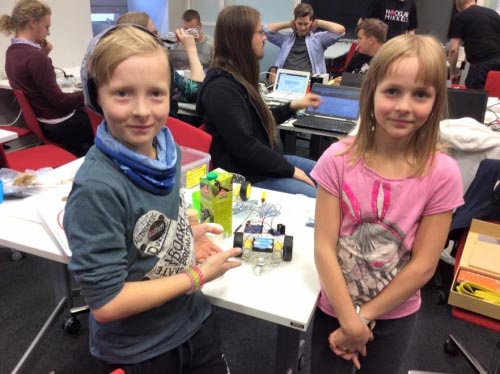
credits: Coding clubs Finland
http://codeweek.eu/
From playing about with animations to designing computer games, teaching coding in schools lends itself to plenty of fun learning activities.

The inclusion of coding into the new computing curriculum has been one of the main changes that the Department of Education in different European countries claimed would "ensure every child leaves school prepared for life in modern society."
Students at the school have apparently responded positively to the new curriculum in those countries and are already seeing the practical use of learning these new skills.


Schools:

International School Library Month (ISLM) is in October, and the theme is:

"Learn to Decode Your World."

Do you need a better theme? Get your school library running a big coding club joining the students to learn coding.

Join Europe Code Week by organising a coding event in your town or help spread the vision of Code Week.


CodeWeek4All:


Europe Code Week is launching the CodeWeek4all challenge to contribute to increase the penetration of coding in schools.

Schools are invited to register online for free to get a unique code to be added to the description of all Code Week events at CodeWeekEU/events organized in the school preferably between October 15 and October 23 2016.
The challenge consists in getting involved as many students as possible during Europe Code Week 2016. The unique code associated with the school will allow Code Week organizers to sum up all the participants to the events organized in the same school and to compare the sum with the total number of students declared in the application form.

Schools achieving a participation rate greater or equal than 50% will be awarded a personalized Certificate of Excellence in Coding Literacy and will be announced in the Europe Code Week website.
Application form available at: http://goo.gl/forms/kx4LfjFRo9QLQOg32


Resources: 

To make organizing and running successful Code Week events easier, Code Week EU prepared specific Presentations & Toolkits and selected some of the best lesson plans, guides and other resources in 30 languages. 

There are activities and games to learn to code, for all ages and skills. Just take a look and choose. You have plenty. You have all the information on the website Code Week EU.


Media:
Code Week EU is on Twitter as @CodeWeekEU, on Facebook. Use the #codeEU hashtag.

Invite your students to have fun building things about code. Are they ready to share their passion? Young students are so creative. Let's them expore all the funny coding games with their imagination.
G-Souto

13.10.2016
Copyright © 2016G-Souto'sBlog, gsouto-digitalteacher.blogspot.com®

Creative Commons License
Schools : Code Week EU ? Let's go ! bG-Souto is licensed under a Creative Commons Attribution-NonCommercial-NoDerivatives 4.0 International License. 

Sunday, October 25, 2015

Schools : Let's celebrate School Libraries Month !


credits : Chris OBrien
http://www.chrisobrion.com/

"Without libraries what do we have? We have not past and no future."

Ray Bradbury

No it's not about public libraries. However they very important in our city. It's about school libraries.


School Library Day US

Every October school librarians - United States is in Aprilare encouraged to create activities to help their school and local community celebrate the essential role that strong school library programs play in a students education and career.


International School Library Month

Throughout October, every year, the world celebrates International School Library Month, the perfect time for students to visit their own school library and browse through the hundreds of books and e-books available.

October is the International School Libraries Month. In Portugal, schools celebrate SLM on 26 October 2015This is the reason I am writing today about the SLM, thinking in all students and school libraries that will be celebrating it on the next Monday.


The SLM theme 2015 is "The School Library Rocks"


credits : Peter H. Reynolds


International School Library Month allows those in charge of school libraries around the world to choose a day, week, or the entire month of October to celebrate the importance of school libraries.

The first International School Library Day was celebrated on 18 October 1999, with the theme, "A Day in the Life..."

The change to International School Library Month was approved by the IASL Board in December 2007.


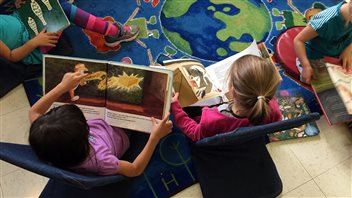
Kids reading at school library, Canada

Education:


"There is an art of reading, as well as an art of thinking, and an art of writing."

Isaac D'Israeli


Activities :

You will find some suggestions to celebrate this day on my post International School Libraries Day 2015 (my blog to Portuguese students and teachers)

However the ISLM is organizing special activities. There is information on the ISLM website to help you. Take part in one of the special activities :


  • ISLM Bookmark Project
The ISLM Bookmark Project involves matched schools making homemade bookmarks - be creative - to exchange with each other.

This year Marie O’Brien of Australia and a team of her school colleagues will co-ordinate the 2015 Bookmark Exchange Project and Skype Project.

Aim:

The Bookmark Exchange Project is a simple, fun way of sharing the pleasure and delights of books and libraries and of making new friends through school libraries worldwide. If you and your students did not get involved last year perhaps you will this year.

You might wish your students to communicate with each other as you make your bookmarks so that they can learn something about another culture and a different way of life. 

If you don’t want to do either of these things you can simply just swap bookmarks or devise your own activity.

You will be able to register your interest by entering your details into a Google Spreadsheet

If you are unable to use the spreadsheet you can email Marie O'Brien. Register for the project, using either the Google spreadsheet or by email, as soon as possible. For detailed information, visit the ISLM Bookmark Project.


ISLM Skype Project

  • ISLM Skype Project
Would your students like to talk to others in a far away country during ISLM2015? 

Join in the fun! If you would like to be part of the Skype Skype Project, complete the Survey Monkey form to receive a possible match for your school.

If you experience difficulties completing the form or have any queries please contact Marie for assistance.

  • What people are doing for ISLM 2015:

You want to submit your school activities for the ISLM ? Send in your submissions for What people are doing for ISLM 2015 by email to the IASL Secretariat.

For detailed information, visit the ISLM's activities page

Deadline : November 15th 2015

By country : 

You would like to know what other schools from you country are doing? After the deadline, the ISLM website will publish.


Other activities:


In Portugal we have a different activity using social networks. I like it a lot.


Tweeting in SLD


Teachers invite students, parents, other teachers, and school staff to write a #tweet (140 characters) about the importance of school libraries. They will be published at the Twitter school/class account using the hashtag #IMSL15

The best tweets of each class/ group will be delivered to the school librarian. The school librarian choose the most creative to publish on the school library website.

My thoughts:

School libraries in the XXI century must have the books, e-books, e-readers and tablets in order to motivate the new generations.

School libraries meet the needs of all kind of learners. Never forget children's preparation to use e-books, especially the students from disadvantaged social backgrounds or having special needs.

Integrating digital literacy as critical elements for education (all levels) is essential to keep our students happy and captivated at the school libraries.

As I already wrote on this blog, implementing these new digital books is about more than just jumping on the latest technological bandwagon or attempting to reinvent the library and printed books in order to stay relevant.


Le Petit Nicolas pop-up


School libraries must be prepared to introduce innovative devices without forget the enchantment of printed books. The smell of paper, the illustrations, some pop-up for the younger readers, the pleasure to touch or turn the page. Just beautiful gestures that we must keep.

Teachers must be innovative of course. So printed books and e-books are both welcome.


School libraries are integrating learning spaces that values connections between home, school, community, and the world.

Encourage students to be creative and never let them lose their sense of wonder. So let's keep reading all over the year in the classroom, encouraging our students to become lifelong avid readers.

"To build up a library is to create a life. It’s never just a random collection of books."

Carlos María Domínguez
G-Souto 

25.10.2015
Copyright © 2015G-Souto'sBlog, gsouto-digitalteacher.blogspot.com®

Creative Commons License
Schools : Let's celebrate School Libraries Month ! bG-Souto is licensed under a Creative Commons Attribution-NonCommercial-NoDerivatives 4.0 International License.