Showing posts with label Druids. Show all posts

Monday, March 20, 2017

Schools : Spring equinox is here !


Spring Awakening
via Pinterest


When daisies pied and violets blue
   And lady-smocks all silver-white
And cuckoo-buds of yellow hue
   Do paint the meadows with delight, (...)

William Shakespeare, Spring

Oh! Yes! Spring is in the air! Today is the Vernal equinox which marks the beginning of Spring season in the Northern Hemisphere, where I live

The daffodils are blooming, blossom is on the trees, birds are singing and Easter is coming, and lambing season will soon be getting underway.

This year, the vernal (or spring) equinox takes place on Monday, March 20, 10:29 (GMT).
After this point, the days will get longer and the nights will get shorter until the summer solstice on June 21, when the pattern will reverse.
Spring equinox the day and night are equal in length. The word 'equinox' comes from the Latin for equal and night. Almost everywhere in the world today, nighttime and daytime are each 12 hours. 

We use the equinox to mark the change of seasons, as the balance of light shifts to make for longer days or nights. 

Google is celebrating with lovely Doodles (I love Doodles as you know) the arrival of spring in the Northern Hemisphere and fall in the Southern Hemisphere.
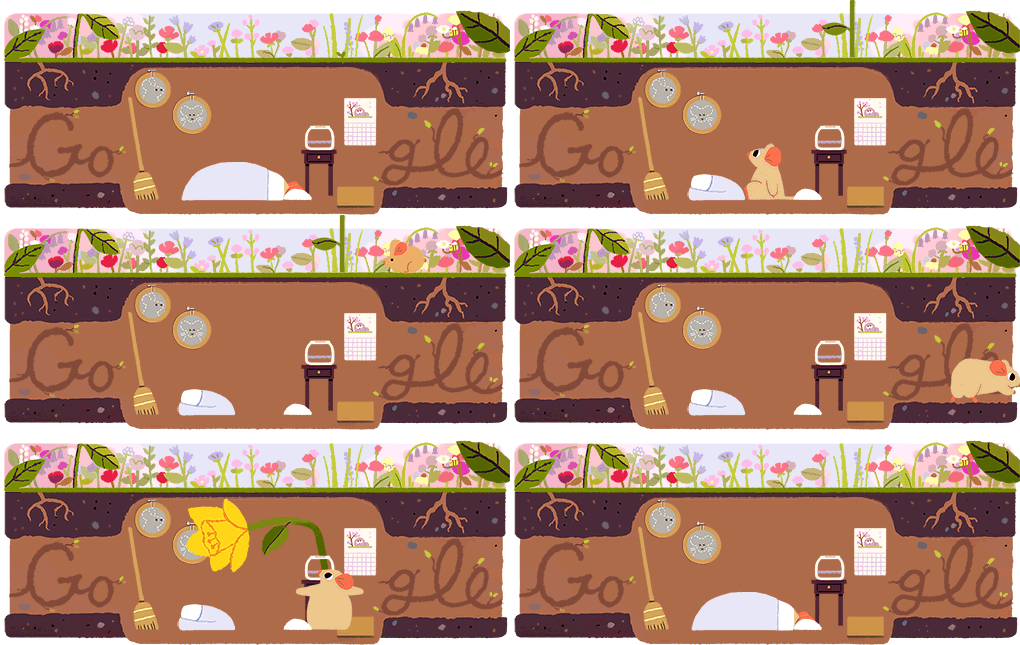


Google doodle spring equinox


  • Google Doodle:
For users living in the north of the equator, Google's homepage features an animated short doodle starring a mouse waking up to grab a yellow flower from outside to display inside his underground home.
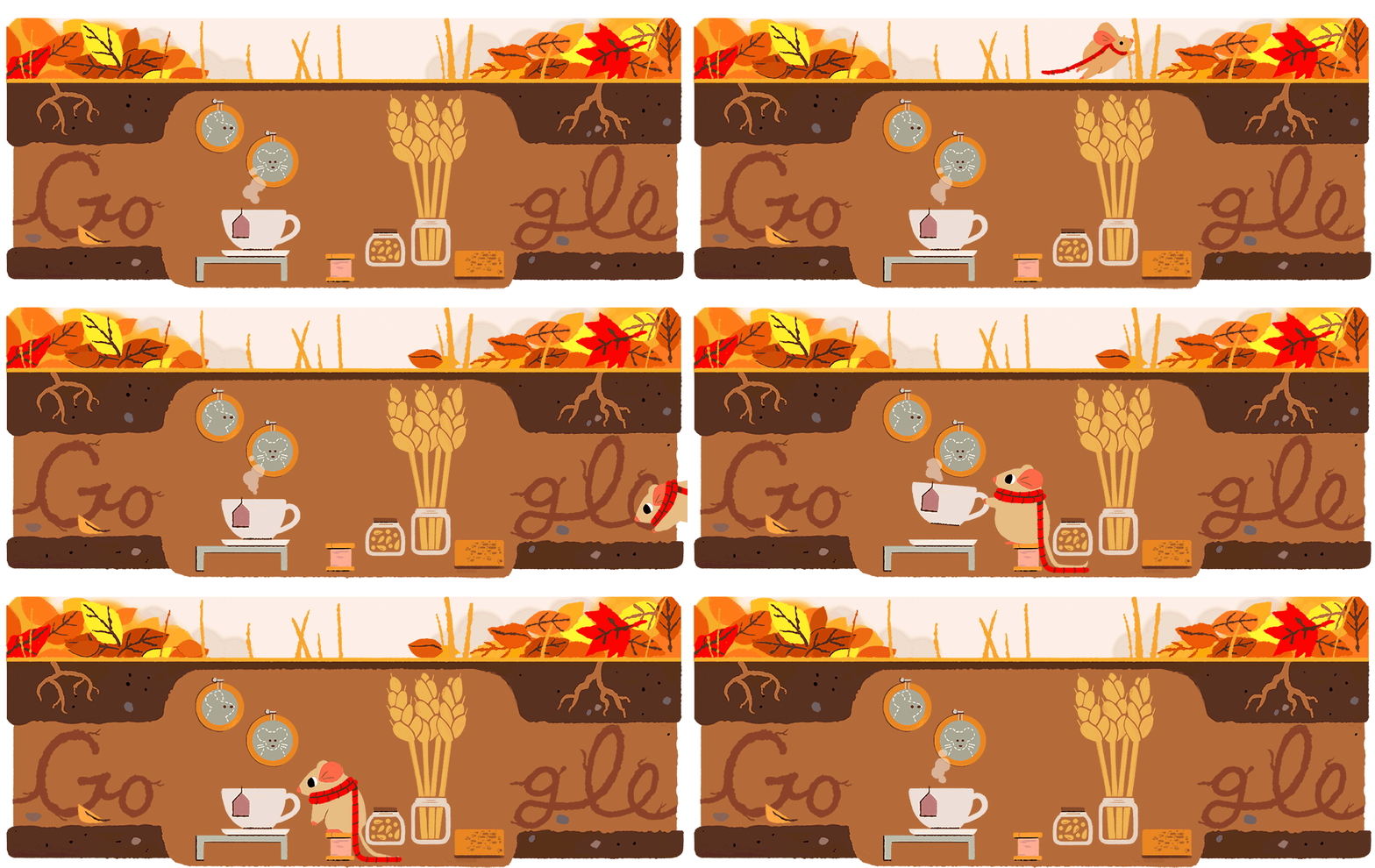


Google doodle fall equinox

For those living in the south of the equator, Google's homepage display's a similar animated short doodle with the mouse now venturing outside to jump into a pile of leaves before returning home to enjoy a warm cup of tea.
"We use the equinox to mark the change of seasons, as the balance of light shifts to make for longer days or nights. It usually means that it's time to hunker down for colder seasons, or time to rise and shine for warmer ones, as in the case of our furry friend the mouse!"
Google doodle team


Ostara (1884) by Johannes Gehrts
https://en.wikipedia.org/
  • Traditions:
For Pagans and Druids, the spring equinox is a time to celebrate the second Wheel of the Year – a series of four festivals celebrated annually. It is the time of the ancient Saxon goddess Eostre, who represents new beginnings and fertility.

Stonehengeone of the wonders of the world and the best-known prehistoric monument in Europe, is open from the start of the equinox until 8:30am, to allow Druids and Pagans to gather and see the sun rise above the ancient stones.


credits: Getty Images
https://www.thesun.co.uk/

Druids, Wiccans and other neopagans celebrate the ancient Saxon goddess Eostre, who symbolizes fertility and new beginnings.

The goddess flies through the heavens surrounded by Roman-inspired putti, beams of light, and animals. Germanic people look up at the goddess from the realm below.

Some people argue that the Ostara tradition comes from ancient Celtic and Saxon spring holidays – which were later merged with the Christian festival of Easter.
Others reckon these neopagan holidays are modern creations.
Whichever the truth, many religions celebrate holidays at the time of the year, including the Hindu Holi festival of colors, Jewish Purim, Sikh Hola Mohalla and Christian Easter.

  • Astronomical seasons & meteorological seasons:
When we talk about the beginning of spring or any other season, we are usually talking about the day in our calendars that mark this date. 
This refers to the astronomical seasons which are a result of the Earth's axis and orbit around the sun.
There is a difference between astronomical seasons and meteorological seasons.
  • Astronomical seasons refer to the position of Earth's orbit in relation to the sun taking into account equinoxes and solstices. 
  • Meteorological seasons are instead based on the annual temperature cycle and measure the meteorological state as well as coinciding with the calendar to determine a clear transition between the seasons.
Since the astronomical seasons vary in length, the start date of a new season can fall on different days each year. 
This makes it difficult to compare seasons between different years and resulted in the introduction of the meteorological calendar. 
This splits the calendar into four seasons of approximately the same length. The astronomical seasons run approximately three weeks later than those of the meteorological calendar.
But let's watch National Geographic explanation about equinoxes on the video below:


The 2017 vernal equinox arrived on March 20 at 10:29 UTC, 10:29 GMT. In the Northern Hemisphere, we’re enjoying earlier sunrises, later sunsets, softer winds, sprouting plants. Meanwhile, the opposite season, later sunrises, earlier sunset, chillier winds, dry and falling leaves, south of the equator. 
For all of us, the moon will be at the last quarter phaseLast quarter moon comes on March 20, 2017. That’s the day of the 2017 vernal equinox.
A last quarter moon looks half-illuminated. It rises around midnight, appears at its highest in the sky at dawn, and sets around noon. 
Fun time to see a last quarter moon: just after it rises, shortly after midnight. Then the lighted portion points downward, to the sun below your feet. Great time to think of yourself in the three-dimensional world of outer space!
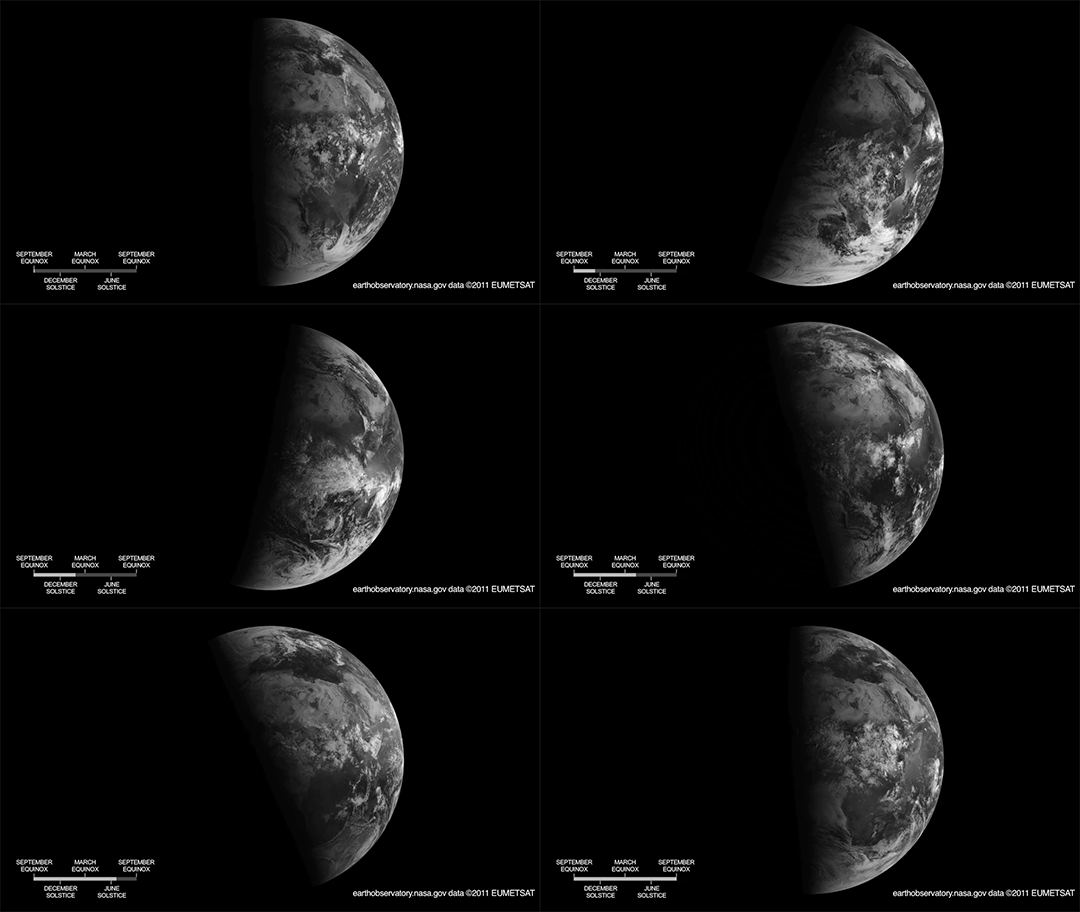


credits: NASA

And of course to visit NASA website Celestial Geometry: Equinoxes and Eclipses will be very interesting to learn more about the equinoxes. 

Children's books:


The Spring Equinox, Celebrating the Greening of the Earth
Ellen Jackson
 illustrations: Jan Davey Ellis (Ages 4+)

A non-fiction exploration of the Spring Equinox and vernal celebrations throughout the world. 
At the end there is a story of Ostara, the Anglo-Saxon goddess of the dawn and springtime, and a handful of traditional activities, crafts, and recipes.
Age: +4


Spring Thaw
Steven Schnur
 illustration Stacey Schuett

A lyrical exploration of the arrival of spring on a farm. Highly descriptive language highlights the small, subtle signs that spring is nearing. Unlike many season books, there is insight into the human experience and preparations for the awakening of the earth.  Painterly, impasto illustrations  reveal the rural world alluded to in the text.
Age: +3


Goose Moon
Carolyn Arden
illustration: Jim Postier 
A young girl has grown tired of the quiet, indoor winter entertainment and is eager for the spring. One night, her grandfather wakes her to see that the geese have returned from their winter migration. A heart-warming, inter-generational tale that celebrates the quiet, subtle signs nature gives.
Age: +3


credits: unknown

Education:

Do you need more interesting facts to share with your students ? Spring time, equinoxes, and traditions? 

Students may do some research about themes around Spring equinox. Sciences and Literature two school curricula that can join on trans-curricular project (activities and so). 


Curricula: Sciences; Languages & Literature.

Level : Primary education; Secondary Education.

Teachers must adapt the activities to the levels they are teaching.


Wishing all a Happy Spring time!

G-Souto
20.03.2017
Copyright © 2017G-Souto'sBlog, gsouto-digitalteacher.blogspot.com®
Creative Commons License
Schools : Spring equinox is here ! by G-Souto is licensed under a Creative Commons Attribution-NonCommercial-NoDerivatives 4.0 International License.

Thursday, March 19, 2015

Education: Solar eclipse, Supermoon, Spring equinox ?


Spring at Serralves Park, Porto, Portugal

Spring is like a perhaps hand 
(which comes carefully 
out of Nowhere)arranging 
a window,into which people look(while 
people stare
arranging and changing placing 
carefully there a strange 
thing and a known thing here)and

changing everything carefully


from 'Spring is like a perhaps hand' by E. E. Cummings


The gentle spring stars are making a welcome return to our skies, chasing away the steely-blue orbs of winter. The flowers bloomed years earlier than expected, with more petals than on a normal tree.

Spring is always wonderful! Let's follow this exciting theme.

Spring equinox is here and ready to capture the world's attention with Supermoon and Solar eclipse on March 20, 2015.

After the Lunar eclipse on 15 April 2014, the world will watch this unique moment. 


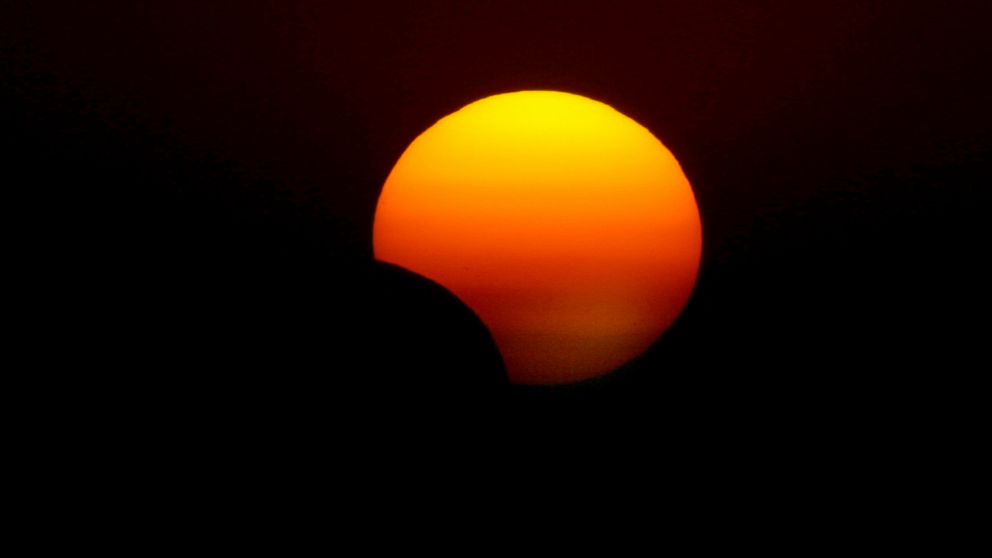
Solar eclipse 2013
credits: Safin Hamed/AFP/Getty Images

A partial solar eclipse will be visible in most of Europe and is the first since November 2013. 
As the eclipse plunges Faroe Islands and few other places into darkness this Friday, two other rare spectacular celestial events will be taking place, too: a Supermoon and the Spring equinox.

Anyone in the world can catch a glimpse of the cosmic wonder at Slooh's online observatory, which will live stream the event at 4:30 a.m. ET.
NASA predicts the "instant of greatest eclipse" will happen at 5:45 a.m. ET for people who want to watch online.


Science information:

A Supermoon, or perigee moon, happens when the full or new moon does its closest fly-by of the Earth, making it look bigger than it normally does. 

Most of the time, there are between three and six Supermoons a year. In 2015 there is set tobe six, two of which have already happened. The next will take place on March 20, the day of the eclipse, and the others will come in August, September and October.

The spring equinox refers to the time of the year when the day and night are of equal duration, mid-way between the longest and shortest days.

The equinox will also happen on March 20. While it won’t have any discernable, direct impact on how the solar eclipse looks, it will contribute to a rare collision of three unusual celestial events.

The Earth’s axis will be perpindecular to the sun’s rays — which only happens twice a year, at the two equinoxes. After that, it will start tipping over, making the days longer in the northern hemisphere.

The equinox will happen at the same time as a solar eclipse in 2053 and 2072, though it doesn’t always appear as close together as that.


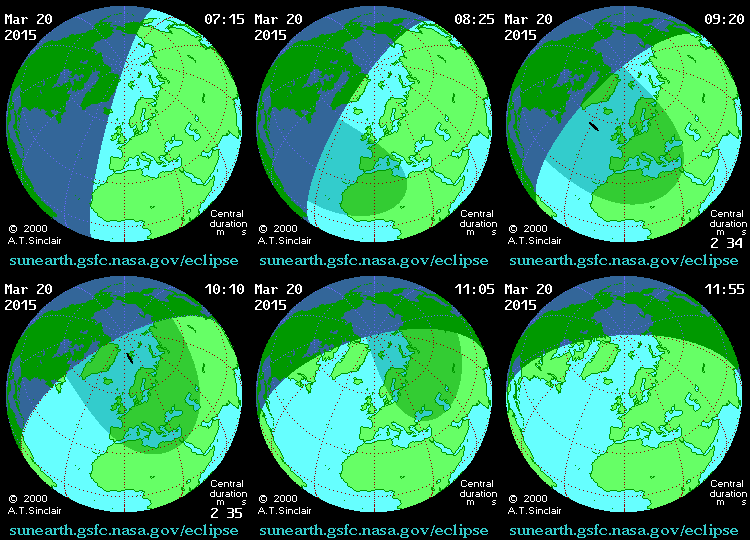
Solar eclipse of March 20, 2015  
Map by Larry Koehn 

The solar eclipse refers to a phenomenon where the sun and moon line up, so that the latter obscures the former. And while it won’t be affected by the two other events, it is rare that the three events happen even individually.

Eclipses can only happen at new moon, when the moon appears is entirely in shadow. And the spectacular Supermoon images that are often spotted can only happen when the moon is full, since it can only be seen then.

As a result, only the last three Supermoons of this year will be visible. Because the moon is new rather than full on March 20, it won’t be seen. But it will be gliding past us closer than ever, and its shadow will be visible as it blocks out the sun on Friday morning.

Some history:

Babylonians and the ancient Chinese were able to predict solar eclipses as early as 2500 BC, but it was a phenomenon that confounded ancient civilisations for centuries.

variety of cultures thought the eclipse was a result of entities devouring the sun.

Traditions and superstitions:

As well the eclipse itself, a Supermoon and the Spring equinox are set to happen all three of which have in the past been celebrated as events of significance within various cultures around the world.

The equinox has long been celebrated as a time of beginning and renewal, by a number of historic cultures, and is linked to Easter and Passover.

Stonehenge one of the wonders of the world and the best-known prehistoric monument in Europe, will be open from the start of the equinox to allow Druids and Pagans to gather and see the sun rise above the ancient stones.

Druids and Pagans will celebrate the ancient Saxon goddess Eostre, who symbolises fertility and new beginnings.

Superstitions surrounding solar eclipses still exist today. Many believe that solar eclipses can be a dangerous to pregnant women and their unborn child – a claim that scientists have debunked.


Who can watch:


The path of total eclipse travels from just below the Greenland peninsula, heading north into the Arctic Circle.
The course takes it across the Norwegian island of Svalbard and also the Faroe Islands, for a full two minutes and nine seconds of total solar eclipse.
These are the only two places which are easy to reach where the full total eclipse can be seen.
Europe and Asia will only see a partial solar eclipse. 

Education:
On Friday 20 March is the last day of school time before Spring holiday in European countries, as well in North America, Australia, and most countries in the world. 

I could not be informed about Asian countries, except Japan. It's Easter holiday also known as Spring holiday.

Even so, teachers had prepared students to understand this incredible moment and join astronomers on NASA Television, skywatchers, or national observatories of Astronomy.

It will be visible on the morning of March 20, with the eclipse visible from across Europe for approximately 90 minutes.


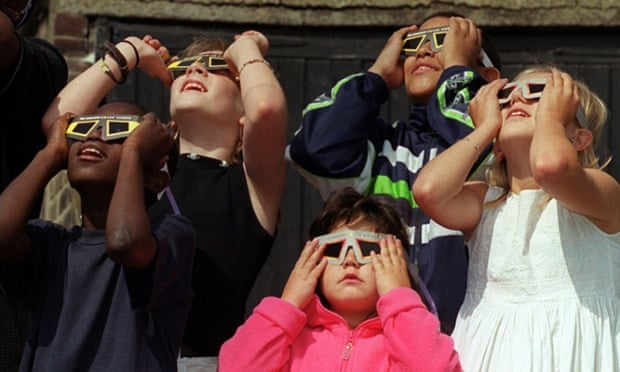
credits: Fiona Hanson/PA

Safety measures:

Remember your students ! DO NOT look directly at the Sun without appropriate protection, such as special eclipse glasses. 

Special glasses that ensure sun spotters do not damage their eyes. Good solar eclipse glasses filter out all of the harmful ultraviolet and infrared light and almost all of the intense visible light to allow you to view the eclipse safely.

But thousands of people across the world are in the precess of building their own viewers. Children should get an adult to help build and use this projector. Take extra care when using sharp tools like craft knifes and scissors.

The safest way to view a solar eclipse is to project it onto a piece of paper. Using a cardboard box, you can make a pinhole projector.

Curricula: Cross-curricular; 

Level : All levels.

Teachers must consider the activities to every level or curriculum they are teaching.

Invite your students to share their experiences on Twitter, Facebook, Google +  (school or class account) during the event.

After Spring holiday, teachers and students will discuss their experiences and knowledge.

Resources for teachers and students:


BBC video : Total eclipse explained in 90 seconds

NASA Eclipse website | Solar eclipses of 2015

Solar eclipse 2015 : what you need to know

How can we watch a solar eclipse safely

EarthSky | Supermoon total eclipse of equinox sun on March 20

Wishing all a awesome Solar eclipse, Spring equinox and so with traditions or not. But do not be superstitious...

G-Souto

19.03.2015
Copyright © 2015G-Souto'sBlog, gsouto-digitalteacher.blogspot.com®

Creative Commons License
Education: Solar eclipse, Supermoon, Spring equinox ? bG-Souto is licensed under a Creative Commons Attribution-NonCommercial-NoDerivatives 4.0 International License.