~
"The children concerned in child labour should be at school being educated, and acquiring skills that prepare them for decent work as adults."
By entering the labour market prematurely, they are deprived of this critical education and training that can help to lift them, their families and communities out of a cycle of poverty."
Last week I wrote about Child poverty in developed countries. Watching David, I realized how important it is to draw attention to situations such as students living below poverty line in schools we teach as well the country we live.
Today is World Day Against Child Labour. So, here I am writing once again about Human Rights and Children Rights and the right of all children to be protected from poverty or from child labour, another violation of fundamental human rights.
June 12th is intended to serve as a catalyst for the growing worldwide movement against child labour, to highlight the plight of child labourers and what can be done to help them.
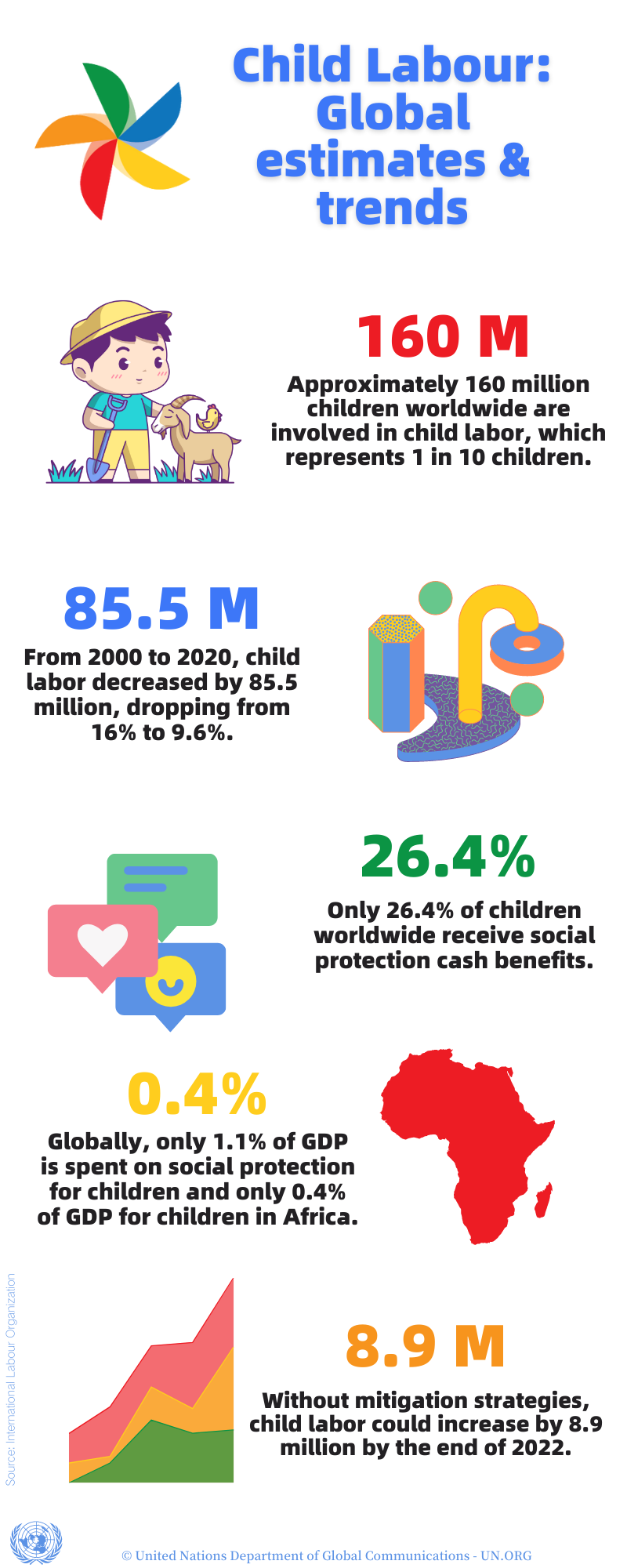
Hundreds of millions of young people, girls and boys throughout the world, are engaged in work that deprives them of "adequate education, health, leisure and basic freedoms", violating their rights.
"A large gap remains between the ratification of Conventions on child labour and the actions countries take to deal with the problem", the International Labour Organization (ILO) said in a report marking the tenth anniversary of the annual World Day Against Child Labour.
Among these children more than half is exposed to the worst forms of child labour such as work in hazardous environments, slavery, or other forms of forced labour, illicit activities such as drug trafficking and prostitution, as well as involvement in armed conflict.
To mark World Day Against Child Labour 2012 events are taking place in more than 50 countries around the world.
Events range from high level policy debates, to public debates, media events, awareness-raising campaigns, cultural performances and other public activities involving governments, employers and workers, other UN organizations and non-governmental organisations.
A summary of some of the events and activities in Africa, Americas, Arab States, Asia, Europe and Central Asia can be accessed here
The World Day Against Child Labour campaign provides an opportunity to gain further support of individual governments and that of the ILO social partners, civil society and others, including schools, youth and women’s groups as well as the media.
Education:
All schools and other educational institutions make a special effort to inform children of their rights according to the Declaration of the Rights of the Child and the Convention on the Rights of the Child.
Teachers and students worldwide are speaking out against child labour in the classroom and taking action to raise further awareness of this issue out school.
They are spreading knowledge among their peers, acting as a voice for those children whose rights are not respected and calling on decision-makers to act urgently to protect children in danger.
Teachers have a crucial role on the alert of poverty or child labour cases among their students.
Numerous tools and initiatives exist to inspire and motivate students of all ages, from primary school through to university, on the subject of child labour.
Here some lesson ideas for middle and secondary education. The teacher will be a learning facilitator not a presenter of content. Trust me!
Activities:
1. Choose a wall in the classroom or a space in the school - school library for example - where students from different curricula can display their depictions of child labour through works of art, photos, storytellings;
2. Organize exhibits of photos or drawings on child labour in school or other public spaces;
3. Set up information stands on Internet, social media (radio, television) or social networks (Twitter, Facebook, Google +) to raise school awareness on the issue;
4. Perform a theatre piece at the school library and invite parents, teachers, the maire and students from another school;
5. Present a film on this theme in the classroom or at the school library, and invite teachers, parents, and other students to a round table discussion;
6. Do a search on child labour in your own country;
7. Make a film joining authentic documents (photos) and texts written by the students and publish it on YouTube;
8. Prepare information brochures and distribute them in your school and community;
9. Prepare interviews with local radio or authorities & prominent personalities in your town in collaboration with local media;
And what about the teacher role? We spend our time speaking with our students. We are answering questions, working with small groups, and guiding the learning of each student individually. Wonderful!
Since the role of the teacher has changed, to more of a tutor or facilitator than a deliverer of content, you and I have the privilege of observing students interact with each other.
As we have time to roam around the class, we notice the students developing their own collaborative groups. Students are helping each other learn instead of relying on the teacher as the sole disseminator of knowledge.
It is magical to observe! And at the end you will have some creative activities all them elaborated by the students.
When we respect our students in this way, they usually correspond. They realize, and for some it takes time, that we are there to guide them in their learning instead of being the authoritarian pedagogue.
"There is no room for complacency when 215 million children are still labouring to survive and more than half of these are exposed to the worst forms of child labour, including slavery and involvement in armed conflict. We cannot allow the eradication of child labour to slip down the development agenda — all countries should be striving to achieve this target, individually and collectively"
Juan Somavia, ILO Director-General
G-Souto
12.06.2012
Copyright © 2012G-Souto'sBlog, gsouto-digitalteacher.blogspot.com®
References:
International Labour Organization: World Day Against Child Labour 2012